
Last Updated: January 23, 2026
Author: Daiwa Health Development Research Team
Category: Omega-3 Supplements, Heart Health, Brain Health
Word Count: 4,200+ words
Related Products: Daiwa Krill Oil
Hub Page: Cardiovascular Health & Cognitive Function Guide
Quick Answer: Which is better for heart and brain health, krill oil or fish oil?
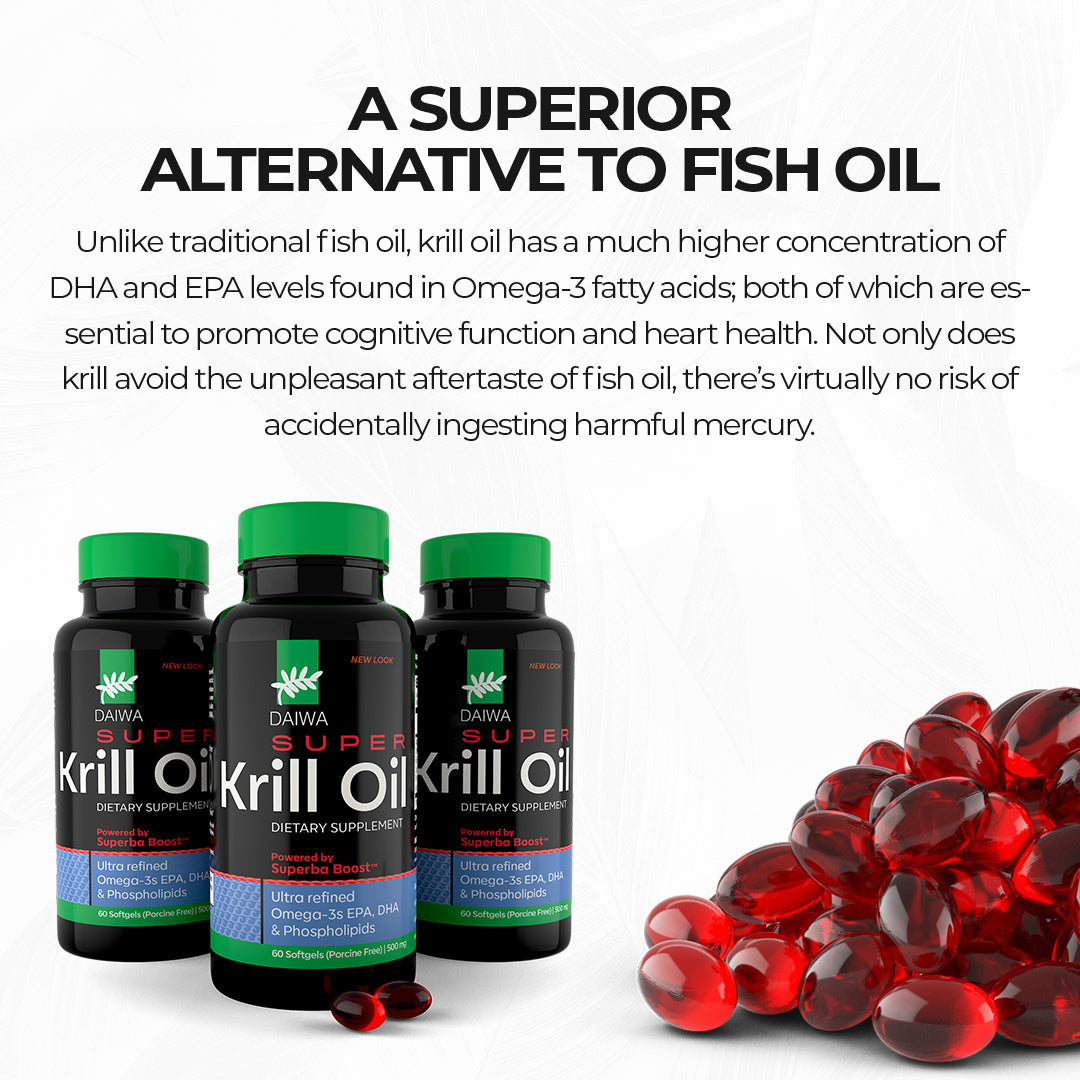
Both krill oil and fish oil provide essential omega-3 fatty acids (EPA and DHA) that support both cardiovascular and cognitive health. However, krill oil offers significant advantages for heart and brain health due to its superior bioavailability, phospholipid-bound structure, and natural antioxidant content. Clinical research shows that krill oil raises blood omega-3 levels 40-60% more effectively than equivalent doses of fish oil, meaning your body absorbs and utilizes more of the beneficial fatty acids. Additionally, krill oil's phospholipid structure facilitates better delivery of DHA to the brain, where it's needed for cognitive function. The natural astaxanthin in krill oil provides antioxidant protection for both the cardiovascular system and brain cells. While fish oil remains a budget-friendly option with extensive research backing, krill oil's enhanced bioavailability and dual-system benefits make it the superior choice for individuals prioritizing optimal heart and brain health outcomes.

Upgrade Your Omega-3 Absorption
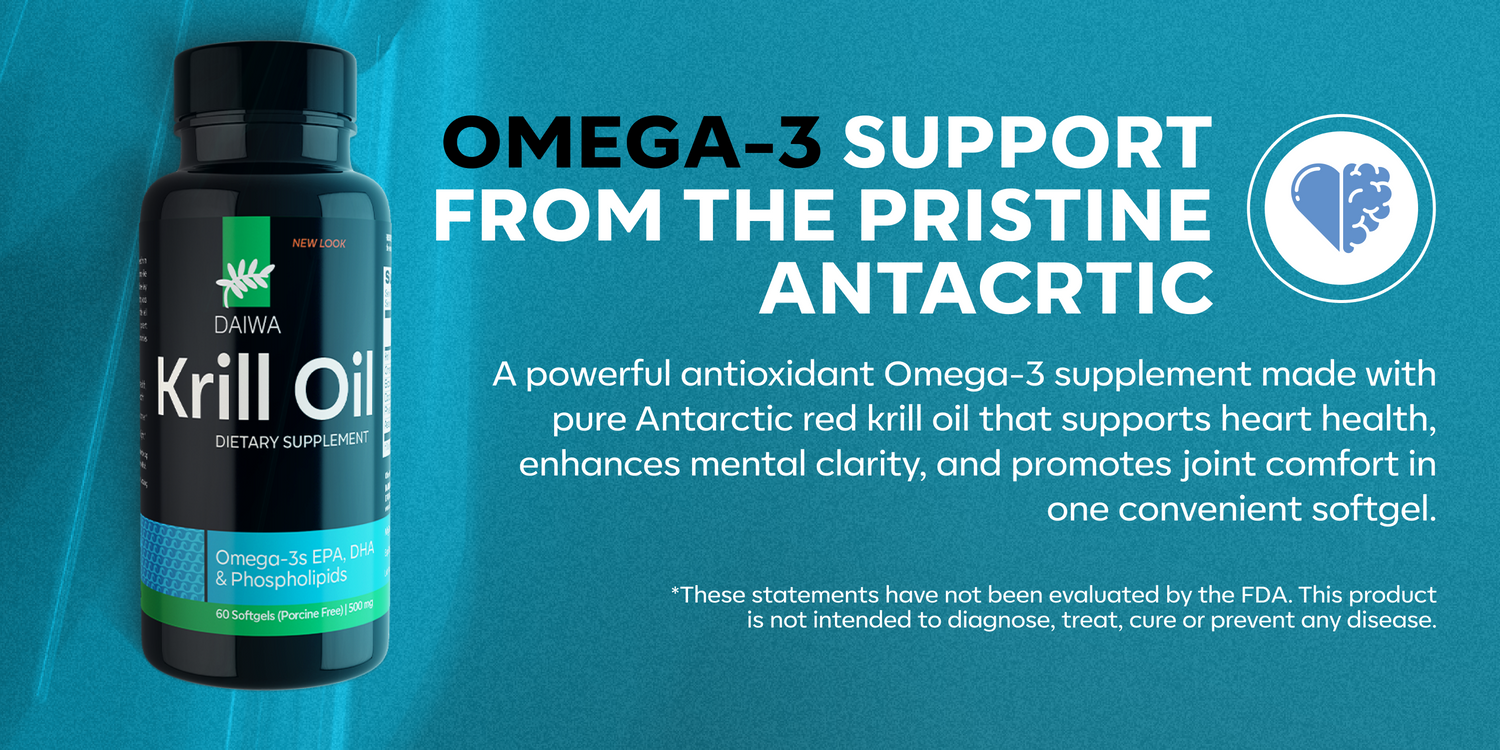
Standard fish oil wastes up to 68% of its EPA and DHA because the fats aren't bound to phospholipids. Daiwa Krill Oil delivers omega-3s in phospholipid form, the same structure your cell membranes use, plus natural astaxanthin for antioxidant protection.
Learn MoreIntroduction: Understanding Omega-3 Sources for Heart and Brain Health
supporting both cardiovascular and cognitive health, omega-3 fatty acids are among the most well-researched and effective nutritional interventions. However, not all omega-3 sources are created equal. The choice between krill oil and fish oil can significantly impact how effectively your body absorbs and utilizes these essential fatty acids for both heart and brain protection.
This complete comparison guide examines krill oil versus fish oil specifically for heart and brain health, analyzing bioavailability, clinical evidence, cost-effectiveness, and practical considerations to help you make an informed decision based on your health goals and priorities.
What are the key differences between krill oil and fish oil?
Molecular Structure: The Fundamental Difference
The most significant difference between krill oil and fish oil lies in how omega-3 fatty acids are structured within each supplement:
Krill Oil Structure:
- Omega-3s (EPA and DHA) are primarily bound to phospholipids (30-65% of total omega-3s)
- Phospholipids are amphipathic molecules (both water- and fat-soluble)
- Natural presence of astaxanthin antioxidant
- Smaller, more easily absorbed particles
Fish Oil Structure:
- Omega-3s are primarily bound to triglycerides
- Triglycerides are purely fat-soluble
- Typically requires added antioxidants (like vitamin E)
- Larger particles requiring more digestive processing
This structural difference has profound implications for absorption, bioavailability, and delivery to both the cardiovascular system and brain.
Source and Sustainability
Krill Oil:
- Derived from Antarctic krill (Euphausia superba)
- Small crustaceans at the base of the marine food chain
- Lower on food chain = fewer contaminants
- Regulated by CCAMLR (Commission for the Conservation of Antarctic Marine Living Resources)
- Sustainability certifications available (MSC certified options)
Fish Oil:
- Derived from fatty fish (salmon, mackerel, sardines, anchovies)
- Higher on food chain = potential for more contaminants
- Requires molecular distillation for purity
- Sustainability varies by source and fishing practices
- Look for MSC certified or sustainably sourced options
How does bioavailability differ between krill oil and fish oil?
Absorption and Blood Levels
The phospholipid structure of krill oil fundamentally changes how omega-3s are absorbed and incorporated into your body, with significant implications for both cardiovascular and cognitive health.
Clinical Evidence:
A landmark 2013 randomized crossover trial published in Lipids in Health and Disease provided compelling evidence for krill oil's superior bioavailability:
- Study Design: Healthy volunteers consumed equal doses of omega-3s (600 mg EPA+DHA per day) from either krill oil or fish oil for 4 weeks
- Results: Krill oil led to significantly higher omega-3 levels in both plasma and red blood cells
- Omega-3 Index: Krill oil raised the Omega-3 Index (percentage of EPA+DHA in red blood cell membranes) more effectively than fish oil
- Implication: Krill oil achieves equivalent or greater tissue incorporation at potentially lower doses
Mechanism of Superior Absorption:
- Phospholipid Advantage: Phospholipids are amphipathic (both water- and fat-soluble), allowing them to form stable emulsions in the digestive tract more easily than triglycerides
- Direct Integration: Phospholipid-bound omega-3s can integrate directly into cell membranes without extensive enzymatic breakdown
- Smaller Particle Size: Krill oil particles are smaller and more readily absorbed
- Natural Emulsification: The phospholipid structure acts as a natural emulsifier, enhancing solubility and absorption
Practical Implications:
- Dose Efficiency: You may need 40-60% less krill oil to achieve equivalent blood omega-3 levels compared to fish oil
- Cost Consideration: While krill oil costs more per capsule, its superior absorption may make it more cost-effective per unit of absorbed omega-3
- Tolerability: Many users report fewer "fishy burps" and digestive issues with krill oil, possibly due to quicker absorption
Brain Delivery: The Critical Difference for Cognitive Health
Perhaps the most significant advantage of krill oil for brain health lies in its superior delivery of DHA to the brain.
Blood-Brain Barrier Penetration:
- Phospholipid-Bound DHA: DHA attached to phosphatidylcholine (the form in krill oil) is the preferred form the brain utilizes for uptake
- Transport Mechanisms: The brain has specific transport mechanisms for phospholipids that facilitate easier entry across the blood-brain barrier
- Animal Studies: Research demonstrates that phospholipid-bound omega-3s lead to significantly higher brain DHA content compared to triglyceride forms
Clinical Evidence for Brain Benefits:
A 2013 randomized controlled trial in Japan involving 45 healthy elderly men (ages 61-72) found:
- Brain Activation: Krill oil supplementation (2 g/day for 12 weeks) led to significantly greater activation in the prefrontal cortex during working memory tasks, measured by near-infrared spectroscopy
- Processing Speed: The krill oil group showed improved cognitive processing speed (shorter P300 latency on EEG), while the control group showed age-related slowing
- Comparison with Fish Oil: While both omega-3 sources showed benefits, the krill oil group tended to perform better on complex tasks and showed stronger brain oxygenation signals
This suggests that krill oil's superior bioavailability translates into measurable cognitive advantages, particularly for higher-order executive functions.
Cardiovascular Health Comparison: Krill Oil vs Fish Oil
Triglyceride Reduction
Both krill oil and fish oil can reduce triglycerides, a major cardiovascular risk factor, but research suggests krill oil may be more effective per unit of omega-3 consumed.
Krill Oil Research:
- Clinical studies show 10-15% reductions in triglycerides with krill oil supplementation
- Effective at lower doses due to superior bioavailability
- Some studies show improvements in HDL ("good") cholesterol as well
Fish Oil Research:
- Extensive research supports fish oil's triglyceride-lowering effects
- Typically requires higher doses (2-4 grams daily) for significant effects
- Well-documented in large clinical trials (REDUCE-IT, JELIS)
Key Finding: Due to krill oil's superior absorption, you may achieve similar triglyceride reductions with lower doses of krill oil compared to fish oil.
For more details, see How do krill oil supplements compare to regular omega. For more details, see heart & circulation supplements. For more details, see brain health supplements. For more details, see Krill Oil vs Fish Oil Paleo. For more details, see Best Supplements for Cardiovascular and Cognitive. For more details, see Daiwa Brain Health®. For more details, see Krill Oil's Emerging Role in Cognitive Function. For more details, see Inflammation Support Bundle.Blood Pressure Management
Both omega-3 sources support healthy blood pressure, but the mechanisms and effectiveness may differ.
Krill Oil:
- Studies show modest blood pressure reductions (2-4 mmHg systolic, 1-2 mmHg diastolic)
- May be more effective per unit of omega-3 due to better absorption
- Natural astaxanthin may provide additional cardiovascular benefits
Fish Oil:
- Meta-analyses show consistent blood pressure reductions (2-4 mmHg systolic, 1-2 mmHg diastolic)
- Extensive research backing from large clinical trials
- Well-established safety profile
Verdict: Both are effective, but krill oil's superior bioavailability may provide advantages at lower doses.
Anti-Inflammatory Effects
Both krill oil and fish oil reduce inflammation, a key driver of cardiovascular disease, but krill oil offers additional antioxidant protection.
Krill Oil Advantages:
- Natural Astaxanthin: Provides powerful antioxidant protection that fish oil lacks
- Phospholipid Structure: May enhance anti-inflammatory effects through better cellular incorporation
- Synergistic Benefits: Astaxanthin and omega-3s work together to reduce inflammation
Fish Oil:
- Well-documented anti-inflammatory effects through EPA and DHA
- Requires added antioxidants (typically vitamin E) for stability
- Extensive research on inflammatory markers (CRP, IL-6, TNF-alpha)
Research Note: Studies comparing krill oil and fish oil for inflammation markers show both are effective, with some studies suggesting krill oil may have advantages due to its unique composition.
Cognitive Health Comparison: Krill Oil vs Fish Oil
Brain DHA Delivery
The most critical difference for cognitive health lies in how effectively each source delivers DHA to the brain.
Krill Oil Advantages:
- Phospholipid-Bound DHA: The preferred form for brain uptake
- Enhanced Blood-Brain Barrier Crossing: More efficient transport mechanisms
- Higher Brain DHA Content: Animal studies show significantly higher brain DHA levels with phospholipid-bound omega-3s
- Clinical Evidence: Human studies show improved brain activation and processing speed with krill oil
Fish Oil:
- Triglyceride Form: Requires enzymatic breakdown before brain uptake
- Less Efficient Delivery: More complex pathway to reach brain cells
- Still Effective: Fish oil does raise brain DHA levels, just less efficiently than krill oil
Key Insight: For cognitive health specifically, krill oil's phospholipid structure provides a significant advantage in delivering DHA where it's needed most.
Memory and Cognitive Performance
Krill Oil Research:
- 2013 Japanese study showed improved cognitive processing speed and brain activation
- Animal studies show better memory performance in Alzheimer's models
- May be more effective for executive function and complex cognitive tasks
Fish Oil Research:
- Extensive observational studies link fish consumption (rich in omega-3s) to better cognitive aging
- Some clinical trials show cognitive benefits, though results are mixed
- Large trials (VITAL) show modest or no benefits in healthy populations
Important Note: Both sources provide cognitive benefits, but krill oil's superior bioavailability and brain delivery may provide advantages, particularly for older adults or those with cognitive concerns.
Neuroprotection
Krill Oil:
- Astaxanthin Protection: Natural antioxidant that crosses blood-brain barrier
- Reduced Oxidative Stress: Astaxanthin directly protects brain cells from free radical damage
- Synergistic Effects: Omega-3s and astaxanthin work together for complete neuroprotection
Fish Oil:
- Provides omega-3 benefits for neuroprotection
- Typically requires added antioxidants for product stability
- Well-researched for reducing neuroinflammation
Verdict: Krill oil's natural astaxanthin provides an additional layer of neuroprotection that fish oil lacks.
Cost-Effectiveness Analysis
Price Comparison
Fish Oil:
- Typically $10-30 per bottle (60-120 capsules)
- Lower cost per milligram of omega-3
- Widely available and competitively priced
- Generic options available at lower cost
Krill Oil:
- Typically $25-50 per bottle (60-120 capsules)
- Higher cost per milligram of omega-3
- Premium pricing reflects superior bioavailability
- Fewer generic options
Value Analysis
When considering cost-effectiveness, it's important to factor in bioavailability:
Scenario 1: Equivalent Absorption
- If krill oil provides 40-60% better absorption, you may need less to achieve the same blood levels
- Example: 1 gram of krill oil may equal 1.5-2 grams of fish oil in terms of absorbed omega-3s
- This narrows the cost gap significantly
Scenario 2: Maximum Benefits
- For individuals prioritizing optimal heart and brain health, krill oil's superior bioavailability and additional benefits (astaxanthin) may justify the premium
- The enhanced brain delivery and antioxidant protection provide value beyond basic omega-3 content
Recommendation:
- Budget-Conscious: Fish oil provides excellent value and proven benefits
- Optimal Health: Krill oil's superior bioavailability and additional benefits may justify the investment
- Combination Approach: Some individuals use krill oil for targeted support and fish oil for general maintenance
Safety and Side Effects Comparison
General Safety
Both krill oil and fish oil are generally safe for most individuals when taken at recommended doses.
Common Side Effects:
- Fish Oil: More commonly associated with "fishy burps," digestive upset, and aftertaste
- Krill Oil: Generally better tolerated with fewer digestive issues
- Both: May have mild blood-thinning effects at high doses
Contamination Concerns
Krill Oil:
- Lower on food chain = fewer contaminants
- Antarctic source = pristine waters
- Still requires third-party testing for purity
Fish Oil:
- Higher on food chain = potential for more contaminants
- Requires molecular distillation for purity
- Quality varies by manufacturer and source
Recommendation: Choose products from reputable manufacturers with third-party testing and purity certifications.
Medication Interactions
Both Sources:
- May have mild blood-thinning effects
- Consult healthcare provider if taking anticoagulants (warfarin, heparin, DOACs)
- May interact with blood pressure medications
- Generally safe but medical supervision recommended for high-risk individuals
Which Should You Choose for Heart and Brain Health?
Choose Krill Oil If:
- You prioritize maximum bioavailability: Want the most efficient absorption and utilization
- Cognitive health is a primary concern: Superior brain delivery of DHA
- You want additional antioxidant protection: Natural astaxanthin provides neuroprotection
- You experience digestive issues with fish oil: Krill oil is generally better tolerated
- You're willing to invest in premium quality: Higher cost but potentially better value per absorbed omega-3
Recommended Product: Daiwa Krill Oil - Premium Antarctic krill oil with phospholipid-bound omega-3s and natural astaxanthin
Choose Fish Oil If:
- Budget is a primary consideration: Lower cost per milligram of omega-3
- You want extensive research backing: Decades of clinical trials and studies
- You prefer traditional omega-3 source: Well-established and familiar
- You need higher doses: Fish oil typically provides more omega-3 per capsule
- You're satisfied with proven benefits: Fish oil provides excellent cardiovascular and cognitive support
Combination Approach
Some individuals use both sources strategically:
- Krill oil for targeted support: Higher bioavailability for specific health goals
- Fish oil for general maintenance: Cost-effective daily omega-3 intake
- Rotating approach: Alternating between sources for variety
Practical Recommendations
Dosage Guidelines
Krill Oil:
- General health: 500-1000 mg daily (100-300 mg EPA+DHA)
- Cardiovascular support: 1-2 grams daily (200-600 mg EPA+DHA)
- Cognitive support: 2 grams daily (as used in cognitive studies)
Fish Oil:
- General health: 500-1000 mg EPA+DHA daily
- Cardiovascular support: 1-2 grams EPA+DHA daily
- High-dose protocols: 2-4 grams EPA+DHA daily (under medical supervision)
Key Point: Due to krill oil's superior bioavailability, lower doses may achieve similar benefits to higher fish oil doses.
Quality Considerations
For Both Sources:
- Choose products from reputable manufacturers
- Look for third-party testing and purity certifications
- Check for freshness (rancidity indicates poor quality)
- Verify EPA/DHA content on label
- Consider sustainability certifications (MSC for fish oil, CCAMLR compliance for krill oil)
Krill Oil Specific:
- Verify phospholipid content
- Check for astaxanthin content
- Look for Antarctic source verification
Fish Oil Specific:
- Verify molecular distillation for purity
- Check for added antioxidants
- Consider source (wild-caught vs. Farmed)
★★★★★ Trusted by thousands of customers
Ready to Switch From Fish Oil?
Daiwa Krill Oil is absorbed up to 68% more efficiently than standard fish oil, contains natural astaxanthin, and comes with zero fish burps. Over 12,000 customers have already made the upgrade.
Shop Daiwa Krill OilFree shipping on orders over $50 · 30-day guarantee
Conclusion: Making Your Decision
Both krill oil and fish oil provide essential omega-3 fatty acids that support both cardiovascular and cognitive health. The choice between them depends on your priorities, budget, and specific health goals.
Key Takeaways:
- Krill oil offers superior bioavailability: 40-60% better absorption means more efficient delivery to both heart and brain
- Krill oil provides better brain delivery: Phospholipid-bound DHA is the preferred form for brain uptake
- Krill oil includes natural antioxidants: Astaxanthin provides additional neuroprotection
- Fish oil remains an excellent choice: Proven benefits, extensive research, and budget-friendly
- Both support heart and brain health: The most important factor is consistent, adequate omega-3 intake
Our Recommendation:
For individuals prioritizing optimal heart and brain health outcomes, krill oil offers significant advantages in bioavailability, brain delivery, and additional antioxidant protection. However, high-quality fish oil remains an excellent and cost-effective option for supporting cardiovascular and cognitive health.
The best choice is the one you'll take consistently. Whether you choose krill oil or fish oil, the most important factor is maintaining adequate omega-3 intake over the long term to support both your cardiovascular system and cognitive function.
Related Resources
- Cardiovascular Health & Cognitive Function Guide - Complete hub page
- How to Improve Heart and Brain Health Naturally - Implementation guide
- Omega-3 Dosage for Heart and Brain Health - Detailed dosing protocols
- Daiwa Krill Oil Product Page - Premium krill oil supplement
- Krill Oil Research Studies - Scientific evidence
- FAQ Page - Common questions
References & Scientific Sources
- Enhanced increase of omega-3 index in healthy individuals with response to 4-week n-3 fatty acid supplementation from krill oil versus fish oil - Clinical trial comparing bioavailability
- Omega-3 Fatty Acids and Cardiovascular Disease - American Heart Association scientific statement
- NIH Research on Omega-3 Fatty Acids - National Institutes of Health findings
- FDA Dietary Supplement Information - Regulatory guidance




Leave a comment
All comments are moderated before being published.
This site is protected by hCaptcha and the hCaptcha Privacy Policy and Terms of Service apply.