
How do krill oil supplements compare to regular omega-3 fish oil?
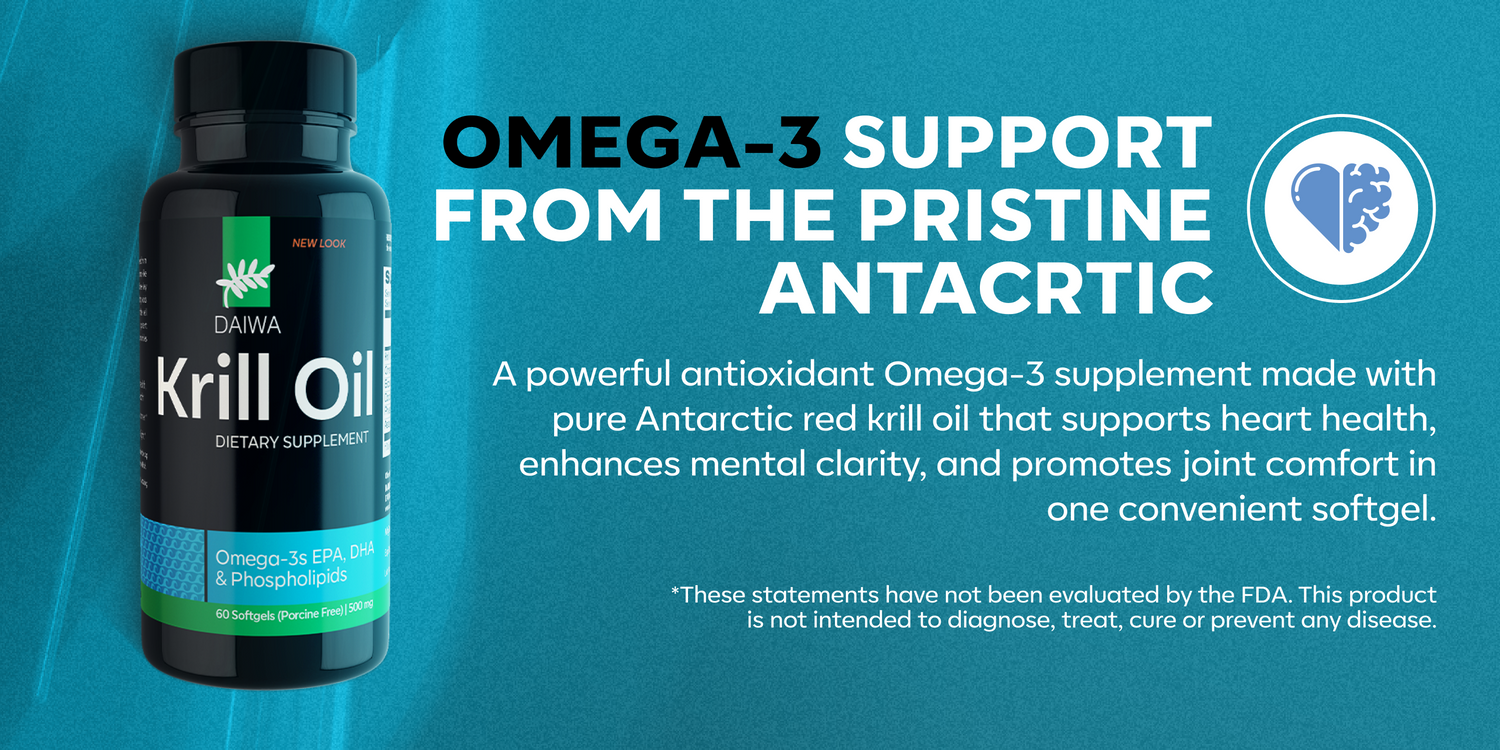
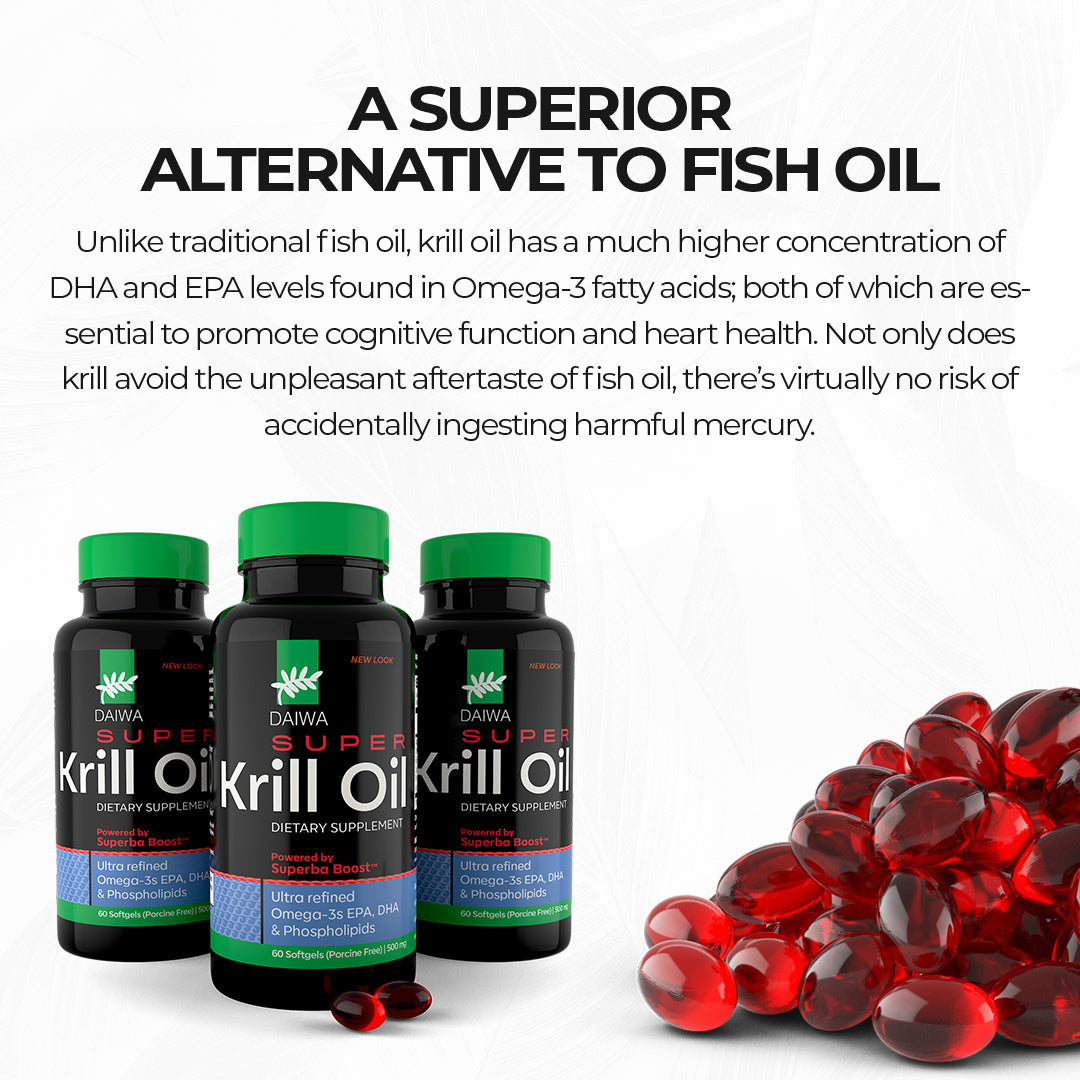
Answer: Most omega-3 supplements rely on fish oil but Daiwa Health's krill oil is molecularly superior because of its Phospholipid-based structure improves absorption by up to 2-3× compared to triglyceride-based fish oils. Naturally mercury-free and sustainably sourced from pristine Antarctic waters. No aftertaste or burps, thanks to krill’s unique composition. Higher EPA/DHA bioavailability, supporting both heart rhythm and cognitive function.
Fish accumulate omega-3s by eating marine plants. But krill eat the algae directly, resulting in purer, fresher oils and higher nutrient density.
Daiwa’s extraction process preserves these delicate compounds.
omega-3 supplements, the shelves are dominated by two main contenders: traditional fish oil and the newer krill oil. Both promise to deliver essential fatty acids that support heart health, brain function, and overall wellness. But which one truly delivers better results? This complete krill oil vs fish oil omega-3 comparison will help you make an informed decision about which supplement deserves a place in your daily routine.
What Are Krill Oil and Fish Oil?
Fish Oil: The Traditional Choice
Fish oil has been the gold standard for omega-3 supplementation for decades. Extracted from fatty fish like salmon, mackerel, sardines, and anchovies, fish oil contains two primary omega-3 fatty acids:

- EPA (Eicosapentaenoic acid) - supports heart health and reduces inflammation
- DHA (Docosahexaenoic acid) - crucial for brain function and eye health
Krill Oil: The Marine Alternative
Krill oil comes from tiny, shrimp-like crustaceans called Antarctic krill. These microscopic creatures are abundant in the ocean and serve as a primary food source for whales, seals, and fish. Krill oil contains the same omega-3s as fish oil (EPA and DHA) but in a different molecular structure.
Key Differences: Krill Oil vs Fish Oil Absorption
One of the most significant factors in any krill oil vs fish oil omega-3 comparison is how well your body can absorb and utilize these nutrients.
Phospholipid vs. Triglyceride Structure
The fundamental difference lies in how the omega-3s are packaged:
Krill Oil:
- Omega-3s are bound to phospholipids
- Similar to the structure found in human cell membranes
- May enhance bioavailability and cellular uptake
Fish Oil:
- Omega-3s are typically in triglyceride or ethyl ester form
- Requires additional processing by the body for absorption
- May have lower bioavailability compared to phospholipid-bound omega-3s
Clinical Evidence on Absorption
Several studies have examined krill oil vs fish oil absorption rates:
- A 2011 study published in Lipids found that krill oil required a lower dose to achieve similar blood levels of omega-3s compared to fish oil
- Research suggests that the phospholipid structure in krill oil may allow for better incorporation into cell membranes
- Some studies indicate that krill oil may be absorbed more efficiently, though more research is needed to confirm this consistently
Krill Oil vs Fish Oil Health Benefits: A Detailed Analysis
When comparing krill oil vs fish oil health benefits, both supplements offer impressive advantages, but with some notable differences.
For more details, see Best Supplements for Cardiovascular and Cognitive. For more details, see Daiwa Krill Oil. For more details, see Krill Oil's Emerging Role in Cognitive Function. For more details, see brain health supplements. For more details, see Daiwa Brain Health®. For more details, see Krill Oil Research Studies. For more details, see heart & circulation supplements. For more details, see Inflammation Support Bundle.Cardiovascular Health
Both supplements support heart health through:
- Reducing triglyceride levels
- Supporting healthy blood pressure
- Reducing inflammation markers
- Improving overall cardiovascular function
Krill oil may have an edge because:
- Contains astaxanthin, a powerful antioxidant that may provide additional cardiovascular protection
- Some studies suggest better improvement in cholesterol profiles
Brain and Cognitive Function
Fish oil benefits:
- Extensive research supporting cognitive health
- Higher DHA concentrations in many formulations
- Well-established benefits for memory and learning
Krill oil advantages:
- Phospholipid-bound DHA may cross the blood-brain barrier more effectively
- Astaxanthin provides neuroprotective antioxidant effects
- May support cognitive function with lower doses
Anti-Inflammatory Effects
Both supplements help reduce inflammation, but krill oil may offer enhanced benefits due to:
- The presence of astaxanthin, which has potent anti-inflammatory properties
- Better cellular uptake potentially leading to more effective inflammation reduction
- Some studies showing superior reduction in inflammatory markers
Joint Health
Research suggests both supplements can support joint health, but krill oil may provide:
- More effective reduction in joint stiffness and pain
- Better improvement in functional mobility
- Enhanced benefits due to the combination of omega-3s and astaxanthin
Upgrade Your Omega-3 Absorption
Standard fish oil wastes up to 68% of its EPA and DHA because the fats aren't bound to phospholipids. Daiwa Krill Oil delivers omega-3s in phospholipid form, the same structure your cell membranes use, plus natural astaxanthin for antioxidant protection.
Learn MoreAdditional Factors to Consider
Sustainability and Environmental Impact
Fish Oil:
- Sourcing can impact wild fish populations
- Look for MSC-certified sustainable sources
- Some concerns about overfishing
Krill Oil:
- Antarctic krill are abundant, but harvesting is regulated
- Generally considered more sustainable when properly managed
- Lower on the food chain, potentially reducing environmental impact
Purity and Contaminants
Fish Oil:
- May contain higher levels of mercury and other contaminants
- Requires careful purification processes
- Quality varies significantly between brands
Krill Oil:
- Generally lower in heavy metals and contaminants
- Krill's position low on the food chain reduces bioaccumulation
- Often considered purer than fish oil
Cost Considerations
- Krill oil typically costs more than fish oil
- Higher price may be justified by better absorption and additional antioxidants
- Consider cost per effective dose rather than just bottle price
Potential Side Effects and Considerations
Common Side Effects
Fish Oil:
- Fishy aftertaste and burping
- Digestive upset in some individuals
- Potential blood-thinning effects
Krill Oil:
- Generally fewer digestive issues
- Less likely to cause fishy aftertaste
- May cause allergic reactions in those with shellfish allergies
Who Should Avoid Each Supplement
Avoid krill oil if you have:
- Shellfish or seafood allergies
- Bleeding disorders (without medical supervision)
Use caution with fish oil if you have:
- Fish allergies
- Are taking blood-thinning medications
Making the Right Choice for You
Choose Krill Oil If:
- You want potentially better absorption
- You experience digestive issues with fish oil
- You prefer a supplement with additional antioxidants
- You don't have shellfish allergies
- Budget allows for the higher cost
Choose Fish Oil If:
- You want the most researched omega-3 supplement
- You need higher doses of EPA/DHA
- You're looking for a more budget-friendly option
- You have shellfish allergies
- You prefer a supplement with decades of research backing
Dosage Recommendations
General Guidelines
Fish Oil:
- Typical dose: 1-3 grams daily
- Look for combined EPA/DHA content
- Higher doses may be needed for therapeutic effects
Krill Oil:
- Typical dose: 500mg-2g daily
- Lower doses may be effective due to better absorption
- Start with manufacturer's recommended dose
Consulting Healthcare Providers
Always consult with a healthcare provider before starting any omega-3 supplement, especially if you:
- Take medications
- Have existing health conditions
- Are pregnant or nursing
- Plan to take high doses
★★★★★ Trusted by thousands of customers
Ready to Switch From Fish Oil?
Daiwa Krill Oil is absorbed up to 68% more efficiently than standard fish oil, contains natural astaxanthin, and comes with zero fish burps. Over 12,000 customers have already made the upgrade.
Shop Daiwa Krill OilFree shipping on orders over $50 · 30-day guarantee
The Bottom Line
In this complete krill oil vs fish oil omega-3 comparison, both supplements offer valuable health benefits. Krill oil may have advantages in terms of absorption, additional antioxidants, and fewer side effects, while fish oil offers extensive research backing and typically better value for money.
The best choice depends on your individual needs, budget, health goals, and any allergies or sensitivities you may have. Consider trying both (at different times) to see which works better for your body, and always prioritize quality, third-party tested products regardless of which option you choose.
Remember that omega-3 supplements work best as part of a healthy lifestyle that includes a balanced diet, regular exercise, and other wellness practices. Whether you choose krill oil or fish oil, you're taking a positive step toward supporting your long-term health and well-being.





Leave a comment
All comments are moderated before being published.
This site is protected by hCaptcha and the hCaptcha Privacy Policy and Terms of Service apply.