Beyond Inflammation: Krill Oil's Emerging Role in Cognitive Function and Neuroprotection for an Aging Population
The global demographic landscape is undergoing a profound and unprecedented transformation, widely recognized as the "global aging crisis." As societies worldwide experience increased longevity and declining birth rates, the proportion of older adults is expanding rapidly, creating significant societal, economic, and healthcare challenges. By 2030, the number of individuals aged 60 and over is projected to reach 1.4 billion, a substantial increase from 1.0 billion in 2020. This trajectory is set to continue, with forecasts indicating that this demographic will swell to 2.1 billion by 2050. This "graying planet" has intensified the focus on maintaining health and independence in older age, particularly brain health, as age is unequivocally the strongest risk factor for cognitive decline and neurodegenerative conditions such as dementia.
Parallel to this aging trend is the mounting public health crisis of dementia. An estimated 57 million people were living with dementia globally in 2021, and this number is projected to skyrocket to 78 million by 2030 and an alarming 139 million by 2050 – a ~140% increase in cases from 2021 to 2050. With no cure or universally effective treatment for dementia currently available, the focus has shifted emphatically towards prevention and lifestyle interventions, underscoring the urgent need for accessible and effective neuroprotective strategies. Against this backdrop, nutritional interventions, particularly those involving omega-3 fatty acids, are garnering considerable attention as vital building blocks for brain structure and function. This research brief explores the emerging role of krill oil, a unique source of omega-3s, in supporting cognitive function and neuroprotection for an aging population, delving into its distinctive properties and significant market implications.
Key Takeaways
- The global aging crisis is necessitating urgent focus on brain health, with dementia cases projected to reach 139 million by 2050.
- Omega-3 fatty acids, particularly DHA, are crucial for brain structure and function, contributing ~20% of the brain's fat content.
- Higher omega-3 intake is consistently linked to superior cognitive aging, including better memory and faster processing speed.
- Beyond general anti-inflammation, omega-3s exert direct neuroprotective effects, combating neuroinflammation and oxidative stress in the brain.
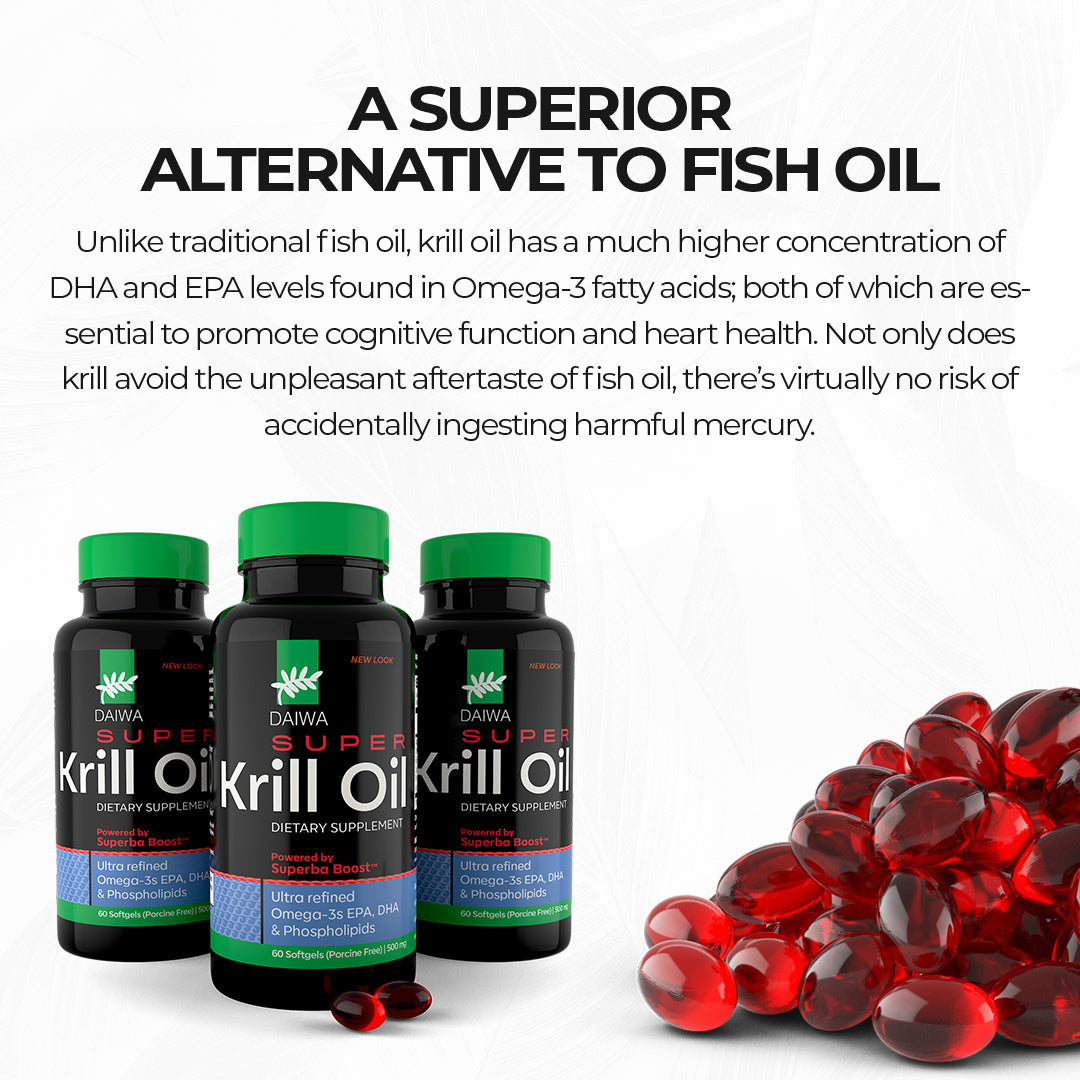
- Krill oil delivers EPA/DHA in a highly bioavailable phospholipid form, enhanced by the antioxidant astaxanthin.
- Clinical studies suggest krill oil may offer superior omega-3 bioavailability compared to fish oil, potentially boosting blood EPA+DHA levels more effectively.
- Emerging research highlights krill oil's potential to protect brain cells from age-related damage, showing promise in preventing neuron loss and reducing cellular aging markers.
1. Executive Summary
The global demographic landscape is undergoing a profound and unprecedented transformation, widely recognized as the "global aging crisis." As societies worldwide experience increased longevity and declining birth rates, the proportion of older adults is expanding rapidly, creating significant societal, economic, and healthcare challenges. By 2030, the number of individuals aged 60 and over is projected to reach 1.4 billion, a substantial increase from 1.0 billion in 202018. This trajectory is set to continue, with forecasts indicating that this demographic will swell to 2.1 billion by 205018. This demographic shift, where older adults will constitute approximately 22% of the global population by 2050 (up from roughly 13% in 2020), represents a historical first in terms of its scale and speed. This "graying planet" has intensified the focus on maintaining health and independence in older age, particularly brain health, as age is unequivocally the strongest risk factor for cognitive decline and neurodegenerative conditions such as dementia2. Parallel to this aging trend is the mounting public health crisis of dementia. An estimated 57 million people were living with dementia globally in 2021, a figure increasing by nearly 10 million new cases each year3. This equates to a new dementia diagnosis approximately every three seconds. Projections indicate a staggering rise in cases to 78 million by 2030 and an alarming 139 million by 20504. This ~140% increase in cases from 2021 to 2050 will place immense strain on healthcare systems and caregiving resources globally, especially in low- and middle-income countries, where about 80% of older people will reside by 205029. The economic burden is already substantial, with dementia costing an estimated US $1.3 trillion in 20195, a cost projected to exceed $2 trillion by 2030 if current trends persist. This includes direct medical care and lost productivity, but notably, approximately 50% of these costs are borne by families as informal care expenses5. With no cure or universally effective treatment for dementia currently available, the focus has shifted emphatically towards prevention and lifestyle interventions, underscoring the urgent need for accessible and effective neuroprotective strategies6. Against this backdrop, nutritional interventions, particularly those involving omega-3 fatty acids, are garnering considerable attention. The human brain, composed of approximately 60% fat, relies heavily on omega-3 docosahexaenoic acid (DHA), which constitutes roughly 20% of its total fat content8. This fundamental role in neuronal membranes and signaling pathways highlights the critical importance of omega-3s for optimal brain structure and function. Higher omega-3 levels have been consistently associated with better cognitive aging, manifesting as superior memory recall, faster processing speed, and larger brain volumes in key regions among older adults with elevated blood omega-3 indices compared to those with lower status9. This research brief explores the emerging role of krill oil, a unique source of omega-3s, in supporting cognitive function and neuroprotection for an aging population, delving into its distinctive properties and significant market implications. ### 1.1. The Intensifying Focus on Brain Health Amidst a Global Aging Crisis The unprecedented shift in global demographics, wherein the segment of the population aged 60 and above is growing at an accelerated rate, presents both triumphs in human longevity and formidable challenges. From 1 billion individuals in 2020, this cohort is expected to swell to 1.4 billion by 2030 and a remarkable 2.1 billion by 205018. This demographic transformation is of critical concern because advanced age is the single most significant risk factor for age-related cognitive decline and neurodegenerative diseases such as Alzheimer's disease and other forms of dementia. The World Health Organization (WHO) has highlighted that common conditions in older age, such as dementia, account for a substantial portion of disability and dependency among older people globally2. The inevitable consequence of a rapidly expanding elderly population is a corresponding dramatic increase in the prevalence of age-related cognitive disorders, pushing neuroprotective strategies to the forefront of public health and scientific inquiry. The scale of the dementia crisis is alarming. In 2021, an estimated 57 million people worldwide were living with dementia3. This figure is projected to skyrocket, reaching 78 million by 2030 and an overwhelming 139 million by 20504. These numbers represent a dramatic escalation in disease burden, with approximately 10 million new cases diagnosed each year—equivalent to one new diagnosis every three seconds3. The personal toll of dementia, characterized by progressive loss of memory, thinking skills, and the ability to carry out daily activities, is immense, leading to a diminished quality of life for individuals and significant emotional and physical strain on caregivers. Beyond the human suffering, the economic impact of dementia is colossal. In 2019, the global cost of dementia was estimated at approximately $1.3 trillion USD5. This figure, representing about 1.5% of the worldwide gross domestic product (GDP) for that year, is expected to soar past $2 trillion by 2030 if current trends continue5. These costs encompass direct medical care, social care services, and the often-overlooked informal care provided by families, which accounts for roughly 50% of the total economic burden5. The burgeoning prevalence, combined with an absence of a cure, has compelled public health experts and policymakers to emphasize risk reduction and the adoption of brain-healthy lifestyles as the primary defense against the impending dementia epidemic6. Maintaining cognitive function is not merely about preventing disease; it is critical for promoting independent living, reducing healthcare expenditures, and sustaining the overall well-being of an aging populace. This urgent imperative has catalyzed businesses and healthcare systems to explore a wide array of interventions, including nutritional supplementation, to support proactive brain health. ### 1.2. Omega-3 Fatty Acids: Essential Building Blocks for Brain Structure and Function The human brain is a marvel of biological engineering, unique in its composition and intense metabolic demands. It is remarkably rich in lipids, with approximately two-thirds of its dry weight consisting of fat. Among these crucial fats, omega-3 fatty acids, particularly docosahexaenoic acid (DHA), play an indispensable structural and functional role. DHA alone constitutes roughly 20% of the brain's total fat content8. This highly concentrated presence of DHA, particularly within neuronal membranes and synapses, underscores its vital importance in maintaining the integrity and fluidity of brain cells, facilitating efficient neurotransmission, and supporting neuroplasticity—the brain’s ability to form new connections and adapt. Sufficient DHA is essential for optimal brain development, and maintenance of cognitive function throughout life; conversely, deficiencies have been linked to impaired cognition and accelerated brain aging. Beyond their structural contributions, omega-3 fatty acids (EPA and DHA) are potent modulators of biological processes, well-recognized for their anti-inflammatory and antioxidant properties. While their ability to combat systemic inflammation throughout the body is well-established, cutting-edge research is now revealing their direct neuroprotective effects, specifically within the brain. Chronic neuroinflammation and oxidative stress are hallmarks of the aging brain and are implicated in the pathogenesis of various neurodegenerative diseases. Microglia, the brain's resident immune cells, can become overactive with age, releasing pro-inflammatory cytokines that can damage synapses and neurons, thereby accelerating cognitive decline10. EPA and DHA counteract these detrimental processes by serving as precursors to specialized pro-resolving mediators (SPMs) such as resolvins and protectins, which actively dampen inflammatory responses and promote tissue repair. Furthermore, omega-3s contribute to cerebrovascular health by improving blood flow and reducing triglyceride levels, ensuring that brain cells receive adequate oxygen and nutrients, which is crucial for preventing vascular dementia and stroke-related cognitive impairment. Observational evidence consistently links higher dietary intake of omega-3s, primarily through the consumption of fatty fish, with superior cognitive outcomes in aging populations. A comprehensive meta-analysis published in 2024, synthesizing data from numerous observational studies, reported that individuals with the highest fish consumption exhibited an approximately 18% lower risk of both cognitive impairment/decline and dementia compared to those with low fish intake11. A detailed dose-response analysis within this meta-analysis suggested a curvilinear relationship, with progressively lower risk observed up to an intake of approximately 150 grams of fish per day, indicating a potential dose-dependent protective effect12. Long-term studies further reinforce these findings: one notable cohort study found that seniors consuming fish at least once a week had up to a 60% lower risk of developing Alzheimer’s disease compared to those who rarely or never ate fish13. These population-level trends provide compelling correlational evidence, aligning perfectly with the mechanistic understanding of omega-3s' role in maintaining brain health. Cultures with seafood-rich diets, such as the Mediterranean and Japanese populations, often exhibit lower incidences of age-related cognitive decline, further supporting the protective role of omega-3s. Beyond dietary questionnaires, biomarker studies offer more objective evidence. Higher levels of the omega-3 index (the percentage of EPA+DHA in red blood cell membranes) in older adults are correlated with better memory performance, faster processing speed, and larger brain volumes in critical areas like the hippocampus and cortex9. Conversely, a deficiency in omega-3s has been associated with accelerated brain atrophy and poorer cognitive scores. These findings suggest that maintaining optimal omega-3 status may effectively slow down age-related "brain shrinkage" and preserve cognitive reserve. The expanding understanding of omega-3s has shifted their perception "beyond inflammation," solidifying their status as crucial neuroprotective agents that can directly safeguard cognitive function in older age. ### 1.3. Krill Oil: A Superior Delivery Mechanism with Added Neuroprotective Benefits While omega-3 fatty acids are broadly recognized for their benefits, krill oil presents itself as a uniquely potent and effective source, distinguishing itself from conventional fish oil through two primary features: its phospholipid-bound omega-3s and the presence of the powerful antioxidant astaxanthin. The most significant distinction lies in the form of its omega-3 fatty acids. Unlike fish oil, where EPA and DHA are predominantly bound to triglycerides, krill oil delivers its omega-3s primarily in phospholipid form76, 77. This structural difference translates into a substantial advantage in bioavailability and cellular incorporation. Phospholipids, being amphipathic molecules, are the fundamental building blocks of all cell membranes, including those in the brain. When omega-3s are naturally bound to phospholipids, they integrate more readily into the lipid bilayers of cells and are efficiently absorbed into the bloodstream. A randomized crossover clinical trial published in 2013 provided compelling evidence of this superior absorption: healthy volunteers consuming 600 mg of omega-3 (EPA+DHA) from krill oil daily exhibited significantly higher increases in their blood plasma and red blood cell omega-3 levels (Omega-3 Index) compared to those receiving an equivalent 600 mg dose from fish oil over a four-week period15, 16. This suggests that krill oil can achieve equivalent, or even greater, tissue incorporation of omega-3s at lower doses, making it a more efficient delivery system. For an aging population, optimizing nutrient delivery to the brain is paramount. Importantly, DHA linked to phosphatidylcholine is considered the preferred form for brain utilization78. The phospholipid structure of krill oil's omega-3s may facilitate more direct and efficient transport across the blood-brain barrier, which is otherwise highly selective. Animal studies support this hypothesis, demonstrating that phospholipid-bound omega-3s significantly increase brain DHA content more effectively than triglyceride forms79, 80. This mechanistic advantage offers a strong rationale for krill oil's potential in cognitive enhancement, by effectively ferrying more DHA to the brain cells where it is critically needed. The second distinctive component of krill oil is the natural presence of **astaxanthin**14. This vibrant red carotenoid, responsible for the characteristic color of krill and wild-caught salmon, acts as a powerful antioxidant. Within the krill oil itself, astaxanthin plays a crucial role in preventing the oxidation (rancidity) of the fragile omega-3 fatty acids, thus enhancing the product's stability and freshness. More critically for brain health, astaxanthin is one of the few antioxidants known to effectively cross the blood-brain barrier. Once in the brain, it can directly neutralize free radicals and reduce oxidative stress, both of which are major contributors to neuroinflammation and neuronal damage in aging. This synergistic effect—astaxanthin protecting the omega-3s in the capsule and then providing direct neuroprotection in the brain—adds a powerful dimension to krill oil's benefits that is not typically found in standard fish oil. The enhanced bioavailability of krill oil has practical implications for consumers. Clinical observations suggest that krill oil at doses around 2 grams per day may achieve similar or superior omega-3 blood profiles compared to fish oil at 4 grams per day15, 16. Furthermore, krill oil is often better tolerated by individuals who experience common side effects like fishy burps or gastrointestinal distress from fish oil, possibly due to its quicker absorption and the smaller capsule sizes typically used. The combination of easy absorption, direct brain delivery, and built-in antioxidant protection positions krill oil as a premium omega-3 supplement, leading many nutraceutical companies to market it as a "next-generation" option, often at a premium price point. ### 1.4. Emerging Research: Krill Oil's Cognitive and Neuroprotective Potential Early research into krill oil's specific effects on cognitive function and neuroprotection is highly promising, albeit still developing, with both preclinical and human studies providing encouraging insights. In animal models, krill oil has demonstrated robust neuroprotective capabilities. A 2020 study using a mouse model genetically engineered for Alzheimer's symptoms found that krill oil supplementation significantly improved spatial learning and memory. These Alzheimer's model mice, when fed krill oil, spent approximately 35% of their time in the correct target quadrant during a Morris water maze probe trial, a marked improvement compared to the mere 26% observed in untreated Alzheimer's mice and comparable to healthy controls81. Furthermore, the krill oil-treated mice exhibited shorter escape latencies, indicating faster learning, and showed clear reductions in oxidative damage markers and neuronal cell death in brain tissue82, 83. Another compelling study in 2022, utilizing _C. elegans_ (roundworm) models of Parkinson’s disease and aging, highlighted krill oil’s ability to preserve dopaminergic neurons. In the Parkinson’s model worms, krill oil supplementation prevented approximately 20% neuron loss that occurred in untreated controls, resulting in nearly 90% neuron survival by mid-adulthood17. The same study also revealed a broad anti-aging effect at the cellular level, with krill oil reducing cellular aging markers (e.g., senescent cells indicated by β-galactosidase activity) by 35% in normal aging worms and a remarkable 60% in Parkinson’s model worms compared to controls18. These preclinical findings underscore krill oil's capacity to act on multiple aging pathways—antioxidant, anti-inflammatory, and anti-apoptotic—to safeguard neural function. In human trials, while the body of evidence is smaller than for fish oil, initial randomized controlled trials (RCTs) suggest cognitive benefits, particularly in older adults. A landmark 12-week RCT conducted in Japan in 2013 involved 45 healthy elderly men (ages 61–72) supplementing with 2 grams/day of krill oil84. Although the krill group did not show statistically significant changes in standard neuropsychological tests compared to placebo, functional brain imaging (near-infrared spectroscopy) revealed significantly greater activation in the dorsolateral prefrontal cortex during working memory tasks85. This indicates that krill oil enhanced the brain’s energetic response and efficiency during cognitive engagement. Moreover, electroencephalography (EEG) measurements showed that the krill group's P300 latency—a recognized brainwave marker of cognitive processing speed—decreased by the end of the trial, whereas it increased (indicating slower processing) in the control group86, 87. This suggests that krill oil might help counteract the age-related slowing of information processing. The study also included a fish oil group, and both omega-3 sources demonstrated cognitive improvements compared to placebo on some measures88. Notably, the krill group tended to perform better on complex calculation tasks and showed marginally stronger brain oxygenation signals than the fish oil group, a finding potentially attributable to krill's phospholipid-bound omega-3s being "more efficiently" incorporated into brain cell membranes89, 90. However, the scientific landscape is not without its complexities. It is crucial to acknowledge that not all trials evaluating omega-3s for cognitive function have yielded positive results. For example, the large-scale VITAL trial in the U.S. (published 2022), which involved over 3,000 older adults taking 1 gram of fish oil daily for about 2.5 years, reported no significant difference in global cognitive decline when compared to a placebo group19. Such mixed findings highlight several critical considerations: the potential influence of dosage, intervention duration, the baseline omega-3 status of participants, the presence of specific genetic predispositions (e.g., APOE4 status), and the stage of cognitive impairment at which the intervention is initiated20, 21. It is increasingly believed that omega-3 interventions may be most effective when initiated earlier, targeting individuals with lower baseline omega-3 levels or those experiencing mild cognitive impairment (MCI). Moreover, omega-3s are likely not a standalone "cure" for dementia but rather elements within a broader, multi-component brain-healthy lifestyle, as demonstrated by studies like the FINGER trial (2015), which showed significant cognitive improvements from a combination of diet, exercise, and cognitive training. Despite these caveats, the overall consensus is that omega-3 fatty acids, whether from fish or krill oil, contribute positively to brain health. While individual study results may vary, meta-analyses generally indicate a modest but consistent protective effect of long-chain omega-3 intake on cognition across various populations22. Krill oil’s distinctive properties offer a compelling rationale for its specialized role, yet larger, well-designed confirmatory trials in humans are necessary to solidify its position and provide more definitive guidance on its optimal use, particularly in specific subgroups (e.g., those with MCI) and for particular cognitive outcomes. ### 1.5. Implications for Aging Populations, Healthcare, and the Krill Oil Market The confluence of a rapidly aging global population, the escalating burden of dementia, and the emerging science on krill oil's neuroprotective potential carries significant implications for older adults, the healthcare sector, and the nutraceutical industry. For older adults, the evidence, though still evolving, provides a strong rationale for ensuring adequate omega-3 intake. Health professionals increasingly recommend dietary sources like fatty fish (salmon, sardines, mackerel) two to three times per week, or daily supplementation for those with insufficient dietary intake. While specific dosages for cognitive benefits are still being optimized, typical recommendations range from 250-500 mg of DHA+EPA for general health, with some research employing higher doses (1-2 grams/day) for brain aging. Omega-3 supplements, whether from fish or krill, are generally considered safe, carry a low risk of side effects, and offer collateral benefits for heart and joint health, making them a reasonable proactive measure. Individuals on blood-thinning medications should consult their physician before starting high-dose omega-3 supplementation. The projected surge in dementia cases necessitates a proactive public health and policy response. Healthcare systems are exploring preventative nutritional strategies at a population level. This includes promoting brain-healthy dietary patterns like the MIND diet, which emphasizes fish consumption, and updating dietary guidelines for seniors to specifically highlight the cognitive benefits of omega-3s. Memory clinics and geriatric practices are incorporating discussions about omega-3 intake into patient assessments, recognizing it as a modifiable lifestyle factor. Longer-term, there may be discussions about food fortification with DHA or targeted supplementation programs for high-risk elderly populations, provided cost-benefit analyses support such widespread interventions to delay dementia onset. The increasing consumer awareness and scientific interest in cognitive wellness have spurred substantial growth in the nutraceutical sector. The global krill oil market, valued at approximately USD 997 million in 2023, is projected to reach USD 1.21 billion by 2025 and a substantial USD 3.28 billion by 2035, exhibiting a robust 10.5% Compound Annual Growth Rate (CAGR) from 2025–203523, 24. This rapid expansion is driven by consumer demand for products supporting heart, joint, and brain health. Supplement brands are actively launching specialized "brain health" omega-3 formulations. For example, Kori Krill Oil (USA) launched its "Mind & Body" supplement in May 2022, combining krill oil with other neuro-supportive ingredients like Vitamin B12 and curcumin, explicitly marketing it for memory support and nervous system health13. This trend reflects an industry shift from generic omega-3 products to targeted solutions for specific health concerns, catering to older consumers proactively seeking to maintain cognitive vitality. However, this booming market also brings critical responsibilities, particularly regarding sustainability and ethics. Antarctic krill, a keystone species in the Southern Ocean ecosystem, forms the base of the food web for whales, seals, and penguins. The demand for krill oil has led to a significant increase in annual krill catch volumes, quadrupling since 200725. This rapid expansion has raised ecological concerns, underscored by recent reports of humpback whales becoming entangled in krill fishing gear in 202425. Industry leaders are under increasing pressure to demonstrate sustainable harvesting practices. Organizations like the Marine Stewardship Council (MSC) are involved in certification, and leading krill oil producers are investing in research and adhering to quotas set by bodies like CCAMLR (Commission for the Conservation of Antarctic Marine Living Resources) to minimize environmental impact. Companies that prioritize and verify eco-friendly practices are likely to gain a competitive advantage as consumers and retailers increasingly demand transparency and ethical sourcing. Furthermore, research into alternative, sustainable omega-3 sources like algal oil is gaining traction to mitigate pressure on wild fisheries. In conclusion, krill oil, with its superior bioavailability due to phospholipid-bound omega-3s and the added neuroprotective benefits of astaxanthin, offers a compelling proposition for supporting cognitive function and neuroprotection in an aging population. While the evidence continues to accumulate, particularly from large-scale human trials, the mechanistic advantages and early research findings position krill oil as a significant player in the growing market for brain health supplements. For individuals, incorporating omega-3-rich foods or supplements like krill oil into a holistic, brain-healthy lifestyle appears to be a prudent strategy. For the healthcare industry and policymakers, it represents a potentially scalable, low-risk intervention that could contribute to mitigating the immense societal challenges posed by the global aging crisis and the rising burden of dementia. The continued growth of the krill oil market necessitates a firm commitment to sustainability to ensure that the pursuit of human brain health does not come at the expense of ecological balance. The subsequent sections of this report will delve deeper into the specific mechanisms of action of krill oil, a comprehensive review of clinical trials, the role of sustainability, and current market trends, providing a more detailed analysis for stakeholders.
2. The Global Burden of Cognitive Decline in an Aging Population
The 21st century is defined by an unprecedented demographic shift: humanity is aging at a rate unforeseen in history. This profound transformation in global demographics, characterized by increasing life expectancy and declining birth rates, has far-reaching implications across all facets of society, none more critical than the escalating challenge of maintaining cognitive health in an older population. As the cohort of individuals aged 60 and over expands exponentially, the prevalence of age-related cognitive decline, and its most severe manifestation, dementia, presents a mounting public health crisis with significant economic and social repercussions worldwide. The urgency to identify and implement effective preventative and neuroprotective strategies has never been greater, as the search for curative treatments continues amidst grim projections of rising case numbers and associated costs.2.1 The Global Demographic Shift: A Graying Planet
The world is experiencing a demographic revolution with profound consequences. The number of people aged 60 and over is projected to surge dramatically in the coming decades, a phenomenon often referred to as the "global graying" of the planet. In 2020, there were approximately 1 billion individuals worldwide aged 60 or older. This number is not only expected to grow to 1.4 billion by 2030 but is further projected to reach an staggering 2.1 billion by 2050[18]. Such a demographic shift implies that by 2050, the absolute number of older adults will have more than doubled from 2020 levels, with their share of the global population rising from approximately 13% in 2020 to around 22% in 2050[18]. This trajectory is unprecedented and underscores a complex interplay of increased life expectancy due to advances in healthcare, nutrition, and sanitation, coupled with declining birth rates across many regions. This demographic transformation, while a testament to human progress, brings with it a crucial challenge: safeguarding the neurological health of an expanding elderly population. Age is, unequivocally, the most significant risk factor for both cognitive decline and dementia[2]. As individuals live longer, they spend more years at risk for developing memory loss and neurodegenerative diseases. This inherent link creates a pressing demand for proactive interventions and research into neuroprotective strategies that can preserve cognitive function and quality of life into advanced age. The World Health Organization (WHO) highlights that this demographic shift has significant implications for health systems and economic development, emphasizing the essential need for proactive strategies to minimize their impact[7]. Societies face the imperative to adapt their health infrastructures and social support systems to accommodate this burgeoning older cohort, all while confronting the escalating burden of cognitive disorders.2.2 The Escalating Burden of Dementia: A Public Health Crisis
The aging global population directly fuels a rapidly escalating public health crisis: dementia. This progressive neurodegenerative condition, characterized by a decline in cognitive function severe enough to interfere with daily life, is no longer a localized concern but a worldwide epidemic.2.2.1 Current and Projected Prevalence
The latest estimates reveal a disquieting reality: an estimated 57 million people were living with dementia globally in 2021[3]. This figure is not static; it is growing at an alarming rate, with nearly 10 million new cases diagnosed each year. This translates to approximately one new dementia diagnosis occurring every three seconds, underscoring the rapid spread and increasing prevalence of the condition amidst an aging global populace[3]. The projections for dementia prevalence paint an even starker picture:- By 2030, the number of individuals living with dementia is forecast to reach 78 million[4].
- By mid-century, in 2050, this number is projected to soar to 139 million[4].
2.2.2 The Staggering Economic Cost
Beyond the profound human suffering and diminished quality of life, dementia imposes an immense financial burden on economies worldwide. In 2019, the global cost of dementia was estimated at approximately US $1.3 trillion[5]. To put this figure into perspective, it represented roughly 1.5% of the worldwide Gross Domestic Product (GDP) that year. A significant portion of this cost, approximately 50%, is attributed to informal care provided by families, underscoring the substantial, often uncompensated, contribution of relatives in managing the disease[5]. The trajectory of this economic burden is deeply concerning. If current trends persist, global dementia costs are projected to surpass $2 trillion by 2030[5]. This escalating financial strain encompasses direct medical care, social care services, and lost productivity due to the disease, making the urgent need for cost-effective preventative interventions paramount. The table below summarizes the key demographic and economic statistics related to dementia:| Metric | Value | Source/Notes |
|---|---|---|
| Global population 60+ (2020) | 1 billion | WHO[18] |
| Global population 60+ (Projected 2030) | 1.4 billion | WHO[18] |
| Global population 60+ (Projected 2050) | 2.1 billion | WHO[18] |
| Global dementia cases (2021) | 57 million | WHO[3] |
| New dementia cases annually | ~10 million | WHO[3] (one every ~3 seconds) |
| Dementia cases (Projected 2030) | 78 million | WHO estimates, via Silkway News[4] |
| Dementia cases (Projected 2050) | 139 million | WHO estimates, via Silkway News[4] (~140% increase from 2021) |
| Global dementia cost (2019) | USD $1.3 trillion | WHO[5] (~1.5% of global GDP) |
| Projected dementia cost (2030) | Exceed $2 trillion | WHO[5] |
| Prevalence in women aged 65+ | 8.1% | Silkway News[5] |
| Prevalence in men aged 65+ | 5.4% | Silkway News[5] |
2.2.3 The Absence of a Cure and the Focus on Prevention
Despite intense and ongoing scientific research, a universally effective cure or treatment for Alzheimer's disease (the most common form of dementia) or other major dementia types remains elusive. This critical void has refocused expert attention towards prevention, risk reduction, and the promotion of brain-healthy lifestyles as the primary defense against the escalating dementia crisis. Organizations like Alzheimer's Disease International (ADI) strongly emphasize that risk reduction is the most viable strategy for combating the dementia epidemic[3]. Maintaining cognitive function into old age is crucial not only for an individual's independent living but also for alleviating the immense pressure on healthcare systems and caregiving networks. The WHO underscores that people worldwide are living longer, making the prevention of functional decline and the promotion of healthy aging essential to minimizing the impact of age-related conditions[7]. This paradigm shift has prompted widespread interest from both the business sector and public health systems in exploring various interventions, including nutritional strategies, to proactively support brain health.2.3 Urgency for Preventative and Neuroprotective Strategies
Given the dire projections regarding dementia prevalence and cost, the global community faces an unprecedented urgency to develop and deploy effective preventative and neuroprotective strategies. This section delves into the foundational role of omega-3 fatty acids in brain health and how such nutritional interventions are gaining prominence.2.3.1 Omega-3 Fatty Acids as a Foundation for Optimal Brain Health
The human brain is a remarkably lipid-rich organ. It is composed of roughly 60% fat by dry weight[8]. Among these lipids, omega-3 fatty acids, particularly docosahexaenoic acid (DHA), play a disproportionately vital role. DHA alone constitutes approximately 20% of the brain's total fat content[8]. This high concentration underscores its critical importance as a structural component of neuronal membranes, especially within gray matter and synapses. Adequate DHA is essential for maintaining the fluidity and integrity of cell membranes, which in turn facilitates optimal neurotransmission and supports neuroplasticity – the brain's ability to form new connections and adapt. The implication of this fundamental role is significant: consistent intake of omega-3 fatty acids, especially DHA and EPA (eicosapentaenoic acid), is intrinsically linked to better cognitive aging outcomes. Observational studies and biomarker research consistently reinforce this connection:- Improved Cognitive Metrics: Older adults with higher blood omega-3 indices—a measure of DHA and EPA levels in red blood cell membranes—demonstrate superior memory recall, faster processing speed, and larger brain volumes in key cognitive regions, such as the hippocampus and cortex, compared to those with lower omega-3 status[10]. This suggests that maintaining optimal omega-3 levels may help mitigate age-related brain shrinkage and preserve cognitive reserve.
- Dietary Links to Reduced Risk: Population studies robustly link higher intake of fish and omega-3s with improved cognitive aging. A comprehensive 2024 meta-analysis encompassing numerous observational studies concluded that individuals with high fish consumption exhibited approximately an 18% lower risk of cognitive impairment/decline and a similar 18% lower risk of dementia compared to those with low fish intake[11]. The analysis even suggested a dose-dependent effect, with consuming up to approximately 150 grams of fish per day correlating with progressively lower risk.
- Impact on Alzheimer's Risk: A long-term prospective study notably observed that seniors consuming fish at least once a week had up to a 60% lower risk of developing Alzheimer's disease compared to those who rarely ate fish[11]. This protective effect was particularly evident in individuals without the APOE-ε4 genetic risk allele, hinting that dietary omega-3s might confer the greatest benefit in those more responsive to lifestyle factors.
2.3.2 Beyond Inflammation: Direct Neuroprotective Effects
While omega-3 fatty acids, particularly EPA and DHA, are widely recognized for their potent anti-inflammatory properties, which help combat systemic inflammation, emerging research is uncovering their direct neuroprotective mechanisms within the brain. The aging brain is often characterized by chronic, low-grade neuroinflammation and increased oxidative stress. Activated microglia, the brain's resident immune cells, can produce pro-inflammatory cytokines that inflict damage on synapses and accelerate cognitive decline[12]. Omega-3s intervene in this process by promoting the synthesis of specialized pro-resolving mediators (SPMs) like resolvins and protectins, which actively dampen inflammatory responses and facilitate cellular repair. Beyond managing inflammation, omega-3s also bolster the brain's defenses against oxidative stress and engage directly in cellular protection:- Preservation of Neuronal Integrity: In preclinical animal models, krill oil, a highly bioavailable source of omega-3s, has demonstrated remarkable neuroprotective capabilities. For instance, a 2022 study utilizing a *C. elegans* (roundworm) model of Parkinson’s disease revealed that krill oil supplementation preserved approximately 90% of dopaminergic neurons by mid-adulthood, a stark contrast to less than 70% neuron survival in untreated controls[6]. This protective effect was significant because aging typically caused a 20-25% loss of these neurons in the Parkinsonian worms, a loss that krill oil effectively prevented. This highlights krill oil's robust neuroprotective properties in a preclinical aging model.
- Reduction of Cellular Aging Markers: The same 2022 study also showed that krill oil markedly reduced cellular aging markers. Treated animals exhibited 35% fewer senescent cells in normal aging worms and 60% fewer in the Parkinson’s-model worms compared to controls[6]. Senescent cells, which accumulate with age and contribute to inflammation and tissue dysfunction, are often identified by elevated β-galactosidase activity. The significant reduction in these markers by krill oil suggests a broad anti-aging effect on cellular health within the nervous system.
2.3.3 The Growing Omega-3 Supplement Market and Consumer Trends
The increasing awareness of omega-3s' importance for health has fueled a booming dietary supplement market. A 2022 survey by the Council for Responsible Nutrition (CRN) reported that 75% of U.S. adults take dietary supplements. Notably, over half (52%) of these supplement users consume a "specialty" supplement, a category that includes omega-3 fish or krill oils, probiotics, and similar products[9]. This indicates widespread consumer belief in the health benefits of omega-3s. Supplement usage tends to be highest among older adults, women, and those with higher educational attainment, groups that are often more proactive about managing their health and cognitive wellness[9]. The global krill oil market exemplifies this growth, reflecting a specific interest in advanced omega-3 formulations. Valued at approximately USD 997 million in 2023, the market is projected to reach USD 1.21 billion by 2025[4]. Looking further ahead, sales are forecast to reach USD 3.28 billion by 2035, representing a compound annual growth rate (CAGR) of 10.5% from 2025 to 2035[4]. This rapid expansion is primarily driven by rising consumer awareness of omega-3 benefits for heart, joint, and brain health. Krill oil, in particular, is gaining traction due to perceived higher efficacy and purity, leading companies to expand production. This booming market, however, also brings responsibilities, particularly concerning sustainable krill harvesting and product quality.2.4 Krill Oil's Unique Advantages: Bioavailability and Antioxidant Protection
Krill oil distinguishes itself from traditional fish oil through unique biochemical characteristics that may confer enhanced efficacy, especially for cognitive health. These include its phospholipid-bound omega-3s and the natural presence of the powerful antioxidant, astaxanthin.2.4.1 Enhanced Bioavailability and Brain Uptake
A key differentiator for krill oil is that its omega-3 fatty acids, EPA and DHA, are primarily bound to phospholipids, rather than the triglyceride form found in most fish oils. This structural difference is critical because phospholipid-bound omega-3s are believed to be more effectively incorporated into cellular membranes and transported throughout the body, including the brain. Phospholipids, particularly phosphatidylcholine, are integral components of cell membranes and are the preferred form the brain uses for DHA transport[8]. Research supports this bioavailability advantage:- Superior Blood Plasma Levels: A 2013 randomized crossover trial demonstrated that consuming krill oil led to significantly higher omega-3 levels in plasma and red blood cells compared to an equal dose of omega-3s from fish oil. Specifically, 600 mg of omega-3s from krill oil raised participants' blood EPA+DHA levels more effectively than 600 mg from fish oil after just four weeks, indicating superior bioavailability[16]. This suggests that krill oil achieves equivalent or greater tissue incorporation at potentially lower doses.
- Crossing the Blood-Brain Barrier (BBB): The phospholipid structure of krill oil's omega-3s may facilitate more efficient transport across the blood-brain barrier. Animal studies have shown that when omega-3s are administered in phospholipid form, they increase brain DHA content significantly more than when given in triglyceride form[8]. This is because phospholipid carriers can be actively taken up by lipid transport mechanisms in the endothelial cells forming the BBB, enabling easier entry into the brain where DHA is needed for neuronal structure and function.
2.4.2 Astaxanthin: A Natural Neuroprotective Antioxidant
Another significant advantage of krill oil is its natural content of astaxanthin, a powerful red carotenoid antioxidant responsible for the distinctive color of krill and wild salmon[14]. Astaxanthin serves a dual purpose within krill oil:- Stabilization of Omega-3s: Astaxanthin acts as a potent natural stabilizer for the delicate omega-3 fatty acids in krill oil, preventing their oxidation and maintaining product freshness and efficacy. Many fish oil supplements require added synthetic antioxidants like vitamin E for this purpose.
- Direct Neuroprotection: Beyond its role as a preservative, astaxanthin itself possesses direct neuroprotective properties. It can cross the blood-brain barrier, making it available to brain cells. Studies have indicated that astaxanthin effectively reduces oxidative stress and inflammation within neurons, potentially contributing to the prevention of cognitive decline[19]. In krill oil, astaxanthin works synergistically with omega-3s, providing both internal antioxidant protection for the oil and external antioxidant benefits to the consumer's brain.
2.5 Emerging Clinical Evidence and Future Research Needs
While the mechanistic and preclinical evidence for krill oil's neuroprotective potential is compelling, human clinical trials are crucial to validate its efficacy in an aging population. Although research is still emerging, initial findings are promising, though mixed evidence also highlights the complexity of nutritional interventions in cognitive health.2.5.1 Promising Human Clinical Trials
Early clinical trials have begun to suggest that krill oil can positively influence cognitive parameters, particularly in older adults:- Enhanced Brain Activation: A 2013 randomized controlled trial in Japan involved 45 healthy elderly men (ages 61–72) who received 2 g/day of krill oil, fish oil, or placebo for 12 weeks[8]. While standard memory tests did not show dramatic changes, near-infrared spectroscopy revealed significantly greater activation in the prefrontal cortex during working memory tasks in the krill oil group compared to placebo[8]. This suggested that krill oil enhanced the brain's functional response, improving blood oxygenation in key areas during cognitive effort.
- Improved Cognitive Processing Speed: The same Japanese trial also utilized electroencephalography (EEG) to measure P300 latency, a biomarker for cognitive processing speed. The krill oil group exhibited a significant decrease (shortening) in P300 latency by week 12, indicating faster information processing, whereas the control group experienced a lengthening of this latency, suggesting age-related cognitive slowing[8]. This suggests krill oil may help counteract some aspects of age-related cognitive decline.
2.5.2 Nuances, Mixed Evidence, and Targeted Approaches
Despite the promising findings, the landscape of omega-3 research for cognitive function is not without complexities and mixed results. For instance, a major 2022 U.S. study, the VITAL trial, involved over 3,000 older adults taking 1 gram/day of fish oil for approximately 2.5 years but reported no significant difference in global cognitive decline compared to placebo[15]. Such mixed outcomes underscore several critical considerations:- Dosage and Duration: The optimal dosage and duration of omega-3 intervention to elicit cognitive benefits remain subjects of ongoing research. Some benefits may require higher doses, longer intervention periods, or both.
- Baseline Omega-3 Status and Genetics: The efficacy of omega-3 supplementation might be more pronounced in individuals with low baseline omega-3 levels or specific genetic predispositions (e.g., APOE4 status).
- Population Heterogeneity: Effects may differ between healthy older adults, those with mild cognitive impairment (MCI), or individuals already diagnosed with dementia. Prevention strategies are likely more effective than attempts at reversing established pathology.
- Holistic Lifestyle Factors: Omega-3s are not a standalone "cure." Their benefits are likely maximized when integrated into a comprehensive brain-healthy lifestyle encompassing diet, physical activity, mental stimulation, social engagement, and management of cardiovascular risk factors. For example, the FINGER trial (Finland, 2015) showed significant cognitive improvements with a multi-domain intervention (diet, exercise, cognitive training).
2.6 Strategic Implications for an Aging World
The profound demographic shifts and the escalating burden of cognitive decline coalesce to create a compelling strategic imperative for older adults, healthcare systems, and industry stakeholders alike.2.6.1 Empowering Older Adults and Informing Healthcare Policy
For older adults, the growing body of evidence surrounding omega-3s presents an actionable strategy for cognitive wellness. Many health professionals now recommend adequate omega-3 intake either through dietary sources (e.g., 2-3 servings of fatty fish per week) or supplementation for those with insufficient dietary intake. A general target of 250-500 mg DHA+EPA per day is often cited for overall health, with higher doses (1-2 g/day) explored in some cognitive research. While not a panacea, omega-3 supplements are relatively low-risk and offer additional benefits for cardiovascular and joint health, making them a sensible proactive measure. Individuals considering krill oil, especially those on blood thinners, should consult their physician due to potential mild anti-coagulant effects. Public health initiatives and policy adjustments are also critical. The sheer scale of impending dementia cases necessitates a population-level approach to prevention. This could involve:- Dietary Guidelines: Promoting brain-healthy dietary patterns like the MIND diet, which emphasizes foods rich in omega-3s, antioxidants, and vitamins.
- Food Fortification: Exploring food fortification with DHA, similar to practices in infant formula, or targeted supplementation programs for high-risk elderly populations.
- Healthcare Integration: Integrating discussions about diet and omega-3 intake into routine geriatric and memory clinic visits, alongside other modifiable risk factors like exercise and blood pressure control.
2.6.2 Industry Innovation and Sustainability Imperatives
The growing demand for cognitive wellness solutions has spurred significant innovation and market growth within the nutraceutical industry. Supplement companies are increasingly launching specialized "brain health" omega-3 formulations, often combining krill oil with other nootropic ingredients. An example is the 2022 launch of "Mind & Body" by Kori Krill Oil, which paired krill oil with vitamin B12 and curcumin, specifically targeting memory and nervous system support[13]. This trend reflects a shift from generic supplements to targeted solutions driven by consumer anxieties about cognitive aging. Beyond supplements, the food and beverage industry is also responding by fortifying products with omega-3s from sources like algae, catering to a broader, health-conscious consumer base. However, the rapid growth in krill oil demand also brings significant sustainability and ethical challenges. Antarctic krill, a keystone species in the Southern Ocean ecosystem, forms the base of the food chain for whales, seals, penguins, and other marine life. The quadrupling of krill catch volumes since 2007 to meet the skyrocketing demand for omega-3 supplements poses a serious threat to this fragile ecosystem[12]. Reports of humpback whales entangled in krill fishing gear in 2024 highlight the tangible ecological risks associated with unregulated or poorly managed harvesting practices[12]. This burgeoning ethical concern places pressure on industry leaders, such as Aker BioMarine, to demonstrate robust commitments to sustainable krill harvesting. This includes adhering to strict quotas set by international bodies like the Commission for the Conservation of Antarctic Marine Living Resources (CCAMLR), investing in marine protected areas, and developing improved fishing technologies to minimize bycatch and ecosystem disruption. Sustainable sourcing is not just an ethical imperative but is increasingly becoming a market differentiator, as consumers and retailers demand greater transparency and environmental responsibility from supplement brands. The krill oil industry serves as a crucial case study in balancing the potent health benefits of a natural resource with ecological stewardship. This tension is driving research into alternative, more sustainable omega-3 sources, such as algal oils, which could alleviate pressure on wild fisheries in the long term. The global demographic shift towards an older population presents both an immense challenge in combating cognitive decline and a significant opportunity for innovative health solutions. Krill oil, with its unique composition and emerging evidence for neuroprotective effects, stands at the forefront of these discussions. The imperative remains to continue rigorous research, advocate for holistic preventative strategies, and ensure that any widespread adoption of nutritional interventions like krill oil is underpinned by robust scientific validation and unyielding commitment to environmental sustainability. Looking ahead, the development and implementation of effective preventative strategies, including the strategic integration of neuroprotective nutrients, will be crucial in reshaping the future of cognitive health for the aging global population. The following section will delve deeper into the intricate mechanisms by which krill oil, beyond its known anti-inflammatory properties, exerts direct neuroprotective effects; this understanding is vital to fully grasp its potential in the fight against age-related cognitive decline.
3. Omega-3 Fatty Acids: Essential Nutrients for Brain Structure and Function
The human brain, a marvel of biological engineering, is arguably the most critical organ for maintaining independent living and quality of life, especially as individuals age. However, the rapidly expanding global elderly population faces an unprecedented challenge: an increasing prevalence of age-related cognitive decline and neurodegenerative diseases such as dementia. With no definitive cure for these conditions, the scientific and medical communities, alongside individuals, are increasingly focusing on preventative strategies and lifestyle interventions to support brain health throughout the lifespan. Prominently among these strategies is the optimized intake of specific nutrients, none more central to brain structure and function than omega-3 fatty acids, particularly docosahexaenoic acid (DHA) and eicosapentaenoic acid (EPA). The urgency of this focus is underscored by alarming demographic trends. By 2030, one in six people worldwide will be over the age of 60, totaling 1.4 billion individuals, a significant increase from 1.0 billion in 2020 which is projected to reach 2.1 billion by 20501. Age is recognized as the primary risk factor for dementia and cognitive decline, meaning this demographic shift directly correlates with a mounting public health crisis. In 2021, an estimated 57 million people globally were living with dementia, with nearly 10 million new cases diagnosed annually—approximately one new case every three seconds2. Projections indicate this number will reach 78 million by 2030 and a staggering 139 million by 20503. The economic burden is equally profound, with global costs attributed to dementia estimated at $1.3 trillion in 2019, a figure expected to escalate dramatically4. Given these projections, the imperative to identify effective nutritional interventions for brain health is stronger than ever. Omega-3 fatty acids represent a cornerstone of this preventative approach, foundational to the brain's very architecture and operational efficiency. This section will delve into their fundamental role in brain composition, neuronal health, their anti-inflammatory and vascular benefits, and the compelling observational evidence linking higher omega-3 intake to superior cognitive aging outcomes.3.1. The Brain's Fatty Composition: DHA as a Structural Imperative
The brain is an exceptionally lipid-rich organ, with approximately 60% of its dry weight composed of fat5. Among these lipids, polyunsaturated fatty acids (PUFAs) are critical, and the omega-3 family takes center stage. Specifically, docosahexaenoic acid (DHA), an omega-3 PUFA, constitutes a remarkable 20% of the brain's total fat content5. This high concentration is not accidental; DHA plays an indispensable structural role in neuronal membranes, particularly within the gray matter and at synaptic junctions. It imparts fluidity to cell membranes, a property crucial for efficient neurotransmission, receptor function, and overall neuronal signaling. The structural significance of DHA extends to key brain regions responsible for cognitive function. For instance, processes such as learning, memory formation, and information processing rely heavily on healthy synaptic plasticity—the ability of synapses to strengthen or weaken over time in response to activity. DHA’s presence in synaptic membranes is vital for maintaining this plasticity. Adequate levels of DHA and EPA are directly linked to fluid cell membranes, optimized neurotransmitter release, and the intricate processes of neuroplasticity (the brain’s capacity to form new connections and reorganize itself). This fundamental structural involvement clarifies why omega-3 intake is not merely beneficial but essential for both cognitive development in early life and its maintenance throughout aging. Conversely, deficiencies in omega-3s have been consistently linked to compromised cognitive function and accelerated cognitive decline in older adults.3.2. Beyond Structure: Anti-inflammatory and Vascular Benefits
While DHA's structural role is paramount, omega-3 fatty acids, including EPA and DHA, exert widespread neuromodulatory effects that contribute significantly to brain health. Their well-established anti-inflammatory properties are particularly relevant in the context of the aging brain. Chronic, low-grade inflammation, often termed "inflammaging," is a hallmark of the aging process and a significant contributor to neurodegenerative pathways. In the aging brain, activated microglia (the brain's resident immune cells) can become dysregulated, releasing pro-inflammatory cytokines that inflict damage on synapses and accelerate cognitive decline6. EPA and DHA effectively counteract this pathological process by serving as precursors to specialized pro-resolving mediators (SPMs) such as resolvins, protectins, and maresins. These bioactive compounds actively promote the resolution of inflammation, helping to "turn off" immune responses and prevent excessive collateral damage to neural tissues. Beyond their direct anti-inflammatory actions, omega-3s also confer substantial benefits to cerebrovascular health:- They help reduce triglyceride levels, a known cardiovascular risk factor.
- They can improve endothelial function, promoting healthier blood vessel walls.
- They contribute to maintaining optimal blood pressure.
3.3. Observational and Correlational Evidence: Omega-3s and Cognitive Aging
A substantial body of research, primarily from observational and population-based studies, consistently highlights a positive correlation between higher omega-3 intake and superior cognitive aging outcomes. These studies, while not proving direct causation, provide compelling evidence of association.3.3.1. Dietary Habits and Dementia Risk
Populations whose diets are rich in omega-3 fatty acids, often through regular consumption of fatty fish or marine oils, tend to exhibit better cognitive performance and a reduced risk of cognitive decline and dementia. A comprehensive meta-analysis published in 2024, pooling data from 15 observational studies, revealed a significant protective effect. It concluded that individuals with the highest fish consumption had an approximate 18% lower risk of developing cognitive impairment or decline, and similarly, an 18% lower risk of dementia, compared to those with the lowest fish intake7. This dose-response analysis suggested that consuming up to approximately 150 grams of fish per day was progressively associated with a reduced risk, implying a potential dose-dependent protective effect8. Longitudinal studies further reinforce these findings. For example, a long-term study conducted as part of the Chicago’s aging cohort found that seniors who consumed fish at least once per week had a substantially reduced risk of developing Alzheimer's disease, with a reduction of up to 60% compared to those who rarely or never ate fish9. This notable effect was particularly pronounced in individuals who did not possess the APOE-ε4 genetic risk allele, suggesting that dietary omega-3s might offer the greatest benefit to those whose cognitive resilience is more responsive to lifestyle factors9. These epidemiological patterns suggest that omega-3s play a crucial protective role in brain health throughout the lifespan. Furthermore, cultures with diets traditionally rich in seafood, such as the Mediterranean and Japanese diets, often report lower rates of age-related cognitive impairment, providing indirect support for the neuroprotective role of omega-3s.3.3.2. Biomarker Studies and Brain Metrics
Beyond dietary questionnaires, biomarker studies offer more direct evidence by correlating measured omega-3 levels in the body with objective brain metrics and cognitive performance. The "Omega-3 Index," which quantifies the percentage of EPA and DHA in red blood cell membranes, serves as a reliable and stable biomarker of long-term omega-3 status. Studies have demonstrated that older adults with a higher blood Omega-3 Index exhibit superior memory recall, faster processing speed, and, notably, larger brain volumes in key regions such as the hippocampus and cortex10. One study found that seniors in the top quartile of omega-3 blood levels had significantly larger total brain volume and performed better on tests assessing recall and executive function compared to those with low omega-3 status10. Conversely, a deficiency in omega-3s has been associated with accelerated brain shrinkage (atrophy) and poorer scores on various cognitive assessments. These findings suggest that maintaining optimal omega-3 status may effectively slow down the physiological "brain aging" process and help preserve cognitive reserve, thereby delaying the onset of age-related cognitive impairments. This convergence of observational and biomarker data strongly supports the notion that omega-3 fatty acids are indispensable for proactive brain health management, moving beyond their generalized anti-inflammatory benefits to directly impact neuronal structure, function, and resilience against age-related decline.3.4. Krill Oil's Unique Advantage: Phospholipid Delivery and Astaxanthin
While fish oil has traditionally been the go-to source for supplemental omega-3s, krill oil offers a distinctive profile that may provide unique advantages for cognitive function due to its chemical composition and accompanying bioactive compounds.3.4.1. Phospholipid-Bound Omega-3s: Enhanced Bioavailability and Brain Uptake
The primary differentiator for krill oil is that its omega-3 fatty acids (EPA and DHA) are predominantly bound to phospholipids, particularly phosphatidylcholine, rather than triglycerides, which is the form found in most fish oils11. This seemingly subtle structural difference has significant implications for absorption, cellular incorporation, and ultimately, brain delivery of omega-3s. The phospholipid-bound form of EPA and DHA is more hydrophilic (water-soluble) than triglyceride-bound omega-3s. This characteristic enables them to mix more readily with the aqueous environment of the gastrointestinal tract, leading to enhanced emulsification and better absorption into the bloodstream. A randomized crossover clinical trial from 2013 provided direct evidence for this superior bioavailability. When healthy volunteers were given equal doses of omega-3 (600 mg of EPA+DHA per day) from either krill oil or fish oil, the krill oil group exhibited significantly higher omega-3 levels in both plasma and red blood cells after just four weeks12,13. This improved Omega-3 Index with krill oil at an equivalent dose suggests that krill oil can achieve therapeutic omega-3 tissue concentrations more efficiently. Crucially for brain health, phospholipid-bound DHA and EPA are thought to cross the blood-brain barrier (BBB) more effectively. The brain itself preferentially incorporates DHA when it is attached to phosphatidylcholine14. Animal studies support this mechanism, demonstrating that omega-3s delivered in phospholipid form lead to significantly higher DHA content in brain tissue compared to equivalent amounts delivered as triglycerides15,16. This enhanced transport capacity is hypothesized to be due to specific lipid transport mechanisms in the brain's endothelial cells that facilitate the uptake of phospholipid complexes, whereas triglyceride forms typically require prior enzymatic breakdown before their fatty acid components can traverse the BBB. For older adults, this implies that krill oil could deliver higher concentrations of brain-beneficial omega-3s to where they are needed most, potentially maximizing cognitive benefits at lower dosages compared to conventional fish oil.3.4.2. Astaxanthin: The Built-in Neuroprotective Antioxidant
Another distinctive component of krill oil is the natural presence of astaxanthin, a powerful red carotenoid pigment that gives krill and wild salmon their characteristic reddish-orange coloration17. Astaxanthin provides a multi-pronged benefit in krill oil:- Enhanced Stability: Astaxanthin acts as a potent natural antioxidant, protecting the comparatively fragile omega-3 fatty acids within the krill oil from oxidative degradation and rancidity. This contributes to the product's stability and shelf life, ensuring the integrity of the omega-3s until consumption.
- Direct Neuroprotection: Beyond preserving the omega-3s, astaxanthin itself is a formidable antioxidant that can cross the blood-brain barrier18. Once in the brain, it directly scavenges free radicals, reducing oxidative stress—a major contributor to neuronal damage and cognitive decline in aging. Studies have indicated that astaxanthin can ameliorate inflammation in neurons and modulate cellular signaling pathways implicated in neuroprotection, thereby potentially slowing the progression of cognitive decline18.
3.4.3. Clinical Implications and Market Response
The enhanced absorption and brain uptake of krill oil's omega-3s, coupled with the antioxidant properties of astaxanthin, have significant clinical and market implications. For consumers, particularly older adults seeking to optimize brain health, krill oil may provide an effective means to achieve therapeutic omega-3 levels with potentially lower dosages. Some research suggests that krill oil at a daily intake of approximately 2 grams may yield comparable or superior omega-3 blood profiles to fish oil taken at higher doses, around 4 grams per day12,19. Furthermore, krill oil is often reported to be more tolerable for individuals who experience common side effects from fish oil, such as "fishy burps," possibly due to its quicker absorption and the smaller capsule sizes often associated with krill oil products. Nutraceutical companies have capitalized on these distinguishing features, positioning krill oil as a "next-generation" omega-3 supplement, often commanding a premium price point. This is reflected in the market's robust growth: the global krill oil market was valued at approximately $997 million in 2023 and is projected to nearly triple to $3.28 billion by 2035, driven significantly by its perceived brain-health benefits20,21. For the aging population concerned about cognitive longevity, krill oil presents a convenient and potentially highly effective option for daily omega-3 supplementation.3.5. Emerging Research on Krill Oil's Cognitive Benefits
The unique composition of krill oil has spurred a growing body of research investigating its specific effects on cognitive function and neuroprotection, particularly in the context of aging.3.5.1. Promising Preclinical Insights from Animal Models
Preclinical studies using animal models have provided compelling evidence for krill oil's neuroprotective capabilities.- Alzheimer's Disease Model (2020): A study conducted in 2020 utilized mice engineered to develop Alzheimer’s-like pathology. Long-term supplementation with krill oil significantly improved memory performance in behavioral tests. Krill-fed Alzheimer's model mice navigated a Morris water maze substantially better than untreated controls, spending approximately 35% of their time in the correct target quadrant compared to only 26% for the untreated mice (a performance comparable to healthy control mice)22,23. These mice also exhibited reduced oxidative stress markers, such as malondialdehyde and reactive oxygen species, and fewer signs of neuronal apoptosis (programmed cell death) in brain tissue24. This suggests krill oil partially rescued cognitive deficits by mitigating key molecular pathologies associated with Alzheimer's.
- Parkinson's Disease and General Aging Model (2022): Another significant study in 2022, using the *C. elegans* (roundworm) model, demonstrated krill oil's ability to protect neurons from age-related degeneration and protein aggregation. In the Parkinson's disease model worms, krill oil supplementation preserved approximately 90% of dopaminergic neurons by mid-adulthood, a remarkable finding compared to less than 70% neuron survival in untreated controls25,26. This implies that krill oil effectively prevented the 20-30% neuronal loss typically observed over the study period in Parkinsonian worms. Furthermore, the study reported a significant reduction (35-60%) in cellular senescence markers in krill oil-fed worms, indicative of broad anti-aging effects at the cellular level27.
3.5.2. Early Clinical Trials in Humans: Cognitive Enhancement
While human clinical trials are still limited, initial findings suggest positive effects of krill oil on cognitive parameters in older adults.- Japanese RCT (2013): A landmark randomized controlled trial conducted in Japan in 2013 involved 45 healthy elderly men (aged 61–72). Participants received either 2 grams/day of krill oil, fish oil, or a placebo for 12 weeks28. Although the krill group did not show large improvements on standard memory tests, physiological assessments revealed notable benefits. Using near-infrared spectroscopy, researchers observed significantly greater activation in the dorsolateral prefrontal cortex during working memory tasks in the krill oil group compared to placebo29. This suggests that krill oil enhanced the brain’s functional response—manifesting as increased oxygenated blood flow—when actively engaged in memory processing. Moreover, electroencephalogram (EEG) measurements indicated that the krill group experienced a shortening of P300 latency—a brainwave marker reflecting cognitive processing speed—by the end of the 12-week trial, whereas the control group showed an increase (worsening) in this latency30,31. This demonstrates an improvement in the speed of information processing in krill oil users, countering age-related cognitive slowing. No serious side effects were reported32.
- Comparative Edge over Fish Oil: Interestingly, the 2013 study also included a fish oil group, and both omega-3 interventions showed some cognitive improvements compared to placebo. However, direct comparisons between krill and fish oil groups revealed subtle differences. The krill group tended to perform better on a complex calculation task and exhibited slightly stronger brain oxygenation signals than the fish oil group, although not all differences reached statistical significance33,34. The authors hypothesized that the phospholipid-bound omega-3 in krill oil was more efficiently incorporated into brain cell membranes, aligning with mechanistic studies on brain uptake14. These findings imply that while any omega-3 source can be beneficial, krill oil might offer incremental cognitive advantages, particularly for tasks demanding higher-order executive function.
3.5.3. Mixed Findings and Future Directions
It is important to acknowledge that not all human trials on omega-3 supplementation for cognitive function have yielded consistently positive results. For example, the large-scale VITAL trial in the U.S., published in 2022, involved over 3,000 older adults taking 1 gram of fish oil daily for approximately 2.5 years but found no significant difference in global cognitive decline outcomes compared to placebo35. Such mixed outcomes suggest that omega-3s are not a standalone "cure" for dementia and that their effects may be influenced by various factors, including dosage, duration of intervention, baseline omega-3 status, genetic predispositions (e.g., APOE4 status), and the specific cognitive domain being assessed. Researchers are now focused on more targeted studies, examining:- Specific Populations: Interventions in individuals with mild cognitive impairment (MCI) to determine if progression to dementia can be slowed.
- Combination Therapies: Omega-3s combined with other nutrients (e.g., B-vitamins, Vitamin D) or lifestyle changes (e.g., exercise, cognitive training). The FINGER trial (Finnish Geriatric Intervention Study to Prevent Cognitive Impairment and Disability) showed a 25% improvement in cognitive scores over two years by combining diet (including fish), exercise, and brain training, suggesting a synergistic effect36.
- Biomarker-Guided Interventions: Targeting individuals with diagnosed omega-3 deficiencies or specific inflammatory markers.
3.6. Implications for an Aging Population and the Healthcare Industry
The growing body of evidence supporting omega-3 fatty acids, and specifically krill oil, for cognitive function carries significant implications for older adults, healthcare providers, and the nutraceutical industry.3.6.1. Practical Guidance for Consumers
For older adults, ensuring adequate omega-3 intake is a prudent step toward proactive brain health management. Dietary recommendations typically include consuming fatty fish (e.g., salmon, sardines, mackerel) 2-3 times per week. For those who do not regularly consume fish, a daily omega-3 supplement, whether from fish oil or krill oil, can help bridge the nutritional gap. General health guidelines often suggest a daily intake of 250-500 mg of DHA+EPA, though some cognitive health studies utilize higher doses, ranging from 1-2 grams per day. While omega-3 supplements are not a "magic bullet," their low-risk profile and associated benefits for cardiovascular and joint health make them a reasonable and accessible preventative measure. Individuals considering krill oil, particularly those on blood-thinning medications, should consult with their healthcare provider, as high doses of omega-3s may have mild anticoagulant effects.3.6.2. Healthcare and Public Health Perspectives
The escalating global burden of dementia is prompting healthcare systems to explore population-level preventative nutritional strategies. Public health campaigns could promote brain-healthy diets, such as the MIND diet (Mediterranean-DASH Intervention for Neurodegenerative Delay), which emphasizes a high intake of fruits, vegetables, nuts, and regular fish consumption. Some national dietary guidelines for seniors are already being updated to specifically highlight omega-3-rich foods for their cognitive benefits. In clinical practice, geriatricians and memory clinics are increasingly incorporating dietary and supplement assessments, with omega-3 intake becoming a routine point of discussion, akin to exercise recommendations. The long-term impact of widespread omega-3 supplementation on dementia prevalence and associated healthcare costs is a critical area for ongoing research and potential public health initiatives.3.6.3. Industry Innovation and Market Growth
The nutraceutical industry is rapidly responding to consumer demand for cognitive wellness products. The global krill oil market is experiencing significant growth, with projections to reach $3.28 billion by 203521. This growth is fueled by an increasing awareness of krill oil's potential brain-health benefits. Supplement companies are launching specialized "brain health" omega-3 formulations, often combining krill oil with other nootropic ingredients. For instance, Kori Krill Oil launched its "Mind & Body" supplement in 2022, combining krill oil with vitamin B12, plant-based antioxidants, and curcumin, explicitly marketed for memory and nervous system support37. This exemplifies how companies are moving beyond generic omega-3 products towards targeted solutions for cognitive aging. Food and beverage manufacturers are also innovating with DHA-fortified products, including algae-based omega-3s as a vegetarian alternative.3.6.4. Sustainability Challenges and Ethical Considerations
The surging demand for krill oil presents a significant ecological challenge. Krill, a keystone species in the Antarctic ecosystem, are a critical food source for whales, seals, and penguins. The annual Antarctic krill catch has quadrupled since 200738, leading to concerns about ecosystem impact. Recent reports of endangered humpback whales entangled in krill fishing gear underscore these risks39. Major krill harvesters are under intense scrutiny to ensure sustainable practices. Industry leaders, in collaboration with conservation groups and regulatory bodies like CCAMLR (Commission for the Conservation of Antarctic Marine Living Resources), are striving to implement sustainable management practices, including strict catch limits and funding for krill population research. The long-term viability and ethical standing of the krill oil industry are intrinsically linked to its commitment to ecological sustainability. This challenge also drives innovation into alternative, sustainable omega-3 sources like algal oil, which could alleviate pressure on wild fisheries. In conclusion, omega-3 fatty acids, particularly DHA, are not merely supplementary but fundamental to the structural integrity and optimal function of the human brain. Their roles extend beyond passive components to actively modulate inflammation, support vascular health, and contribute to cognitive resilience against age-related decline. While krill oil offers a unique advantage through its phospholipid delivery system and intrinsic antioxidant astaxanthin, the broader message remains: securing adequate omega-3 intake is a vital component of a holistic strategy for healthy cognitive aging. As research continues to refine our understanding of their specific mechanisms and efficacy in diverse populations, omega-3s are set to remain at the forefront of nutritional interventions aimed at supporting brain health in an increasingly aging world.The next section will delve into the critical topic of neuroinflammation and oxidative stress as key drivers of age-related cognitive decline, further elucidating how omega-3s, and krill oil in particular, exert their neuroprotective effects beyond structural contributions.
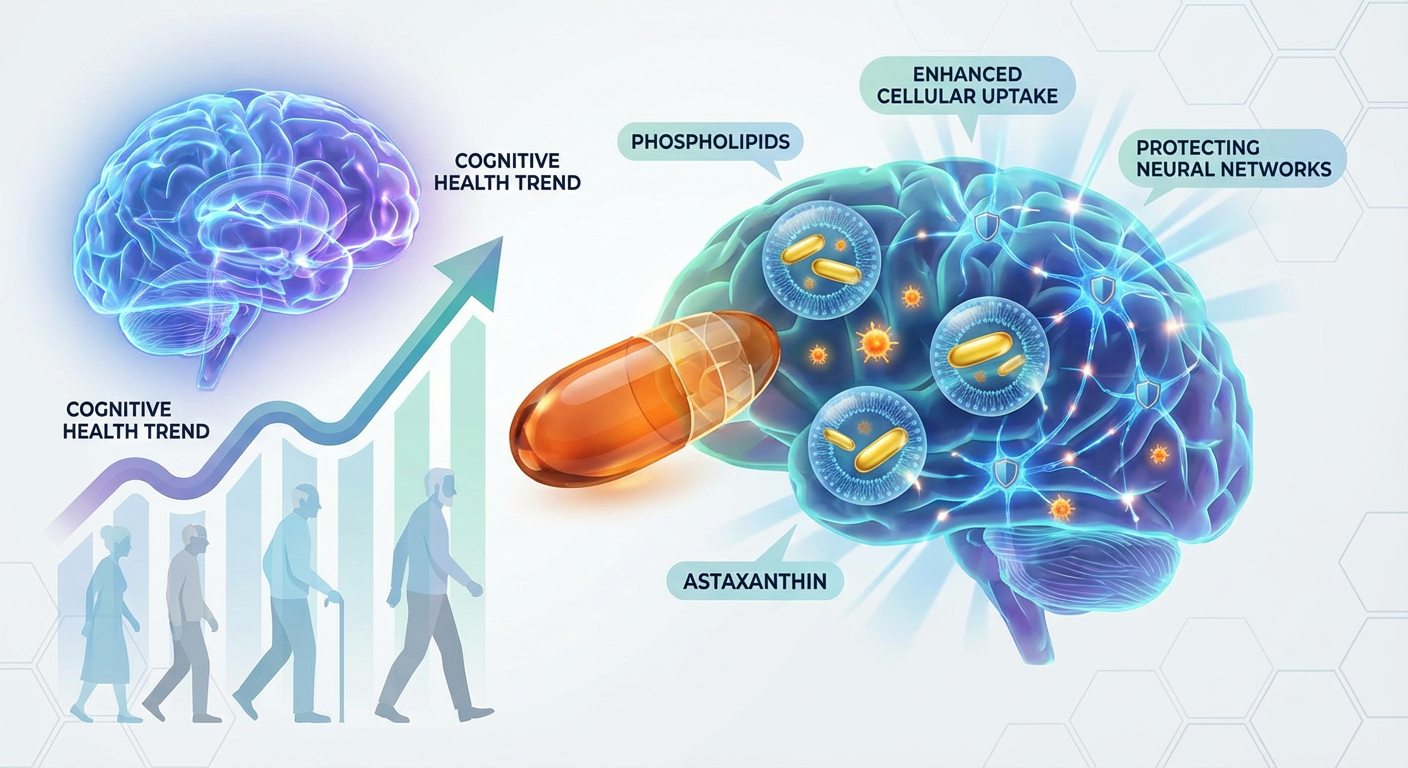
4. Krill Oil's Bioavailability Advantage: Phospholipids and Astaxanthin
The burgeoning challenges posed by an aging global population, characterized by a rapid increase in the prevalence of cognitive decline and dementia, have intensified the search for effective neuroprotective strategies. Forecasts indicate that the global population aged 60 and over will surge from 1 billion in 2020 to 1.4 billion by 2030, and further to 2.1 billion by 20501. This demographic shift inevitably brings with it a substantial rise in age-related health concerns, particularly involving brain health. Dementia, for instance, afflicted an estimated 57 million people globally in 2021, with nearly 10 million new cases emerging annually3. These numbers are projected to skyrocket to 78 million by 2030 and a staggering 139 million by 20505. With no definitive cure, the spotlight has shifted firmly onto preventative measures and lifestyle interventions, including nutritional supplementation, to mitigate this impending public health crisis9.
Omega-3 fatty acids, docosahexaenoic acid (DHA) and eicosapentaenoic acid (EPA), are well-established as critical components of brain structure and function. The human brain, remarkably, comprises approximately 60% fat, with DHA constituting roughly 20% of its total fat content13. This highlights DHA's indispensable role in neuronal membrane integrity and synaptic signaling. Higher omega-3 levels in older adults have been consistently associated with superior cognitive aging, including enhanced memory recall, faster processing speed, and larger brain volumes in key cognitive areas14. While omega-3s are widely recognized for their systemic anti-inflammatory properties, a growing body of research is unveiling their direct neuroprotective effects, including the reduction of chronic neuroinflammation and oxidative stress in the aging brain15.
Among the various sources of omega-3s, krill oil has emerged as a particularly promising candidate, offering a potent and uniquely bioavailable form of these essential fatty acids. Unlike conventional fish oil, which primarily delivers omega-3s in triglyceride form, krill oil supplies EPA and DHA predominantly bound to phospholipids, alongside the powerful antioxidant astaxanthin18. This distinctive molecular structure, especially the phospholipid-bound omega-3s, offers significant advantages in terms of absorption and efficacy, particularly for brain tissue. This section will delve deeply into the unique molecular attributes of krill oil, exploring how its phospholipid-bound omega-3s enhance absorption and facilitate penetration of the crucial blood-brain barrier, thereby setting it apart from other omega-3 sources. Furthermore, it will detail the added neuroprotective benefits conferred by krill oil's natural antioxidant, astaxanthin, providing a comprehensive understanding of why krill oil holds such considerable promise for supporting cognitive function and neuroprotection in our aging population.
4.1. The Phospholipid Advantage: Enhanced Absorption and Cellular Integration
The molecular form in which omega-3 fatty acids are delivered significantly impacts their bioavailability and subsequent therapeutic efficacy. While fish oil primarily provides EPA and DHA in triglyceride form, krill oil presents these crucial fatty acids predominantly bound to phospholipids35, 36. This is not merely a chemical distinction but a critical factor influencing how the body processes and utilizes these nutrients, especially in the context of brain health.
4.1.1. Superior Bioavailability Compared to Fish Oil
The phospholipid structure of krill oil's omega-3s facilitates a more efficient absorption process within the digestive tract. Unlike triglycerides, which require extensive enzymatic digestion before their fatty acid components can be absorbed, phospholipids can be absorbed more directly, forming smaller micelles that are easier for the body to assimilate. This enhanced absorption directly translates into higher circulating levels of EPA and DHA in the bloodstream and better incorporation into cellular membranes. A landmark randomized crossover trial conducted in 2013 provided compelling evidence for this superior bioavailability. In this study, healthy volunteers were administered equal doses of omega-3s (600 mg of EPA+DHA per day) from either krill oil or fish oil19, 20, 39. After just four weeks, participants receiving krill oil demonstrated significantly higher plasma and red blood cell omega-3 levels, as indicated by a greater increase in their Omega-3 Index, compared to those given fish oil19, 20. This suggests that krill oil can achieve equivalent or even greater tissue incorporation of omega-3s at lower doses, making it a more potent and potentially cost-effective option for supplementation. The authors of the study posited that the phospholipid-bound omega-3s in krill oil are likely absorbed and incorporated into cell membranes more efficiently than the triglyceride form found in fish oil39.
The implications of this enhanced bioavailability are particularly relevant for older adults. As individuals age, digestive efficiency can sometimes decline, potentially affecting nutrient absorption. The superior uptake mechanism of krill oil could ensure that older adults benefit more effectively from omega-3 supplementation, helping them achieve optimal blood and tissue omega-3 levels necessary for maintaining cognitive function. Furthermore, the higher digestibility and reduced incidence of digestive side effects, such as the "fishy burps" often associated with fish oil, contribute to better patient compliance, making krill oil a more palatable option for long-term use.
From a molecular perspective, phospholipids are amphiphilic molecules, meaning they possess both hydrophilic (water-loving) and hydrophobic (water-fearing) properties. This characteristic allows them to readily form stable emulsions in the aqueous environment of the gastrointestinal tract, leading to better dispersion and subsequent absorption. In stark contrast, triglycerides are purely hydrophobic molecules, necessitating intricate emulsification processes by bile salts and digestion by pancreatic lipases into monoglycerides and free fatty acids before absorption can occur. This difference in molecular packaging and digestive processing underpins krill oil's discernible advantage in bioavailability.
4.1.2. Facilitating Blood-Brain Barrier Penetration
Perhaps the most compelling aspect of krill oil's phospholipid-bound omega-3s, particularly in the context of cognitive function and neuroprotection, is their potential to more effectively traverse the blood-brain barrier (BBB). The BBB is a highly selective semi-permeable membrane that separates circulating blood from brain extracellular fluid, playing a crucial role in maintaining the brain's delicate homeostasis by preventing the entry of harmful substances while allowing essential nutrients to pass. However, this same selectivity can limit the delivery of therapeutic compounds to the brain.
When omega-3s are bound to phosphatidylcholine (a type of phospholipid), they appear to utilize specific transport mechanisms at the BBB that are not available to triglyceride-bound omega-3s. The brain has a high demand for phospholipids, particularly phosphatidylcholine, which is an integral component of neuronal membranes and a precursor for acetylcholine, a neurotransmitter vital for memory and learning. Research indicates that DHA attached to phosphatidylcholine is the preferential form the brain utilizes for its structural and functional needs37, 41. Animal studies consistently support this hypothesis, demonstrating that phospholipid-bound omega-3s lead to a significantly greater increase in brain DHA content compared to equivalent doses of omega-3s delivered in triglyceride form37, 42. This enhanced delivery to the brain is attributed to the ability of phospholipid carriers to be taken up by lipid transport mechanisms present in endothelial cells that form the BBB, allowing direct entry into the central nervous system. Triglyceride forms, conversely, must first be extensively metabolized and then re-esterified into phospholipids or other forms before they can gain entry, a less efficient pathway for brain accretion.
This mechanistic advantage suggests that krill oil might deliver a higher concentration of DHA and EPA directly to brain cells, precisely where these fatty acids are needed to exert their neuroprotective and cognitive-enhancing effects. In an aging brain, where the integrity of the BBB might be compromised or nutrient transport mechanisms may become less efficient, this preferential delivery pathway could be even more critical. By providing more omega-3s to the brain, krill oil could potentially more effectively support neuronal membrane fluidity, enhance synaptic plasticity, reduce neuroinflammation, and counteract oxidative stress, all of which are vital for maintaining cognitive function as we age.
The implications for neuroprotection are profound. If krill oil can more efficiently augment the brain's omega-3 content, it could offer a more robust defense against age-related neuronal damage. For example, animal models of Alzheimer's disease have shown that krill oil supplementation improved spatial learning and memory, partially rescuing cognitive deficits and reducing oxidative damage in brain tissue23, 24, 25. While these are preclinical findings, they underscore the potential of efficiently delivered omega-3s to influence neurobiology.
4.2. Astaxanthin: Krill Oil's Built-in Neuroprotective Antioxidant
Beyond its unique phospholipid-bound omega-3s, krill oil possesses another distinctive component that significantly contributes to its neuroprotective profile: astaxanthin. This potent carotenoid antioxidant, responsible for the characteristic reddish-orange hue of krill and other marine organisms like wild salmon, provides a dual benefit: it protects the fragile omega-3 fatty acids within the oil from oxidation and offers direct antioxidant and anti-inflammatory support to the brain18, 43.
4.2.1. Stabilizing Omega-3s and Preventing Oxidation
Omega-3 fatty acids, particularly DHA and EPA, are highly susceptible to oxidation due to their numerous double bonds. Oxidation can lead to rancidity, reducing the efficacy, palatability, and potentially even generating harmful byproducts in omega-3 supplements. Astaxanthin acts as a powerful natural preservative within krill oil, effectively neutralizing free radicals and singlet oxygen species that would otherwise degrade the omega-3s. This inherent stability ensures that the consumer receives the full neuroprotective potential of the EPA and DHA without the compromise of oxidative damage.
In contrast, standard fish oil often requires the addition of synthetic antioxidants, such as vitamin E, to prevent oxidation. While vitamin E is an effective antioxidant, it typically does not possess the same broad-spectrum efficacy or the ability to cross the blood-brain barrier to the same extent as astaxanthin, which offers both extrinsic protection for the oil and intrinsic protection for the brain's delicate neuronal structures.
4.2.2. Direct Neuroprotective Effects of Astaxanthin
The true value of astaxanthin extends beyond its role as a stabilizer, offering direct neuroprotective benefits within the brain. Astaxanthin distinguishes itself from many other antioxidants by its exceptional ability to cross the blood-brain barrier44. Once in the brain, it embeds itself within cellular membranes, where it can exert its antioxidant effects directly and efficiently.
Research has demonstrated astaxanthin’s capacity to reduce oxidative stress and inflammation within neurons, two primary drivers of age-related cognitive decline and neurodegenerative diseases44. Free radicals, generated by metabolic processes and environmental factors, cause cellular damage through oxidative stress. Chronic neuroinflammation, often initiated by activated microglia, further exacerbates neuronal damage. Astaxanthin's unique molecular structure allows it to quench various types of free radicals, including reactive oxygen species (ROS) and reactive nitrogen species (RNS), more effectively than several other well-known antioxidants. It also has been shown to modulate inflammatory pathways, reducing the production of pro-inflammatory cytokines that contribute to neuronal toxicity. By mitigating both oxidative stress and inflammation, astaxanthin helps to preserve neuronal integrity and function, thereby contributing to cognitive health.
This synergistic effect, where astaxanthin protects the omega-3s while simultaneously bolstering the brain's natural defenses, positions krill oil as a comprehensive neuroprotective agent. For an aging population facing increased susceptibility to oxidative damage and chronic low-grade neuroinflammation, the presence of stable, phospholipid-bound omega-3s alongside a potent, brain-penetrating antioxidant like astaxanthin offers a compelling argument for its inclusion in brain health strategies.
4.3. Clinical Implications and Market Response
The unique molecular composition of krill oil, combining highly bioavailable phospholipid-bound omega-3s with the potent antioxidant astaxanthin, has significant implications for its clinical application and market adoption within the context of cognitive health.
For more details, see Best Supplements for Cardiovascular and Cognitive. For more details, see Best Recommended Krill Oil Brands. For more details, see The Complete Guide to Cardiovascular Health and Cognitive Function. For more details, see Krill Oil Research Studies.4.3.1. Achieving Therapeutic Effects with Lower Doses
One of the key practical benefits of krill oil's enhanced bioavailability is the possibility of achieving therapeutic omega-3 levels in the body and brain with smaller daily doses compared to traditional fish oil. Some clinical trials suggest that approximately 2 grams per day of krill oil can yield similar or even superior omega-3 blood profiles than 4 grams per day of fish oil39, 40. This dose-efficiency is advantageous for several reasons:
- Improved Compliance: Smaller capsule sizes and higher tolerability (less gastric distress, fewer "fishy burps") typically associated with krill oil due to its emulsifying properties often lead to better patient adherence to supplementation regimens.
- Cost-Effectiveness: While krill oil supplements often carry a premium price per milligram of omega-3, the need for lower doses could potentially offset some of this cost, making it a more economical long-term option for some consumers to achieve desired omega-3 status.
- Reduced Potential for Side Effects: While omega-3s are generally safe, higher doses from fish oil can sometimes lead to mild blood-thinning effects, which might be a consideration for individuals on anticoagulant medications. Lower effective doses from krill oil could mitigate such concerns, though consultation with a healthcare professional remains paramount.
4.3.2. Emerging Evidence for Cognitive Benefits in Humans
While the mechanistic advantages of krill oil are well-understood, supporting clinical data on its direct cognitive benefits in humans, particularly in an aging population, are still emerging but promising. A notable 2013 randomized controlled trial in Japan investigated the effects of krill oil on brain function in 45 healthy elderly men (ages 61–72) over a 12-week period21, 45. Participants received either 2 grams/day of krill oil, fish oil, or a placebo. Although standard memory tests did not show large differences, the krill oil group exhibited several key physiological improvements related to cognitive function:
- Enhanced Prefrontal Cortex Activation: Near-infrared spectroscopy revealed significantly greater activation in the dorsolateral prefrontal cortex during working memory tasks in the krill oil group compared to placebo21, 46. This suggests that krill oil supplementation enhanced the brain's functional response and increased oxygenated blood flow during the execution of memory-intensive tasks, indicating improved neural efficiency.
- Faster Information Processing: Electroencephalogram (EEG) measurements showed that the P300 latency – a brainwave marker indicative of cognitive processing speed – significantly decreased (improved) by week 12 in the krill oil group, whereas it lengthened (worsened) in the control group22, 47, 48. A shorter P300 latency signifies faster information processing and stronger cognitive responses, suggesting that krill oil may help counteract age-related slowing of mental speed.
These findings from the Konagai et al. study, one of the first human trials to explore krill oil's cognitive effects, suggest that its highly bioavailable omega-3s can enhance neuronal function and cognitive processing in older adults, laying a crucial foundation for further research21. Interestingly, while both krill oil and fish oil groups showed some cognitive improvements compared to placebo, the krill group demonstrated slightly stronger brain oxygenation signals and better performance on complex calculation tasks, hinting at its potential superior impact on higher-order executive functions49, 50. The authors attributed this to the more efficient incorporation of phospholipid omega-3s into brain cell membranes51, 52.
However, it is crucial to acknowledge that the landscape of omega-3 research for cognition is not without mixed findings. Large-scale trials, such as the VITAL trial in 2022, administered 1 gram/day of fish oil to over 3,000 older adults over 2.5 years and found no significant difference in global cognitive decline compared to placebo27, 53. Such mixed results emphasize that omega-3s may not be a standalone "cure" for dementia and their efficacy can depend on factors like dosage, baseline omega-3 status, genetic predispositions (e.g., APOE4 status), intervention duration, and the specific cognitive domains being assessed. While these larger trials often use conventional fish oil, it reinforces the concept that the benefits of omega-3s are complex and may require targeted approaches, longer intervention periods, or the distinct advantages offered by krill oil.
4.3.3. Industry Response and Market Growth
The perceived advantages of krill oil have not gone unnoticed by the nutraceutical industry. Nutraceutical companies have actively capitalized on krill oil's unique profile, marketing it as a "next-generation" omega-3 supplement offering superior benefits for brain, heart, and joint health18. This enthusiasm is reflected in significant market growth; the global krill oil market, valued at approximately USD 997 million in 2023, is projected to reach USD 1.21 billion by 2025 and an impressive USD 3.28 billion by 2035, exhibiting a compound annual growth rate (CAGR) of 10.5% from 2025–203526. This rapid expansion is largely driven by increasing consumer awareness of omega-3 benefits and krill oil's touted higher efficacy and purity. Brands are explicitly highlighting krill's phospholipids and astaxanthin as key differentiators on product labels.
For example, in May 2022, Kori Krill Oil launched its "Mind & Body" supplement, directly targeting cognitive support. This product combines krill oil with other nootropic and neuro-supportive ingredients like vitamin B12, plant-based antioxidants, and curcumin, strategically positioning itself in the burgeoning brain health market28, 60. Such innovations underscore how companies are moving beyond generic omega-3 offerings to specialized formulations designed to address specific health concerns of the aging demographic. The success of these products attests to a robust consumer demand for proactive solutions to maintain cognitive vitality. For older adults, krill oil offers a convenient and potentially more effective means to bolster their daily omega-3 intake, appealing to those seeking to optimize brain function and neuroprotection.
4.3.4. Sustainability Concerns and Ethical Sourcing
The booming demand for krill oil, however, is not without its challenges, particularly concerning sustainability. Antarctic krill (Euphausia superba) are a keystone species in the Antarctic ecosystem, forming the base of the food web for numerous marine mammals and birds, including whales, seals, and penguins. The volume of Antarctic krill caught annually has quadrupled since 2007 to meet the skyrocketing demand for omega-3 supplements30, 61. This intensive harvesting by industrial fleets from various countries, including Norway and China, has raised alarms among environmentalists and scientists about potential ecosystem stress.
Concerns intensified in 2024 with reports of several endangered humpback whales found entangled in krill fishing gear31, 62. Such incidents highlight the real-world environmental impacts of the krill fishing industry. Major krill harvesters, like Aker BioMarine, which is a significant player in the market, are under increasing scrutiny to demonstrate sustainable practices that do not disrupt the delicate Antarctic food chain. This pressure has led to collaborations with conservation groups, adherence to catch limits set by the Commission for the Conservation of Antarctic Marine Living Resources (CCAMLR), and investment in research aimed at understanding krill population dynamics and implementing improved, wildlife-friendly fishing technologies.
The emerging emphasis on sustainability and ethical sourcing represents a critical juncture for the krill oil industry. As consumers become more environmentally conscious, companies that can transparently demonstrate eco-friendly practices and responsible krill management may gain a significant market advantage. Conversely, those that fail to address these concerns risk consumer backlash and potential regulatory actions. This ongoing dialogue positions krill oil as a model for how the nutraceutical industry must balance health benefits with environmental responsibility, ensuring that the pursuit of cognitive wellness does not come at an ecological cost.
In conclusion, krill oil’s unique molecular structure, featuring phospholipid-bound omega-3s and the intrinsic antioxidant astaxanthin, provides a compelling advantage for enhanced bioavailability and targeted delivery to the brain. This positions it as a highly promising intervention for cognitive support and neuroprotection, especially for an aging population. While the scientific evidence continues to accumulate, particularly from larger human trials, the mechanistic rationale and early clinical data suggest that krill oil offers a potent and efficient means to augment brain omega-3 levels, thereby supporting neuronal health and mitigating age-related cognitive decline.
The next section of this report will delve into the specific neuroprotective mechanisms of krill oil, exploring its anti-inflammatory effects and antioxidant properties in greater detail and synthesizing the pathways through which it may safeguard cognitive function.
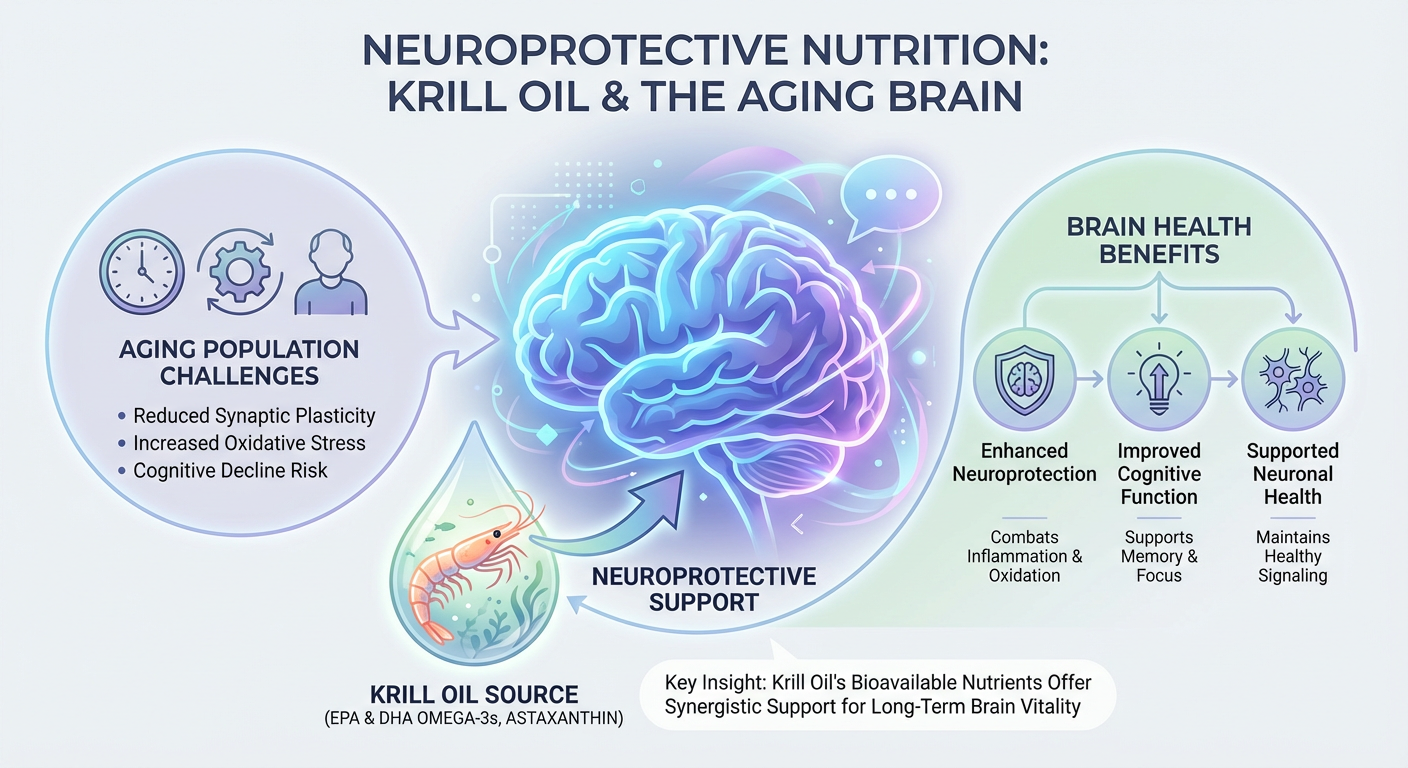
5. Emerging Scientific Evidence for Krill Oil in Cognitive Health
The accelerating rate of global aging, with a projected 1.4 billion individuals over 60 by 2030 and 2.1 billion by 2050, places an urgent spotlight on strategies to maintain cognitive function and prevent neurodegenerative diseases[18]. As age remains the primary risk factor for dementia, a condition affecting an estimated 57 million people globally in 2021 and projected to reach 139 million by 2050, the imperative for effective neuroprotective interventions has never been greater[24], [4]. With no cure or universally effective treatment currently available for most dementias, the focus has shifted towards prevention and lifestyle-based approaches to foster brain health throughout the lifespan[6]. Within this context, omega-3 fatty acids, indispensable components of brain structure and function, have garnered considerable attention. The human brain, composed of approximately 60% fat, heavily relies on docosahexaenoic acid (DHA), an omega-3, which constitutes about 20% of its fat content[9]. Higher omega-3 levels have been consistently linked to superior cognitive aging outcomes, including improved memory recall, faster processing speed, and larger brain volumes in critical areas in older adults[10]. While the anti-inflammatory properties of omega-3 fatty acids are well-established, particularly in mitigating systemic inflammation, a deeper understanding of their direct neuroprotective mechanisms is now emerging. Research indicates that omega-3s actively reduce chronic neuroinflammation and oxidative stress in the aging brain, key contributors to neuronal damage and cognitive decline[11]. Krill oil, a marine omega-3 source, is carving out a unique position in this landscape due to its distinct biochemical composition, offering EPA and DHA predominantly in phospholipid form and naturally containing the potent antioxidant astaxanthin[14]. This section will delve into the growing body of scientific evidence, from preclinical models to early-phase clinical trials, that elucidates krill oil's specific contributions to neuroprotection and cognitive enhancement in an aging population. It will explore its unique advantages over other omega-3 sources, analyze key findings demonstrating improvements in memory, processing speed, and brain activation, and candidly address the mixed results and ongoing research necessary to fully establish its therapeutic potential.5.1 Preclinical Insights: Krill Oil's Neuroprotective and Anti-Aging Effects
The foundational understanding of krill oil's potential in cognitive health germinates from robust preclinical research, primarily utilizing animal models and cellular studies. These investigations provide crucial mechanistic insights into how krill oil, often surpassing the benefits observed with traditional fish oil, exerts its neuroprotective and anti-aging properties. One significant area of preclinical research has focused on krill oil's ability to protect neurons from degeneration and mitigate markers of cellular aging. A compelling 2022 study, using the roundworm model *C. elegans* and human cells, provided direct evidence of krill oil's profound neuroprotective capacity. In a Parkinson's disease model (where dopaminergic neurons are specifically targeted for degeneration), krill oil supplementation facilitated the preservation of approximately 90% of these critical neurons by mid-adulthood[12]. This stands in stark contrast to untreated controls, where neuron survival hovered under 70%[12]. Given that aging typically induces a 20-25% loss of these neurons in Parkinsonian worms over the study period, the virtual absence of neuronal loss in krill oil-fed worms highlights its potent protective effects against neurodegeneration[12]. The study underscored krill oil's ability to rewire temporal transcriptomes and suppress several hallmarks of aging, directly implicating its role in cellular longevity and resilience. Furthermore, the same 2022 study revealed krill oil's significant impact on cellular aging markers. Treated animals exhibited a substantial reduction in senescent cells: a 35% decrease in normal aging worms and an even more pronounced 60% decrease in the Parkinson's model worms, compared to their respective control groups[13]. Senescent cells, characterized by indicators such as β-galactosidase activity, accumulate with age and are known contributors to chronic inflammation and tissue damage. The observed reduction in these markers by krill oil suggests a broad anti-aging effect on cellular health within the brain and nervous system, combating pathways implicated in age-related cognitive decline. Beyond neuroprotection, krill oil has shown promise in directly addressing cognitive impairments in animal models of neurodegenerative diseases. A 2020 study using an Alzheimer's disease mouse model provided compelling evidence of krill oil's capability to improve spatial learning and memory[13]. Alzheimer's disease (AD) model mice, fed krill oil, spent approximately 35% of their time in the correct target quadrant during a Morris water maze probe trial, a performance comparable to healthy control mice that also spent around 35% of their time in the target quadrant[13]. This was significantly higher than the mere 26% observed in untreated AD-model mice[13]. The krill oil-treated mice also demonstrated shorter escape latencies, indicating a quicker learning curve for locating the target platform, and exhibited reduced oxidative damage in brain tissue, a hallmark of AD pathology[13], [13]. These findings suggest that krill oil can effectively rescue memory deficits and protect against the damaging oxidative stress characteristic of Alzheimer's-like conditions. The mechanistic underpinnings of these preclinical effects are complex but appear to involve multi-targeted actions:- Anti-oxidant activity: The astaxanthin present in krill oil, a powerful carotenoid antioxidant, directly neutralizes free radicals and reduces oxidative stress within neural tissues. This protection extends to safeguarding the fragile omega-3 fatty acids themselves from oxidation, preserving their biological activity[26].
- Anti-inflammatory modulation: Krill oil's omega-3s (EPA/DHA) contribute to the production of specialized pro-resolving mediators (SPMs) like resolvins and protectins, which actively resolve inflammation and promote tissue repair, countering chronic neuroinflammation implicated in aging and neurodegeneration[11].
- Membrane fluidity and signaling: The phospholipid-bound omega-3s in krill oil are efficiently incorporated into neuronal membranes, enhancing their fluidity and integrity. This is vital for optimal neurotransmission, synaptic plasticity, and the overall efficiency of brain signaling pathways. DHA in particular is a structural element of neuronal membranes and synapses.
- Mitochondrial function: Emerging research hints that krill oil may also support mitochondrial health, improving cellular energy production and reducing mitochondrial dysfunction, a key factor in aging and neurodegenerative processes.
| Study (Year) | Model System | Key Findings | Citation |
|---|---|---|---|
| SenGupta et al. (2022) | *C. elegans* (Parkinson's Model) | Preserved ~90% of dopaminergic neurons vs. <70% in controls; reduced cellular senescence markers by 35-60%. | [12], [13] |
| Kim et al. (2020) | Alzheimer's Disease Mouse Model | Improved spatial learning/memory (35% time in target quadrant vs. 26% for controls); reduced oxidative stress. | [13] |
5.2 Early-Phase Clinical Trials: Cognitive Improvements in Older Adults
Translating promising preclinical findings into human benefit is the ultimate goal of research. Early clinical trials investigating krill oil's impact on cognitive function in older adults have yielded intriguing, albeit preliminary, positive results, particularly in areas of memory, processing speed, and brain activation. These studies underscore the potential of krill oil to move beyond general inflammation management to direct cognitive enhancement. A landmark **2013 randomized controlled trial** conducted in Japan by Konagai and colleagues provided some of the first human evidence for krill oil’s cognitive benefits[35]. This double-blind study involved 45 healthy elderly men, aged 61–72, who were randomized to receive either 2 grams/day of krill oil, fish oil, or a placebo for 12 weeks[35]. While the krill oil group did not demonstrate significant improvements on standard, broad memory tests, the researchers employed advanced neuroimaging and electrophysiological techniques that revealed more subtle yet important physiological changes. Specifically, near-infrared spectroscopy (NIRS) showed significantly **greater activation in the dorsolateral prefrontal cortex** during working memory tasks in the krill oil group compared to the placebo[35]. The prefrontal cortex is a critical brain region for executive functions, including working memory, attention, and decision-making. Enhanced activation, measured by increased oxygenated hemoglobin responses, suggests that krill oil supplementation improved the efficiency or capacity of the brain’s functional response during cognitive engagement. Even more striking were the electroencephalography (EEG) findings from the same Konagai study. The krill oil group exhibited a **significant decrease in P300 latency** by the end of the 12-week intervention[35]. P300 latency is an event-related potential (ERP) and a well-established neurophysiological marker of cognitive processing speed; a shorter latency indicates faster information processing and improved attentional resource allocation. Conversely, the control group showed a lengthening (worsening) of P300 latency over the same period, suggesting age-related cognitive slowing[35]. This finding implies that krill oil might not only prevent the deterioration of cognitive activity but also actively enhance brain processing speed in older adults, a crucial aspect of maintaining cognitive independence. The authors hypothesized that the superior uptake of krill oil's phospholipid-bound omega-3s into brain cell membranes was responsible for these observed improvements[35], a concept supported by other research indicating phospholipid-bound DHA is preferentially taken up by the brain[35]. A comparative aspect of the Konagai study also deserves attention: it included a fish oil group. While both omega-3 groups (krill oil and fish oil) showed some cognitive improvements compared to placebo, nuances emerged. The krill oil group tended to perform better on a complex calculation task and showed slightly stronger brain oxygenation signals than the fish oil group, though not always reaching statistical significance[35], [35]. These subtle differences, coupled with the enhanced bioavailability of krill oil's phospholipid EPA/DHA reported in other studies (e.g., 600 mg of omega-3 from krill oil raised blood EPA+DHA levels more effectively than 600 mg from fish oil in 4 weeks)[15], [16], suggest a potential "comparative edge" for krill oil in direct brain delivery and cognitive impact. These early clinical findings, though requiring replication in larger and more diverse populations, align with population-level observations where higher fish and omega-3 intake is consistently linked to better cognitive aging. A recent 2024 meta-analysis found approximately **18% lower risk of dementia and cognitive decline** in individuals with high fish consumption compared to low intake[19]. Furthermore, longitudinal studies have observed that seniors consuming fish at least once a week experienced up to a **60% lower risk of Alzheimer's disease** compared to those who rarely ate fish[17]. While these are observational data, they provide a compelling backdrop for the targeted intervention studies with krill oil.5.3 Addressing Mixed Results and Future Research Directions
Despite the promising preclinical data and early clinical trial results, the landscape of omega-3 supplementation for cognitive health, including krill oil, is not without its complexities and mixed findings. It is crucial to acknowledge these inconsistencies for a balanced understanding and to guide future research. Not all large-scale trials of general omega-3 supplementation have demonstrated clear cognitive benefits. For instance, the extensive **VITAL trial** published in 2022, which involved over 3,000 older adults taking 1 gram/day of fish oil for approximately 2.5 years, found **no significant difference** in overall cognitive decline when compared to a placebo group[20]. Similar null or minimal effects have been reported in some trials involving very elderly populations or individuals without pre-existing nutritional deficiencies. Several factors may contribute to these mixed results:- Dosage and Duration: The optimal dose and duration of omega-3 supplementation for cognitive benefit might be higher or longer than typically studied. Chronic, lifetime intake of omega-3s through diet might be more impactful than shorter-term supplementation in later life.
- Baseline Omega-3 Status: Individuals with very low baseline omega-3 levels or dietary deficiencies may stand to benefit most, whereas those with adequate intake might see less noticeable improvement.
- Genetic Factors: Genetic predispositions, such as APOE4 status, known to influence Alzheimer's risk, could modify an individual's response to omega-3 intervention. Observational studies suggest dietary omega-3s may confer most benefit in individuals without the APOE-ε4 genetic risk allele[17].
- Cognitive Stage: Omega-3 intervention may be more effective in preventing or delaying cognitive decline in healthy individuals or those with Mild Cognitive Impairment (MCI), rather than in individuals with established dementia. It might act more as a preventative or decelerating agent rather than a restorative one.
- Holistic Approach: Omega-3s are unlikely to be a standalone "cure." Their benefits may be potentiated when combined with other brain-healthy lifestyle factors, such as physical exercise, mental stimulation, and adherence to diets like the Mediterranean or MIND diet. The Finnish Geriatric Intervention Study to Prevent Cognitive Impairment and Disability (FINGER) trial, which implemented a multi-domain intervention (diet, exercise, cognitive training, vascular risk management), demonstrated a 25% improvement in cognitive scores over two years. This suggests synergy is key.
- Measurement Sensitivity: Standard neuropsychological tests may not always be sensitive enough to detect subtle, yet clinically meaningful, improvements or changes in brain function that may be observable through more sophisticated measures like NIRS or EEG, as seen in the Konagai study[8].
- Targeted Populations: Studies should focus on specific cohorts, such as individuals with mild cognitive impairment (MCI), early signs of cognitive decline, or genetically at-risk populations, to determine if krill oil can delay progression or reduce incidence.
- Longitudinal Studies: Longer-term randomized controlled trials (RCTs) spanning several years are needed to assess krill oil’s effects on the trajectory of cognitive decline and incidence of dementia.
- Optimized Dosing and Formulation: Research into ideal krill oil dosages, considering its superior bioavailability, and the synergistic effects of astaxanthin needs further exploration.
- Combination Therapies: Investigating krill oil as part of comprehensive lifestyle interventions or in combination with other neuro-supportive nutrients (e.g., B-vitamins, vitamin D, nootropics) could yield stronger results. The market is already reflecting this trend, with products like Kori Krill Oil's "Mind & Body" formula combining krill oil with vitamin B12 and curcumin[13].
- Biomarker-Driven Research: Utilizing advanced biomarkers (e.g., brain imaging for structural changes, CSF proteomics for amyloid/tau, blood-based omega-3 index) can provide a more objective and mechanistic understanding of krill oil's effects on brain health, even before overt cognitive changes are detectable.
5.4 The Market Responds: Krill Oil's Commercial Ascent for Brain Health
The emerging scientific understanding of krill oil's specific advantages for cognitive health is not merely an academic exercise; it has ignited significant interest and investment within the nutraceutical industry, leading to substantial market growth and product innovation. The global krill oil market, valued at approximately **USD 997 million in 2023**, is projected to expand significantly, reaching **USD 1.21 billion by 2025** and a staggering **$3.28 billion by 2035**, indicating a robust **10.5% Compound Annual Growth Rate (CAGR)** from 2025–2035[14], [14]. This rapid expansion is largely propelled by increasing consumer awareness regarding the health benefits of omega-3s for not only cardiovascular and joint health but, crucially, for cognitive function. The industry's response to this demand is evident in the proliferation of krill oil products explicitly marketed for brain health. Supplement companies are strategically highlighting krill's phospholipid-bound omega-3s and naturally occurring astaxanthin as key differentiators, emphasizing their enhanced bioavailability and antioxidant properties for neuronal support. A prime example occurred in May 2022, when **Kori Krill Oil (USA) launched its "Mind & Body" supplement**, combining krill oil with additional nootropic and neuro-supportive ingredients, such as vitamin B₁₂ and curcumin from turmeric[13]. This product was specifically positioned to support memory, focus, and nervous system health, alongside the traditional benefits for heart health. Such targeted product development underscores the industry's confidence in krill oil's appeal to consumers proactively seeking solutions for cognitive aging. The consumer appetite for brain health solutions is robust. A 2022 survey by the Council for Responsible Nutrition (CRN) revealed that a significant portion of US adults, 75%, take dietary supplements, and over half (52%) of these users opt for "specialty" supplements like omega-3 fish or krill oil[5]. This trend is particularly pronounced among older adults, women, and higher-educated demographics[5], reflecting a growing segment of the population actively invested in maintaining cognitive vitality. This commercial ascent, however, also brings with it significant responsibilities, particularly regarding environmental sustainability and ethical sourcing. The surge in demand for krill oil has led to a dramatic increase in Antarctic krill harvesting, with annual catch volumes **quadrupling since 2007**[12]. Krill is a cornerstone species in the Antarctic ecosystem, serving as a vital food source for whales, seals, and penguins. The intensification of industrial fishing, involving fleets from countries like Norway and China, has raised alarms among environmental groups and scientists. Concerns peaked in 2024 when several humpback whales were found entangled in krill fishing gear, highlighting the direct ecological risks associated with unregulated expansion[12]. Leading krill oil harvesters, such as Aker BioMarine, and industry bodies are under increasing pressure to demonstrate and uphold stringent sustainability practices. Efforts include collaborating with conservation organizations, adhering to catch limits set by the Commission for the Conservation of Antarctic Marine Living Resources (CCAMLR), funding scientific research into krill population dynamics, and investing in advanced, whale-safe fishing technologies. The Marine Stewardship Council (MSC) certification has also become a critical benchmark for companies to assure consumers of sustainable sourcing. The future trajectory of the krill oil market is intrinsically linked to its ability to balance profound health benefits with unwavering environmental stewardship. This critical interplay highlights a broader trend in the nutraceutical space where consumer demand for efficacy must increasingly be met with verifiable ethical and sustainable practices. The burgeoning market for krill oil for cognitive health represents a confluence of scientific discovery, demographic shifts, and consumer demand. As evidence continues to mount and product innovation flourishes, krill oil is securing its place as a prominent and distinct player within the omega-3 supplement landscape. This evolution promises substantial benefits for an aging population seeking to proactively support their brain health, provided that sustainability and quality remain at the forefront of industry practices. *** The information presented in this section clearly illustrates the exciting, albeit developing, role of krill oil in supporting cognitive function and neuroprotection. From its unique biochemical advantages to its demonstrated effects in preclinical models and early human trials, krill oil appears poised to offer a distinct contribution to brain health, particularly for the aging population. The next section will delve into the practical applications and recommendations for incorporating krill oil into a holistic approach to cognitive wellness, considering dosages, safety, and its place alongside other lifestyle interventions.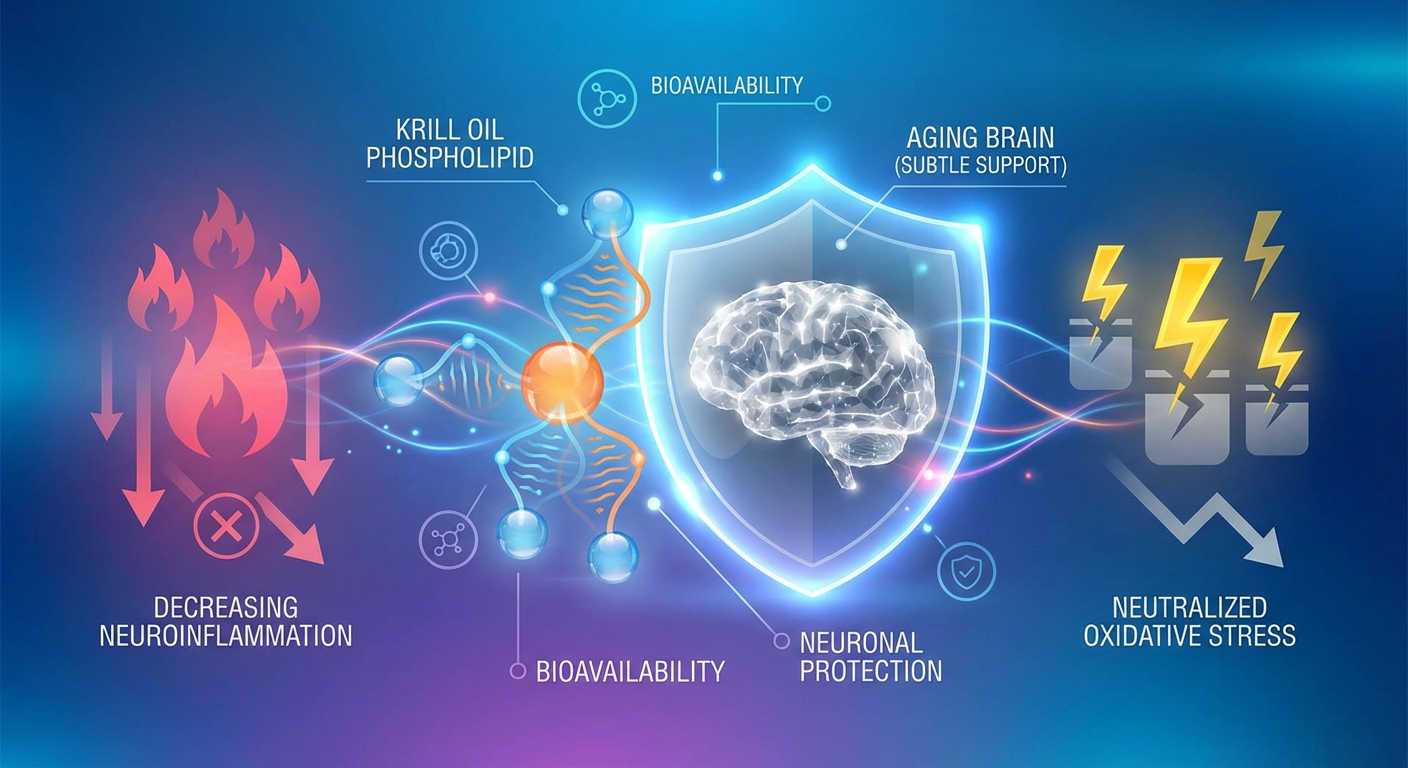
6. Krill Oil's Role in Counteracting Neuroinflammation and Oxidative Stress
The burgeoning global aging population, with projections indicating 1.4 billion people over 60 by 2030 and 2.1 billion by 2050, places an urgent spotlight on brain health and the prevention of age-related cognitive decline1. As age is the preeminent risk factor for dementia, which is currently estimated to affect 57 million people globally and is projected to reach 139 million by 2050, the imperative to identify effective neuroprotective strategies has never been greater23. With no definitive cure for most dementias, the scientific and medical communities have pivoted towards preventive measures and lifestyle interventions. Among these, nutritional interventions, particularly those involving omega-3 fatty acids, are garnering significant attention for their potential to mitigate the cellular and molecular hallmarks of cognitive aging. Specifically, krill oil, a rich source of eicosapentaenoic acid (EPA) and docosahexaenoic acid (DHA), along with the potent antioxidant astaxanthin, is emerging as a promising agent in the fight against neuroinflammation and oxidative stress—two fundamental contributors to age-related cognitive decline and the progression of neurodegenerative diseases4. Chronic neuroinflammation, characterized by the sustained activation of glial cells (microglia and astrocytes) and the subsequent release of pro-inflammatory cytokines, can lead to synaptic dysfunction, neuronal damage, and impaired neurogenesis. This persistent inflammatory state is commonly observed in the aging brain and is a critical factor in the pathogenesis of neurodegenerative conditions like Alzheimer's and Parkinson's disease5. Concurrently, oxidative stress, resulting from an imbalance between the production of reactive oxygen species (ROS) and the brain's antioxidant defense mechanisms, inflicts damage on neuronal lipids, proteins, and DNA, further exacerbating neuroinflammation and cellular demise. The brain, with its high metabolic rate, rich lipid content, and relatively low antioxidant capacity, is particularly vulnerable to oxidative damage6. Krill oil's unique composition offers a synergistic approach to address both these detrimental processes, positioning it "beyond inflammation" to provide direct neuroprotective effects7.6.1 The Intricate Link Between Neuroinflammation, Oxidative Stress, and Cognitive Decline
The aging brain is not merely subject to the passive wear and tear of time; it actively undergoes complex molecular and cellular changes that predispose it to cognitive impairment. Neuroinflammation and oxidative stress are inextricably linked and form a vicious cycle that underpins much of age-related neurodegeneration.6.1.1 Chronic Neuroinflammation: A Silent Destroyer
Neuroinflammation is now recognized as a central player in the onset and progression of neurodegenerative diseases. Unlike acute inflammation, which is a beneficial immune response to injury, chronic neuroinflammation is a persistent, low-grade activation of the brain's immune cells, primarily microglia and astrocytes. These cells, when chronically activated, shift from a neuroprotective to a neurotoxic phenotype, leading to:- Release of Pro-inflammatory Mediators: Chronically activated microglia and astrocytes release excessive amounts of pro-inflammatory cytokines (e.g., TNF-α, IL-1β, IL-6), chemokines, and reactive nitrogen species, creating a hostile environment for neurons8.
- Synaptic Dysfunction: Inflammatory mediators can directly impair synaptic plasticity, compromising the ability of neurons to communicate effectively. This can lead to impaired learning and memory9.
- Neurotoxicity and Apoptosis: Sustained inflammation can induce neuronal oxidative stress, mitochondrial dysfunction, and ultimately programmed cell death (apoptosis), leading to neuronal loss and brain atrophy10.
- Compromised Blood-Brain Barrier (BBB): Chronic inflammation can disrupt the integrity of the BBB, allowing peripheral inflammatory cells and molecules to infiltrate the brain, further perpetuating the inflammatory cycle11.
6.1.2 Oxidative Stress: The Brain's Vulnerability
The brain is particularly susceptible to oxidative stress due to several factors:- High Oxygen Consumption: Despite accounting for only about 2% of body weight, the brain consumes approximately 20% of the body's total oxygen, leading to high rates of ROS production as a byproduct of mitochondrial respiration13.
- Rich Lipid Content: The human brain is composed of about 60% fat, with DHA accounting for roughly 20% of the brain's total fat content14. These polyunsaturated fatty acids (PUFAs) are highly vulnerable to lipid peroxidation by ROS, generating toxic aldehydes and further compromising cell membrane integrity and function15.
- Lower Antioxidant Capacity: Compared to other organs, the brain has relatively lower levels of endogenous antioxidant enzymes (like superoxide dismutase, catalase, and glutathione peroxidase) and non-enzymatic antioxidants (like Vitamin E and C), making it less equipped to neutralize ROS16.
- Excitotoxicity: Increased glutamate release, commonly associated with neurodegenerative processes, can lead to excitotoxicity, which in turn enhances intracellular calcium levels and mitochondrial ROS production17.
6.2 Krill Oil's Multi-Targeted Approach: EPA, DHA, and Astaxanthin
Krill oil distinguishes itself from other omega-3 sources through its unique molecular structure and the presence of potent co-factors, allowing for a multi-pronged attack on neuroinflammation and oxidative stress.6.2.1 Omega-3 Fatty Acids (EPA and DHA): The Anti-Inflammatory Powerhouses
The primary active components of krill oil are the long-chain omega-3 polyunsaturated fatty acids, EPA and DHA. While widely recognized for their systemic anti-inflammatory properties, their specific role in neuroinflammation is increasingly understood:- Modulation of Eicosanoid Pathways: In the brain, EPA and DHA compete with arachidonic acid (AA), an omega-6 fatty acid, for incorporation into cell membrane phospholipids. When released, AA is metabolized into pro-inflammatory eicosanoids (prostaglandins, leukotrienes). In contrast, EPA gives rise to less inflammatory eicosanoids (e.g., PGE3, LTB5), while DHA generates powerful anti-inflammatory and pro-resolving mediators such as resolvins (e.g., RvD1, RvD2), protectins (e.g., NPD1), and maresins19. These specialized pro-resolving mediators (SPMs) actively promote the resolution of inflammation, helping to turn off the inflammatory response and restore cellular homeostasis20.
- Direct Immune Cell Modulation: EPA and DHA can directly influence the function of microglia and astrocytes, shifting them from a pro-inflammatory to an anti-inflammatory state. They suppress the activation of key inflammatory transcription factors like NF-κB and AP-1, thereby reducing the production of pro-inflammatory cytokines and chemokines21. This helps to quiet the chronic inflammatory milieu in the aging brain.
- Membrane Fluidity and Receptor Function: Incorporation of EPA and DHA into neuronal and glial cell membranes enhances membrane fluidity, which is crucial for optimal receptor function, cell signaling, and neurotransmission. This can indirectly improve the brain's resilience to inflammatory insults22.
6.2.2 Astaxanthin: The Potent Antioxidant Shield
Unique to krill oil among common omega-3 supplements is the natural presence of astaxanthin, a powerful red carotenoid. Astaxanthin provides a critical layer of defense against oxidative stress through multiple mechanisms:- Exceptional Free Radical Scavenging: Astaxanthin possesses a unique molecular structure that allows it to quench a wide range of free radicals including singlet oxygen and superoxide radicals, making it significantly more potent than other well-known antioxidants like beta-carotene and vitamin E. Some studies suggest it is up to 10-100 times stronger than vitamin E in its antioxidant capacity25.
- Blood-Brain Barrier Penetration: Crucially, astaxanthin can cross the blood-brain barrier, enabling it to exert its antioxidant effects directly within the central nervous system, where it can protect neurons and glial cells from oxidative damage26. This is a significant advantage over many other antioxidants that cannot readily enter the brain.
- Membrane Protection: Astaxanthin's amphipathic nature (having both hydrophilic and hydrophobic properties) allows it to embed itself within the lipid bilayer of cell membranes. This strategic positioning enables it to protect vulnerable PUFAs, such as DHA, from lipid peroxidation, preserving membrane integrity and function27.
- Anti-inflammatory Synergy: Beyond its direct antioxidant effects, astaxanthin also exhibits anti-inflammatory properties by inhibiting key inflammatory mediators (e.g., NF-κB activation, COX-2 expression) and reducing the production of pro-inflammatory cytokines, thereby synergistically complementing the anti-inflammatory actions of EPA and DHA28.
- Preventing Omega-3 Oxidation: Astaxanthin also serves a vital role within the krill oil itself by naturally preventing the oxidation of the fragile omega-3 fatty acids, thus maintaining the oil's freshness, stability, and efficacy both in the capsule and once consumed29.
6.3 Enhanced Bioavailability: The Phospholipid Advantage
A critical factor contributing to krill oil's efficacy in combating neuroinflammation and oxidative stress, especially in the brain, is the unique phospholipid-bound form of its omega-3 fatty acids.6.3.1 Superior Absorption and Tissue Delivery
Unlike fish oil, where EPA and DHA are predominantly packaged as triglycerides, krill oil delivers the majority of its omega-3s bound to phospholipids (primarily phosphatidylcholine)30. This structural difference has profound implications for absorption and bioavailability:- Mimicking Natural Intake: The phospholipid form resembles the way omega-3s are found in biological membranes and many foods, potentially making them more recognizable and readily assimilated by the body31.
- Improved Emulsification and Digestion: Phospholipids are amphiphilic molecules (having both fat- and water-loving ends) which means they readily form micelles in the digestive tract. This enhances their emulsification and absorption efficiency, as they bypass the need for extensive bile salt action required for triglyceride digestion32.
- Clinical Evidence of Superior Bioavailability: A 2013 randomized crossover trial provided robust evidence for krill oil's superior absorption. Healthy volunteers consumed equal doses of omega-3 (600 mg EPA+DHA per day) from either krill oil or fish oil for 4 weeks. The study found that krill oil led to significantly higher omega-3 levels in both plasma and red blood cells, indicating a more effective increase in the Omega-3 Index (a marker of the body's omega-3 status)3334. This suggests that krill oil can achieve equivalent or greater tissue incorporation at potentially lower doses than fish oil.
6.3.2 Efficient Transport Across the Blood-Brain Barrier
The phospholipid-bound nature of krill oil's omega-3s is particularly advantageous for cerebral delivery. Phosphatidylcholine-bound DHA is considered the brain's preferred form for uptake35.- Targeted Delivery System: The blood-brain barrier (BBB) is a highly selective physiological barrier that protects the brain from harmful substances while allowing essential nutrients to pass. Lipids, particularly phospholipids, can readily cross the BBB via specific transport mechanisms36. Because krill oil delivers DHA and EPA as part of phosphatidylcholine, it is believed to utilize this endogenous transport system more effectively than triglyceride-bound omega-3s37.
- Enhanced Brain Incorporation: Animal studies support this hypothesis, demonstrating that omega-3s supplied in phospholipid form result in significantly higher DHA levels in brain tissue compared to equivalent doses of triglyceride-form omega-3s38. This enhanced delivery ensures that more of the beneficial fatty acids reach their target sites in neuronal membranes, where they can exert their anti-inflammatory and neuroprotective effects.
6.4 Evidence from Research: Preclinical and Human Studies
The mechanisms by which krill oil combats neuroinflammation and oxidative stress are well-supported by both preclinical models and emerging human clinical trials.6.4.1 Preclinical Insights: Protecting Neurons and Reducing Cellular Aging
Numerous laboratory studies have elucidated krill oil's direct neuroprotective actions:- Reduced Oxidative Damage in Alzheimer's Models: A 2020 study using an Alzheimer's disease mouse model demonstrated krill oil's ability to protect the brain from oxidative stress. Krill oil supplementation improved spatial learning and memory in these mice, with krill-fed AD-model mice spending approximately 35% of their time in the correct target quadrant during a Morris water maze probe trial, comparable to healthy controls, versus only 26% for untreated AD-model mice39. Importantly, these mice also exhibited reduced levels of oxidative stress markers (e.g., malondialdehyde and reactive oxygen species) and fewer signs of neuronal apoptosis in brain tissue4041. This indicates krill oil effectively mitigated oxidative damage and cell death, leading to improved cognitive function.
- Neuroprotection and Anti-Aging Effects in Parkinsonoid Worms: The 2022 C. elegans study mentioned previously provided striking evidence of krill oil's impact on neural integrity and cellular aging. In a Parkinson's disease model, krill oil supplementation preserved close to 90% of dopaminergic neurons by mid-adulthood, preventing the typical 20-25% loss observed in untreated control worms42. Furthermore, krill oil significantly reduced cellular aging markers, leading to 35% fewer senescent cells in normal aging worms and an even more pronounced 60% reduction in senescent cells in the Parkinson's model worms compared to controls43. Senescent cells contribute significantly to chronic inflammation and tissue dysfunction, so their reduction represents a key anti-aging mechanism.
6.4.2 Human Trials: Cognitive Benefits in Older Adults
While human clinical trials specifically investigating krill oil's direct impact on neuroinflammation and oxidative stress biomarkers are still evolving, several studies have shown promising cognitive benefits, indirectly supporting its neuroprotective role.- Improved Brain Activation and Processing Speed: A landmark 2013 randomized controlled trial in Japan involving 45 healthy elderly men (ages 61–72) provided compelling evidence. Participants receiving 2 grams/day of krill oil for 12 weeks demonstrated significantly greater activation in the prefrontal cortex during working memory tasks, as measured by oxygenated hemoglobin responses using near-infrared spectroscopy, compared to the placebo group44. This suggests enhanced functional brain response and engaged neural resources for cognitive functions. Moreover, EEG measurements revealed a significant decrease in P300 brainwave latency (a marker of cognitive processing speed) in the krill oil group by week 12, whereas it increased (worsened) in the control group4546. This indicates that krill oil may counteract age-related slowing of mental processing.
- Comparative Effectiveness with Fish Oil: The aforementioned 2013 Konagai et al. study also included a fish oil group, and both omega-3 types showed cognitive improvements over placebo47. However, the krill oil group tended to perform better on a complex calculation task and showed slightly stronger brain oxygenation signals than the fish oil group, though not always reaching statistical significance4849. These observations, combined with the bioavailability data, hint at krill oil's potential for incrementally superior cerebral benefits, likely attributable to its phospholipid structure and astaxanthin content. This supports the hypothesis that the efficient delivery of omega-3s and antioxidant protection offered by krill oil translate into measurable cognitive advantages (Figure 1).
| Component | Mechanism Against Neuroinflammation | Mechanism Against Oxidative Stress | Overall Neuroprotective Effect |
|---|---|---|---|
| EPA/DHA (Phospholipid-bound) |
|
|
Reduced chronic brain inflammation; preserved synaptic function and neurogenesis. |
| Astaxanthin |
|
|
Direct antioxidant protection of neurons and glia; reduced oxidative damage to lipids, proteins, and DNA within the brain. |
7. Market Trends, Industry Response, and Consumer Adoption
The global demographic shift towards an aging population is profoundly reshaping public health priorities and driving significant innovation within the nutraceutical industry. As the world confronts an unprecedented rise in the number of individuals aged 60 and over – projected to increase from 1 billion in 2020 to 1.4 billion by 2030, and further to 2.1 billion by 2050 – the urgent need for effective strategies to maintain cognitive function and prevent neurodegenerative diseases has become a paramount concern1. This burgeoning senior demographic, coupled with the alarming statistics on dementia prevalence and its economic burden, has positioned cognitive health as a key growth area for dietary supplements, particularly those rich in omega-3 fatty acids like krill oil. This section explores the dynamic interplay between these demographic imperatives, the subsequent industry response, and the evolving patterns of consumer and healthcare professional adoption of krill oil for brain health.7.1 The Global Demographic Imperative: Aging, Dementia, and the Search for Solutions
The "graying of the planet" is not merely a statistical anomaly but a profound societal transformation with far-reaching implications for health, economy, and quality of life. The number of people aged 60 and over is set to roughly double in absolute terms between 2020 and 2050, reaching approximately 22% of the global population from 13% in 20201. This unprecedented demographic shift creates both challenges and opportunities, particularly in the realm of cognitive health.7.1.1 The Mounting Crisis of Dementia
Age stands as the single largest risk factor for dementia and cognitive decline2. Consequently, the expanding senior population directly translates into a surging global burden of dementia. In 2021, an estimated 57 million people worldwide were living with dementia, a staggering figure that sees nearly 10 million new cases emerge each year – equating to roughly one new diagnosis every three seconds3. Projections indicate that this number will escalate to 78 million by 2030 and a frightening 139 million by 20504. This represents a staggering 140% increase from 2021 to 2050, posing an immense strain on healthcare systems, caregiving resources, and economies globally4. By 2050, approximately 80% of older people will reside in low- and middle-income countries, many of which lack the necessary infrastructure for comprehensive dementia care5. From an economic perspective, the costs associated with dementia are equally alarming. In 2019, dementia represented a global economic burden of approximately $1.3 trillion, roughly 1.5% of the worldwide GDP. This figure encompasses medical care, lost productivity, and significantly, informal care costs borne by families, which account for about 50% of the total6. Should current trends persist, global dementia costs are projected to exceed $2 trillion by 2030, underscoring the urgent need for cost-effective preventative interventions3. Gender disparity also plays a role, with 8.1% of women and 5.4% of men over 65 living with dementia globally, partly due to women generally living longer7.7.1.2 The Shift to Prevention and Nutritional Interventions
The sobering reality is that, despite extensive research, there is currently no cure or universally effective treatment for Alzheimer’s disease or most other forms of dementia8. This critical gap has redirected focus towards risk reduction and lifestyle interventions as the primary defense against cognitive decline8. Maintaining cognitive function into older age is not only crucial for individual independence and quality of life but also vital for reducing healthcare burdens9. This paradigm shift has opened the door for nutritional interventions. Experts emphasize that cognitive decline can be delayed or slowed through brain-healthy lifestyles, which include balanced nutrition, physical activity, mental stimulation, and management of cardiovascular risk factors8. Within this framework, supplements rich in omega-3 fatty acids, such as krill oil, are gaining traction as accessible and proactive measures to support brain health. The immense and growing market represents a significant opportunity for businesses and health systems to invest in products that help address the coming wave of age-related cognitive challenges.7.2 Omega-3s: A Cornerstone of Brain Health and Market Growth
The scientific understanding of omega-3 fatty acids, particularly eicosapentaenoic acid (EPA) and docosahexaenoic acid (DHA), as fundamental components of brain structure and function, forms the bedrock of their market appeal. The human brain, composed of approximately 60% fat, contains DHA as roughly 20% of its total fat content10. This high concentration in neuronal membranes, synapses, and gray matter underscores DHA's critical role in neurodevelopment and cognitive maintenance.7.2.1 From Systemic Inflammation to Neuroprotection
Initially recognized for their anti-inflammatory properties and cardiovascular benefits, omega-3 fatty acids are now increasingly understood to exert direct neuroprotective effects. They are crucial in mitigating chronic neuroinflammation and oxidative stress, which are hallmarks of the aging brain and contribute to neurodegenerative processes11. Animal models have provided compelling evidence, with krill oil preventing 20% neuron loss and cutting cellular aging markers by over 50% in age-related degeneration scenarios1213. These findings extend the role of omega-3s beyond general anti-inflammatory agents to specific safeguards for cognitive function in older age. Population studies consistently link higher omega-3 intake to better cognitive aging. A 2024 meta-analysis found that individuals with high fish consumption had an approximate 18% lower risk of dementia and cognitive decline compared to those with low fish intake14. One long-term study even observed up to a 60% lower risk of Alzheimer's disease in seniors eating fish at least once a week15. Biomarker studies further corroborate these links, showing that older adults with elevated blood omega-3 indices exhibit superior memory recall, faster processing speed, and larger brain volumes in key cognitive areas16.7.2.2 The Booming Omega-3 Supplement Market
Consumer awareness of these benefits has fueled substantial growth in the omega-3 supplement market. The Council for Responsible Nutrition (CRN) reported in 2022 that 75% of U.S. adults take dietary supplements, with over half (52%) of these users consuming a "specialty" supplement such as omega-3 fish or krill oil17. This highlights broad consumer belief in their health benefits, with usage being highest among older adults and higher-education groups18. The global krill oil market, specifically, is a testament to this trend. Valued at approximately $1.0 billion in 2023, it is projected to triple to $3.3 billion by 2035, demonstrating a robust 10.5% Compound Annual Growth Rate (CAGR) from 2025-20351920. Brain health benefits are cited as a primary driver, alongside established benefits for heart and joint health21. This rapid expansion showcases a significant industry response to the growing demand for cognitive support.7.3 Krill Oil's Differentiators and Ascendance in the Market
Within the broader omega-3 market, krill oil distinguishes itself through unique biochemical properties that position it as a premium option for cognitive health. The market research firm Future Market Insights forecasts continued strong growth for the krill oil sector, specifically highlighting its "richness in antioxidant Astaxanthin, phospholipids," and its role in combating inflammation as key selling points21.7.3.1 Bioavailability Advantage: Phospholipid-Bound Omega-3s
Unlike most fish oils, where EPA and DHA are primarily found in triglyceride form, krill oil delivers these essential fatty acids predominantly bound to phospholipids22. This structural difference translates into a significant bioavailability advantage. Phospholipid-bound omega-3s are more efficiently absorbed and incorporated into cell membranes, including those in the brain. DHA attached to phosphatidylcholine, a common phospholipid in krill oil, is notably the preferred form utilized by the brain23. A 2013 clinical trial underscored this superior absorption, demonstrating that 600 mg of omega-3 from krill oil raised participants’ blood EPA+DHA levels more effectively than an equivalent 600 mg from fish oil over just four weeks2425. This enhanced uptake suggests that krill oil can deliver brain-beneficial omega-3 levels more efficiently, potentially achieving therapeutic effects with smaller doses. Crucially, the phospholipid carrier in krill oil may facilitate easier transport across the blood-brain barrier, ensuring that more DHA reaches the neural tissues where it is most needed26.7.3.2 The Antioxidant Power of Astaxanthin
Another key differentiator for krill oil is the natural presence of astaxanthin, a potent carotenoid antioxidant responsible for krill's distinctive red hue21. Astaxanthin not only protects the delicate omega-3 fatty acids within the oil from oxidation, thereby enhancing product stability, but also offers direct neuroprotective benefits. Studies suggest that astaxanthin can cross the blood-brain barrier to reduce oxidative stress and inflammation in neurons, potentially contributing to cognitive preservation27. This synergistic effect – antioxidant protection for the oil and direct neuronal support for the consumer – positions krill oil as a "next-generation" omega-3 supplement.7.3.3 Clinical Validation and Emerging Research
While more extensive human trials are still needed, early research provides encouraging signals for krill oil’s cognitive benefits. Preclinical studies have shown krill oil's ability to protect neurons from age-related degeneration and improve memory in animal models. In a 2020 Alzheimer’s disease mouse study, krill oil supplementation improved spatial learning and memory, with treated mice spending approximately 35% of their time in the correct target quadrant of a Morris water maze, compared to just 26% for untreated mice2829. Similarly, a 2022 study on C. elegans worms demonstrated krill oil’s ability to preserve nearly 90% of dopaminergic neurons in a Parkinson’s disease model, alongside significant reductions (35-60%) in cellular senescence markers3031. In human trials, a 2013 randomized controlled trial in Japan involving healthy elderly men found that krill oil supplementation (2 g/day for 12 weeks) led to significantly greater activation in the prefrontal cortex during memory tasks, measured by oxygenated hemoglobin responses, compared to placebo3233. The krill group also displayed a shorter P300 brainwave latency, indicating improved cognitive processing speed, whereas the control group showed worsened latency3435. Such findings suggest krill oil can enhance the brain’s functional response during memory processing and counteract age-related cognitive slowing. However, the scientific landscape is nuanced. Not all large-scale trials show clear cognitive benefits from omega-3 supplementation; for instance, the VITAL trial (2022) found no significant difference in cognitive decline with 1g/day fish oil in older adults compared to placebo over 2.5 years36. This mixed evidence underscores that efficacy may depend on factors like dosage, baseline nutritional status, genetics (e.g., APOE4 status), intervention duration, or whether the intervention is part of a broader lifestyle modification37. These considerations inform ongoing research, which increasingly focuses on targeted studies in vulnerable groups (e.g., those with mild cognitive impairment) and integrated approaches combining omega-3s with other brain-healthy interventions.7.4 Industry Response and Brand Differentiation
The robust scientific, demographic, and economic drivers have spurred a strong response from the nutraceutical industry, which is actively leveraging krill oil’s unique advantages to meet growing consumer demand.7.4.1 Product Innovation and Marketing Strategies
Supplement brands are increasingly developing specialized omega-3 products explicitly marketed for cognitive support. This represents a strategic shift from generic fish oil offerings towards "brain health" as a primary claim. For example, in May 2022, Kori Krill Oil launched its "Mind & Body" supplement, combining krill oil with other nootropic ingredients like Vitamin B12, plant-based antioxidants, and curcumin. This product was explicitly positioned for memory, focus, and nervous system health, targeting consumers proactively seeking mental sharpness as they age38. The launch was strategically backed by research highlighting growing consumer anxiety about mental well-being. Companies are emphasizing krill oil’s phospholipid form and astaxanthin content on product labels, educating consumers about the enhanced bioavailability and antioxidant protection these features offer. This differentiation allows krill oil to command a premium price point compared to traditional fish oil.| Feature | Krill Oil (typically) | Fish Oil (typically) | Benefit for Brain Health |
|---|---|---|---|
| Omega-3 Form | Phospholipid-bound | Triglyceride-bound | Enhanced absorption and transport across blood-brain barrier2426 |
| Antioxidant | Naturally contains Astaxanthin | Often requires added Vitamin E | Astaxanthin provides powerful neuroprotection and prevents oxidation2127 |
| Bioavailability (Omega-3 Index) | Higher uptake at equivalent doses24 | Lower uptake at equivalent doses | More efficient delivery of EPA/DHA to tissues, including the brain |
| DHA to Brain | Potentially higher delivery due to phospholipid form26 | Requires more complex breakdown for brain uptake | Supports neuronal structure and function more directly |
| Side Effects (e.g., 'fishy burps') | Generally less common/severe | More commonly reported | Improved user experience and compliance |
7.4.2 Healthcare Professional Acceptance and Recommendations
The increasing scientific evidence and consumer interest are also influencing healthcare professionals. While not a cure, many physicians and dietitians now recommend adequate omega-3 intake for older patients, viewing it as a reasonable preventative measure for cognitive longevity. Conversations about diet and supplement habits are becoming more routine in geriatric care and memory clinics, akin to discussions about exercise and managing cardiovascular risk factors. The relatively low-risk profile of omega-3 supplements, coupled with their collateral benefits for heart and joint health, makes them an attractive option for proactive health management.7.4.3 Sustainability Concerns and Industry Responsibility
However, the rapid growth of the krill oil market also brings significant environmental considerations. The demand for omega-3 supplements has led to a quadrupling of annual Antarctic krill catch volumes since 200739. Krill is a keystone species in the Antarctic ecosystem, crucial for the survival of marine animals such as whales, seals, and penguins. The booming fishery has raised alarms amongst conservation groups about potential ecosystem impacts. In 2024, incidents of humpback whales found entangled in krill fishing gear further amplified these concerns40. Industry leaders, including major krill harvesters like Aker BioMarine, are under increasing scrutiny to demonstrate sustainable practices. Many companies are collaborating with conservation organizations and adhering to catch limits set by bodies like the Commission for the Conservation of Antarctic Marine Living Resources (CCAMLR). Investment in Marine Stewardship Council (MSC) certification and research into krill population health are critical steps taken by the industry to ensure that cognitive benefits are not achieved at an unacceptable environmental cost. This necessitates industry-wide responsibility to balance growing market demand with environmental stewardship, recognizing that long-term success is intertwined with ecological health and transparent sourcing.7.5 Consumer Adoption and Future Outlook
Consumer adoption of omega-3s for memory and cognitive support is on a clear upward trajectory, driven by demographic trends, scientific dissemination, and concerted marketing efforts by supplement brands.7.5.1 Shifting Consumer Perceptions
Consumers, particularly older adults, are increasingly proactive about brain health. The absence of a cure for dementia and the emphasis from health organizations on risk reduction empower individuals to seek out nutritional interventions. Omega-3 supplements, with their dual benefits for heart and brain, fit well into a holistic approach to healthy aging. The perception of krill oil as a "superior" form due to its bioavailability and astaxanthin content is also contributing to its rising popularity among discerning consumers.7.5.2 Policy and Public Health Initiatives
The massive projected surge in dementia cases is prompting healthcare systems and policymakers to explore preventative nutrition at a population level. This includes promoting diets like the MIND diet, which emphasizes fish consumption, and updating dietary guidelines for seniors to specifically highlight the importance of omega-3s. While krill oil itself might be a niche product, the broader adoption of omega-3 literacy can only benefit the segment. The prospect of DHA fortification of foods and targeted supplementation for high-risk elderly populations are ongoing discussions indicative of the shift towards preventative nutritional strategies.7.5.3 The Path Forward: Personalization and Holistic Approaches
While krill oil offers compelling advantages, it is just one component of a comprehensive cognitive health strategy. Experts advise consumers to view omega-3 supplements, whether from krill or fish oil, as complementary to other healthy lifestyle habits. This includes a balanced diet, regular exercise, mental and social engagement, and effective management of chronic conditions. As research progresses, more personalized guidance on omega-3 supplementation may emerge, potentially based on genetic predispositions (e.g., APOE4 status) or specific inflammatory biomarkers. The market for krill oil for cognitive function is dynamic and growing, reflecting a societal embrace of proactive health management in the face of an aging population. Its unique properties, coupled with ongoing research and innovative product development, position krill oil favorably within the burgeoning brain health segment. However, sustained success hinges not only on compelling scientific evidence and effective marketing but also on a demonstrated commitment to environmental responsibility and ethical sourcing. The next section will delve into the regulatory landscape governing krill oil, examining the quality control, safety standards, and labeling requirements that underpin consumer trust and brand credibility.8. Sustainability Challenges and Ethical Considerations in Krill Harvesting
The accelerating demand for krill oil, largely driven by its perceived benefits for cognitive function and general health in an aging global population, has underscored a critical paradox: how can we harness the potential health advantages of this marine resource without jeopardizing the fragile Antarctic ecosystem from which it is derived? The global krill oil market, valued at approximately USD 997 million in 2023, is projected to surge to USD 3.28 billion by 2035, representing a significant 10.5% Compound Annual Growth Rate (CAGR) from 2025–2035. This rapid expansion is a direct response to increasing consumer awareness of omega-3s' benefits for heart, joint, and brain health, with krill oil specifically gaining traction due to its touted higher efficacy and purity[25]. However, this growth is inextricably linked to the escalating volume of krill harvesting in the Southern Ocean, an activity that has quadrupled since 2007[24]. This intensive fishing effort, primarily concentrated in the pristine waters surrounding Antarctica, has ignited substantial debate among scientists, conservationists, industry players, and consumers regarding its environmental impact and the ethical responsibilities of the supplement industry. Antarctic krill (Euphausia superba) are not merely a source of omega-3s; they form the bedrock of the entire Antarctic food web. These small crustaceans exist in vast swarms and are a primary food source for a diverse array of iconic Antarctic wildlife, including whales, seals, penguins, and various fish species. Disrupting this foundational link in the food chain carries profound implications, potentially cascading through the ecosystem and threatening the survival of numerous species. The recent incidents, such as the entanglement of several endangered humpback whales in krill fishing gear in 2024, serve as stark reminders of the tangible risks associated with unregulated or inadequately managed harvesting practices[24]. This section delves into the complex interplay of environmental concerns, ethical dilemmas, and the industry's evolving response to ensure sustainable krill sourcing. It examines the ecological significance of krill, the direct and indirect impacts of increased harvesting, the regulatory frameworks in place, and the efforts and commitments made by the krill industry to mitigate its footprint. Furthermore, it explores the broader ethical responsibilities that extend beyond mere compliance, encompassing transparency, ecosystem stewardship, and the long-term viability of both the krill population and the market it supports.8.1. The Critical Ecological Role of Antarctic Krill
Antarctic krill are often referred to as a "keystone species" due to their disproportionately large impact on the environment relative to their biomass. Their immense abundance, estimated to be hundreds of millions of tons, and their position as primary consumers of phytoplankton make them the crucial intermediary that transfers energy from the microscopic primary producers to the larger, longer-lived marine organisms of the Southern Ocean[24].8.1.1. Foundation of the Antarctic Food Web
- Primary Food Source: Krill constitute the primary diet for numerous species, including baleen whales (such as humpbacks, blue whales, and fin whales), crabeater seals, Adélie penguins, chinstrap penguins, macaroni penguins, and various species of fish and squid. Without sufficient krill, these populations would face severe food shortages, impacting their reproductive success and overall numbers.
- Biomass Transfer: Krill efficiently graze on phytoplankton blooms that thrive in the nutrient-rich Antarctic waters. They then become prey for larger animals, essentially converting microscopic plant life into a form of energy that can sustain a complex multi-trophic ecosystem. This makes them a vital link in the biogeochemical cycles of the Southern Ocean.
- Carbon Sequestration: Krill also play a role in carbon cycling. By consuming phytoplankton, they package carbon into fecal pellets that sink to the deep ocean, thereby contributing to the biological pump that sequesters carbon from the atmosphere. Significant alterations to krill populations could thus have broader implications for global climate regulation.
8.2. Environmental Impacts of Increased Krill Harvesting
The substantial growth in the krill oil market directly translates to intensified harvesting pressure on Antarctic krill stocks. Annual Antarctic krill catch volumes have quadrupled since 2007[24]. Industrial fleets from nations such as Norway and China now extract hundreds of thousands of tons of krill annually. This burgeoning fishery raises critical questions about its environmental ramifications, particularly in the face of ongoing climate change which already poses significant threats to the Antarctic ecosystem.8.2.1. Competition with Wildlife
The areas targeted by krill fishing fleets often overlap with key foraging grounds for krill-dependent predators. For instance, commercial krill fishing predominantly occurs off the Antarctic Peninsula – an area known as a biodiversity hotspot and a critical breeding and feeding ground for many marine mammals and birds. Concentrated fishing in these specific regions can lead to localized depletion of krill, even if overall stock levels appear healthy, creating "food deserts" for penguins, seals, and whales who rely on dense krill swarms to feed efficiently. This competition for food can lead to increased foraging efforts for predators, reduced breeding success, and potentially localized population declines.
8.2.2. Bycatch and Entanglement
Modern krill harvesting employs specialized trawling nets designed to minimize bycatch, often featuring fine meshes and continuous pumping systems. However, bycatch is never entirely eliminated, and unintended harm to other marine life remains a concern. More dramatically, the sheer scale of operations and the movement of large vessels pose direct risks. In 2024, significant public and scientific concern arose following reports of several humpback whales found entangled in krill fishing gear[24]. Such incidents not only highlight the direct mortality risk to endangered species but also underscore the potential for operational conflicts between industrial fishing and wildlife in a shared, confined space.
8.2.3. Habitat Disturbance and Climate Change Interactions
While krill fishing primarily occurs in the pelagic zone with less direct physical impact on benthic habitats, the presence of large vessels, their noise, and the localized removal of krill can disturb the wider ecosystem. Furthermore, the interplay between fishing pressure and climate change is a critical factor. Antarctic krill populations are already highly sensitive to changes in sea ice extent and ocean temperature, both of which are being profoundly altered by global warming. Sea ice provides crucial shelter and food (algae) for juvenile krill, and reductions in sea ice can significantly impact krill recruitment. An ecosystem already stressed by climate change becomes more vulnerable to additional pressures from commercial fishing. Therefore, even 'sustainable' catch limits based on historical data may become unsustainable under future climate scenarios, particularly if fishing concentrates in areas where krill are already struggling.
8.3. Regulatory Frameworks and Industry Efforts for Sustainability
Recognizing the ecological sensitivity of the Southern Ocean and the importance of krill, international bodies and the krill industry itself have taken steps to establish regulatory frameworks and commit to sustainable practices.8.3.1. Commission for the Conservation of Antarctic Marine Living Resources (CCAMLR)
The primary regulatory body governing fishing activities in the Southern Ocean is the Commission for the Conservation of Antarctic Marine Living Resources (CCAMLR). Established in 1982, CCAMLR operates under an ecosystem-based management approach, aiming to maintain the ecological relationships between harvested, dependent, and related populations of Antarctic marine living resources and to prevent changes that are not reversible over two or three decades. Key aspects of CCAMLR's management of the krill fishery include:
- Catch Limits: CCAMLR sets precautionary catch limits for krill based on scientific assessments of stock abundance. These limits are designed to be well below the estimated total krill biomass to ensure that sufficient krill remain for predators. The current overall catch limit for the entire Convention Area is 5.61 million tons, but the operational precautionary catch limit for the main fishing areas is much lower, typically around 620,000 tons, representing less than 1% of the estimated total krill biomass[24].
- Spatial and Temporal Management: CCAMLR divides the krill fishing grounds into subareas and manages catches within these subareas. There are ongoing efforts to implement dynamic spatial management tools that can shift fishing effort away from critical foraging areas for predators, especially during sensitive breeding seasons.
- Scientific Monitoring and Research: CCAMLR places a strong emphasis on continuous scientific research into krill biomass, distribution, and predator-prey dynamics to inform its management decisions. Fishing vessels are often required to carry scientific observers to collect data.
- Marine Protected Areas (MPAs): CCAMLR has been instrumental in establishing MPAs in the Southern Ocean, such as the Ross Sea Region MPA, which aim to conserve biodiversity and protect critical habitats from most human activities, including fishing.
8.3.2. Industry Self-Regulation and Certifications
Major krill harvesting companies, particularly those supplying the high-value supplement market, have increasingly acknowledged the need for robust sustainability credentials. They face scrutiny from environmental organizations and increasingly from eco-conscious consumers. Consequently, many have adopted voluntary measures and sought third-party certifications.
- Marine Stewardship Council (MSC) Certification: The MSC is a globally recognized standard for sustainable fishing. Several leading krill fishing companies, such as Aker BioMarine (a key player in the krill oil market), have had their krill fisheries certified by the MSC. MSC certification typically requires demonstrating healthy krill stocks, minimal ecosystem impact, and effective management systems. Aker BioMarine, for instance, touts its MSC certification as a cornerstone of its sustainability commitment.
- Technological Innovations: Krill fishing companies have invested in technological advancements to reduce their environmental impact. This includes developing specialized trawls that minimize bycatch and continuous pumping systems that bring krill directly onto the vessel without exposing them to air, preserving their quality and reducing waste. Some fleets also employ real-time monitoring systems to avoid areas with high concentrations of predators.
- Collaboration with Conservation Groups: Active collaboration between industry players and Non-Governmental Organizations (NGOs) like the Antarctic and Southern Ocean Coalition (ASOC) and the World Wildlife Fund (WWF) has become more common. This can involve joint research initiatives, sharing data, and supporting the establishment of further marine protected areas. These partnerships aim to build trust and ensure a more holistic approach to managing the krill fishery.
- Transparency and Data Sharing: Leading companies are increasingly transparent about their fishing locations, catch rates, and sustainability initiatives. They publish annual sustainability reports and engage in public dialogue to address concerns.
8.4. Challenges and Remaining Concerns
Despite the regulatory efforts and industry commitments, significant challenges and concerns persist regarding the long-term sustainability and ethical implications of krill harvesting.8.4.1. Climate Change Uncertainty
The most overarching threat is the uncertainty introduced by climate change. As noted, krill populations are highly sensitive to declining sea ice and warming ocean temperatures. Even with conservative catch limits, if krill biomass significantly declines due to environmental changes, current harvesting levels could become unsustainable. The dynamic nature of krill populations and their intricate link to climate variability make long-term projections challenging and necessitate adaptive management strategies that can respond quickly to ecosystem shifts.
8.4.2. Enforcement and Compliance Across Fleets
While major players might be MSC-certified and adhere to best practices, not all fishing entities operate with the same rigor. The presence of international fleets, sometimes with less transparent operations, can complicate enforcement and create a "tragedy of the commons" scenario if some prioritize short-term profit over long-term sustainability. The Associated Press noted that China, for example, is a significant harvester of krill and is under growing scrutiny for its operations, particularly as climate change impacts krill populations[24]. Ensuring uniform compliance across all CCAMLR member states and combating potential illegal, unreported, and unregulated (IUU) fishing remains a significant challenge.
8.4.3. Data Gaps and Research Needs
Despite ongoing research, there are still significant data gaps in our understanding of krill population dynamics, especially at different life stages, and the fine-scale interactions between fishing, krill predators, and environmental variability. More research is needed to understand the cumulative impacts of fishing and climate change, and to refine models that predict krill biomass and distribution accurately under future conditions. Investment in scientific infrastructure in the remote Antarctic is crucial to support these data collection efforts.
8.4.4. Localization of Fishing Effort
Even if global catch limits are well below safe thresholds, the concentration of fishing activity in specific, highly productive areas where predators also aggregate can create localized depletion effects. This phenomenon, known as "fine-scale overlap," means that fishing vessels may inadvertently remove krill from critical foraging patches, starving local penguin colonies or seal pups even while vast quantities of krill exist elsewhere. CCAMLR is actively working on developing fine-scale management measures to address this, but implementation is complex.
8.5. Ethical Responsibilities and the Future of Krill Sourcing
The booming market for krill oil places a high ethical burden on the industry, regulators, and consumers to ensure the pursuit of human health benefits does not compromise the health of the planet.8.5.1. Beyond Compliance – True Stewardship
Ethical responsibility extends beyond simply meeting minimum regulatory requirements or adhering to certifications. It demands a commitment to true environmental stewardship, which includes:
- Precautionary Principle: Adopting a cautious approach, especially given the unknowns of climate change and ecosystem complexity. This means setting conservative catch limits and developing adaptive management strategies that can quickly respond to new scientific information.
- Ecosystem Approach: Managing the fishery not just for krill, but for the entire ecosystem that depends on it. This includes proactively protecting predator foraging grounds and ensuring ecosystem resilience.
- Investing in Research: Active funding and participation in scientific research to continuously improve understanding of krill biology, population dynamics, and ecosystem interactions.
- Supporting MPAs: Advocating for and supporting the establishment of more Marine Protected Areas in the Southern Ocean to provide safe refuges for marine life.
8.5.2. Consumer Awareness and Choice
Consumers play a vital role in driving sustainable practices. Informed choices can exert market pressure on companies to prioritize ethical sourcing. Questions consumers can ask include:
- Does the krill oil product explicitly state its sourcing and sustainability certifications (e.g., MSC certified)?
- Is the company transparent about its harvesting practices and environmental commitments?
- Are there alternative sustainable omega-3 sources (e.g., algal oil) that could meet their needs?
8.5.3. The Search for Alternatives: Algal Oil
To alleviate pressure on wild krill populations, research and development into alternative, sustainable sources of omega-3s are critical. Algal oil, derived from microalgae, presents a promising vegetarian and vegan alternative that can provide both DHA and EPA without impacting marine ecosystems. As manufacturing processes for algal oil become more efficient and cost-effective, its role in the omega-3 market is expected to grow. This could offer a pathway to meet the burgeoning demand for omega-3 supplements while minimizing the environmental footprint on the Antarctic.
In conclusion, the expanding role of krill oil in promoting cognitive function for an aging population brings with it significant environmental and ethical responsibilities. While the industry has made strides in adopting sustainability measures and adhering to international regulations, the inherent fragility of the Antarctic ecosystem, coupled with the profound uncertainties of climate change, demands continuous vigilance, adaptive management, and a deep commitment to stewardship. The long-term viability of krill oil as a health supplement is inextricably linked to the health of the Southern Ocean. Therefore, a balanced approach that prioritizes ecological integrity, robust scientific understanding, and transparent, ethical harvesting practices is essential for ensuring that the cognitive benefits derived from krill oil do not come at an irrecoverable cost to one of the planet's most unique and vulnerable environments. As the discussion moves towards potential solutions and recommendations, the imperative for true sustainability in all aspects of krill sourcing will remain paramount.
The next section will explore innovative solutions and future directions in krill oil research and sourcing, including emerging alternatives to addressing these sustainability challenges more comprehensively.
References
- World Health Organization (WHO). Ageing and health. Feb 21, 2025. Available from: https://www.who.int/news-room/fact-sheets/detail/ageing-and-health [18]
- Kim JH, et al. Krill Oil Attenuated Cognitive Impairment in an Alzheimer’s Mouse Model. Molecules. Aug 28, 2020. [7]
- World Health Organization. Dementia. Mar 31, 2025. Available from: https://www.who.int/news-room/fact-sheets/detail/dementia [24]
- Silkway News. Improve support for rising numbers living with dementia, urges WHO | Silkway News. Available from: https://www.silkway.news/improve-support-for-rising-numbers-35813/ [25]
- Alzheimer’s Disease International (ADI). World Alzheimer Report 2023: Risk Reduction. Sept 2023. [21]
- CSRA Science. The Brain Needs Animal Fat – Psychology Today – CSRA Science. Available from: https://csrascience.org/the-brain-needs-animal-fat-psychology-today/ [28]
- SenGupta T, et al. Krill oil protects dopaminergic neurons from age-related degeneration through temporal transcriptome rewiring and suppression of several hallmarks of aging | Aging. Aging (Journal). 2022. [6]
- Future Market Insights. Krill Oil Market Size, Trends & Forecast 2025 to 2035. 2023. [26]
- Ramprasath VR, et al. Enhanced increase of omega-3 index in healthy individuals with response to 4-week n-3 fatty acid supplementation from krill oil versus fish oil - PMC. Lipids in Health and Disease. Dec 5, 2013. [32]
- Konagai C, et al. Effects of krill oil containing n-3 polyunsaturated fatty acids in phospholipid form on human brain function: a randomized controlled trial in healthy elderly volunteers - PMC. Clinical Interventions in Aging. Sep 19, 2013. [35]
- Godos J, et al. Fish consumption, cognitive impairment and dementia: an updated dose-response meta-analysis of observational studies - PMC. Aging Clinical and Experimental Research. Aug 20, 2024. [42]
- Kang JH, et al. Marine n‐3 fatty acids and cognitive change among older adults in the VITAL randomized trial - PMC. Alzheimer’s & Dementia: TRCI. Apr 2022. [44]
- Associated Press (AP News). Factory fishing in Antarctica for krill targets the cornerstone of a fragile ecosystem. Oct 13, 2023. [24]
- Council for Responsible Nutrition (CRN). CRN Reveals Survey Data from 2022 Consumer Survey on Dietary Supplements | Council for Responsible Nutrition. Oct 13, 2022. [29]
- Loong S, et al. Omega-3 Fatty Acids, Cognition, and Brain Volume in Older Adults - PubMed. Brain Sciences. Sept 2, 2023. [39]
- O’Connell B, et al. Twelve Weeks of Additional Fish Intake Improves the Cognition of Cognitively Intact, Resource-Limited Elderly People: A Randomized Control Trial - ScienceDirect. Journal of Nutrition, Health & Aging. 2023. [63]
- Business Wire. Kori Krill Oil Launches New Supplement Uniquely Designed to Support Memory, Nervous System and Heart Health. May 4, 2022. [57]
- Endurance Research. Krill oil supports cognitive function in healthy elderly men, study sh – endurance-research. Available from: https://enduranceresearch.com/blogs/news/krill-oil-improves-cognitive-function-in-healthy-elderly-men-study-shows.
- PubMed. Astaxanthin and improvement of dementia: A systematic review of current clinical trials - PubMed. Available from: https://pubmed.ncbi.nlm.nih.gov/39036318/.
- PMC. New Insights on the Effects of Krill Oil Supplementation, a High-Fat Diet, and Aging on Hippocampal-Dependent Memory, Neuroinflammation, Synaptic Density, and Neurogenesis - PMC. Available from: https://pmc.ncbi.nlm.nih.gov/articles/PMC11545834/.
9. Frequently Asked Questions
The growing global aging population and the escalating public health crisis of dementia have intensified the focus on neuroprotective strategies and cognitive health. As the promise of krill oil in supporting cognitive function and neuroprotection garners increasing attention, a number of common questions arise among consumers, healthcare providers, and researchers. This section aims to address these frequently asked questions, providing comprehensive, evidence-based answers regarding krill oil's role, its comparison to traditional fish oil, appropriate dosages, safety considerations, and its place within a broader brain health strategy. Understanding these aspects is crucial for individuals seeking to make informed decisions about nutritional interventions for cognitive longevity.9.1. Why is there such a strong focus on cognitive function and neuroprotection for the aging population now?
The emphasis on cognitive function and neuroprotection for the aging population is driven by unprecedented demographic shifts and the mounting burden of age-related neurological disorders. The world is experiencing a rapid "graying" of its population. By 2030, one in six people worldwide will be over 60 years old, totaling an estimated 1.4 billion individuals, a significant increase from 1.0 billion in 20201. This trajectory is expected to continue, with the number of older adults projected to reach 2.1 billion by 2050, doubling their absolute number and representing approximately 22% of the global population, up from about 13% in 20201. This demographic transformation is historically unprecedented. As age is undeniably the primary risk factor for dementia and general cognitive decline2, the escalating senior population inevitably leads to a proportional increase in neurodegenerative conditions. Dementia, in particular, has emerged as a critical public health crisis. In 2021, an estimated 57 million people globally were living with dementia3. This figure is increasing exponentially, with nearly 10 million new cases diagnosed each year—roughly one new diagnosis every three seconds3. Projections indicate that the total number of dementia cases will reach 78 million by 2030 and a staggering 139 million by 20504. This represents a nearly 140% increase from 2021 to 2050 and signifies a massive strain on healthcare systems and caregiving resources, especially in low- and middle-income countries where about 80% of older adults will reside by 20505. The economic cost associated with dementia is equally staggering. In 2019, the global cost of dementia was estimated at approximately $1.3 trillion USD6. This sum, which accounted for roughly 1.5% of the worldwide GDP, includes medical care, lost productivity, and, significantly, about 50% in informal care costs borne by families. Forecasts suggest that if current trends persist, global dementia costs could exceed $2 trillion by 20306. A critical factor fueling the intense focus on prevention and neuroprotection is the current lack of a cure or universally effective treatment for most forms of dementia7. This absence of curative options shifts the scientific and medical community's attention towards risk reduction and the promotion of brain-healthy lifestyles as the most effective defense mechanism7. Maintaining cognitive function into advanced age is paramount not only for preserving the independence and quality of life for individuals but also for mitigating the immense healthcare burdens associated with cognitive decline8. Consequently, businesses, health systems, and researchers are actively exploring and investing in nutritional interventions, such as omega-3 supplements like krill oil, for proactive brain health support. This urgent need for preventive and supportive measures against age-related cognitive decline underpins the heightened focus on developing and understanding neuroprotective strategies.9.2. How do Omega-3 fatty acids, especially DHA, support cognitive function?
Omega-3 fatty acids, particularly docosahexaenoic acid (DHA) and eicosapentaenoic acid (EPA), are fundamental to optimal brain structure and function, making their role in cognitive health indispensable. The human brain is remarkably rich in lipids, with approximately 60% of its dry weight composed of fat9. Among these fats, DHA stands out as a critical structural component, constituting roughly 20% of the total fatty acid content in the brain9. Its high concentration is particularly notable in neuronal membranes, synapses, and the gray matter, where it plays a vital role in maintaining membrane fluidity, facilitating neurotransmission, and supporting neuroplasticity—the brain’s ability to adapt and form new connections9. These functions are essential for complex cognitive processes such as memory, learning, and executive function. Beyond their structural contributions, omega-3s exert direct neuroprotective effects. They are well-known for their potent anti-inflammatory properties. In the aging brain, chronic low-grade inflammation, often mediated by activated microglia (resident immune cells of the brain), can release pro-inflammatory cytokines that damage synapses and accelerate cognitive decline10. EPA and DHA actively counteract this by forming specialized pro-resolving mediators (SPMs) like resolvins and protectins, which help to resolve inflammation and prevent excessive immune responses10. This reduction in neuroinflammation and oxidative stress is vital for safeguarding neuronal health and preserving cognitive function. The protective role of omega-3s is consistently supported by observational studies and biomarker research:- Dietary Intake and Cognitive Aging: Population studies repeatedly link higher intake of fish and omega-3s with superior cognitive aging outcomes. A comprehensive 2024 meta-analysis encompassing 15 observational studies concluded that individuals with high fish consumption had an approximate 18% lower risk of both cognitive impairment/decline and dementia compared to those with low fish intake11. A long-term study further observed that seniors who consumed fish at least once a week experienced up to a 60% lower risk of developing Alzheimer’s disease compared to those who rarely ate fish12. These findings suggest a dose-dependent protective effect, with consumption of up to approximately 150 grams of fish per day linked to progressively lower risk11.
- Biomarker Correlation: Studies employing objective biomarkers, such as the Omega-3 Index (the percentage of EPA+DHA in red blood cell membranes), further solidify this connection. Older adults with elevated blood omega-3 indices typically exhibit better memory recall, faster processing speed, and larger brain volumes in crucial cognitive areas like the hippocampus and cortex13. Conversely, omega-3 deficiencies have been associated with accelerated brain atrophy and poorer cognitive test scores. This evidence suggests that maintaining optimal omega-3 status can help slow "brain aging" and bolster cognitive reserve.
- Vascular Health: Omega-3s also contribute to cerebrovascular health by improving blood flow and reducing levels of triglycerides. Enhanced blood circulation ensures a more efficient supply of oxygen and nutrients to brain cells, which can protect against vascular dementia and cognitive impairment caused by stroke.
9.3. What makes krill oil potentially more effective than fish oil for cognitive benefits?
Krill oil distinguishes itself from traditional fish oil primarily through two unique features: the phospholipid form of its omega-3 fatty acids and the natural presence of the powerful antioxidant astaxanthin. These attributes are believed to confer superior bioavailability and added neuroprotective benefits.9.3.1. Phospholipid-Bound Omega-3s: Enhanced Bioavailability and Brain Uptake
The most significant difference lies in how omega-3 fatty acids (EPA and DHA) are structured within krill oil. In traditional fish oil, omega-3s are predominantly found in triglyceride form. In contrast, krill oil carries its omega-3s largely bound to phospholipids, particularly phosphatidylcholine14. This structural difference has profound implications for absorption and distribution, especially to the brain:- Improved Absorption: Phospholipids readily integrate into the cell membranes of the digestive tract, facilitating more efficient absorption of EPA and DHA into the bloodstream. A 2013 randomized crossover trial provided compelling evidence for this. Healthy volunteers given 600 mg of omega-3 (EPA+DHA) from krill oil daily for four weeks showed significantly higher omega-3 levels in their plasma and red blood cells compared to those given an equivalent 600 mg from fish oil1516. This indicates krill oil's superior bioavailability, suggesting it can achieve comparable or greater tissue incorporation of omega-3s at lower doses.
- Enhanced Blood-Brain Barrier (BBB) Penetration: The brain's architecture includes the blood-brain barrier, a highly selective physiological barrier that restricts the passage of many substances from the bloodstream into the central nervous system. Phospholipid-bound DHA and EPA appear to cross this barrier more readily than their triglyceride counterparts. This is because DHA attached to phosphatidylcholine is the preferred form utilized by the brain17. Animal studies corroborate this, demonstrating that omega-3s delivered in phospholipid form lead to a significantly greater increase in brain DHA content compared to triglyceride forms18. The phospholipid carrier can be taken up by specific lipid transport mechanisms in the brain's endothelial cells, facilitating its entry, whereas triglyceride forms must undergo enzymatic breakdown before their fatty acids can potentially cross. This mechanistic advantage suggests that krill oil may deliver more brain-beneficial DHA and EPA directly to neural cells where they are most needed.
9.3.2. Astaxanthin: A Potent Built-In Antioxidant
Another key differentiator is krill oil's natural content of astaxanthin, a potent red carotenoid antioxidant responsible for the reddish hue of krill and salmon19. Astaxanthin offers a dual benefit:- Protection of Omega-3s: Astaxanthin acts as a natural stabilizer for the fragile omega-3 fatty acids within krill oil, protecting them from oxidation and rancidity. This inherent antioxidant capacity helps maintain the integrity and efficacy of the EPA and DHA in the supplement. Standard fish oil typically requires added preservatives (like vitamin E) and lacks astaxanthin's powerful antioxidant profile.
- Direct Neuroprotection: Crucially, astaxanthin itself is capable of crossing the blood-brain barrier and exerts direct neuroprotective effects. Research indicates that astaxanthin can reduce oxidative stress and inflammation within neurons, potentially mitigating age-related cognitive decline20. By neutralizing free radicals, astaxanthin complements the anti-inflammatory actions of EPA and DHA, providing an additional layer of brain protection.
9.3.3. Clinical Implications of Higher Potency
The combined advantages of phospholipid-bound omega-3s and astaxanthin suggest that krill oil may offer a more potent and efficient delivery system for brain health.- Potentially Lower Dosing: Given its enhanced absorption, individuals might achieve desired therapeutic omega-3 levels with smaller doses of krill oil compared to fish oil. Some research hints that 2 grams per day of krill oil could yield similar or even superior omega-3 blood profiles than 4 grams per day of fish oil21.
- Improved Tolerability: Many users report that krill oil is better tolerated than fish oil, with fewer instances of "fishy burps" or gastrointestinal discomfort. This may be due to its quicker absorption and the smaller capsule sizes often used for kr same omega-3 content.
- Synergistic Benefits: The presence of astaxanthin creates a synergistic effect, where the antioxidant protects the omega-3s and also directly contributes to brain health, amplifying the overall neuroprotective potential.
9.4. What does current research say about krill oil's direct impact on cognitive function in older adults?
Emerging research, especially from preclinical models and early human trials, suggests that krill oil has a direct positive impact on cognitive function and provides neuroprotection, particularly relevant for older adults. While more large-scale human clinical trials are needed, the existing evidence is promising.9.4.1. Preclinical Evidence: Neuroprotection in Animal Models
Preclinical studies provide strong mechanistic insights into krill oil's neuroprotective capabilities:- Protection against Neurodegeneration: A 2022 study utilizing the *C. elegans* (roundworm) model of Parkinson's disease demonstrated that krill oil supplementation effectively protected dopaminergic neurons from age-related degeneration. In this model, krill oil preserved approximately 90% of dopaminergic neurons by mid-adulthood, a stark contrast to less than 70% neuron survival in untreated controls22. This is significant because standard aging typically caused about 20-25% loss of these neurons in the Parkinsonian worms, a loss that krill oil almost entirely prevented.
- Anti-Aging Cellular Effects: The same 2022 study also revealed krill oil's anti-aging effects at a cellular level. Treated animals exhibited a significant reduction in cellular aging markers, with 35% fewer senescent cells in normal aging worms and an even more pronounced 60% fewer senescent cells in the Parkinson's model worms compared to controls23. Senescent cells contribute to chronic inflammation and tissue damage with age; their reduction implies a broad anti-aging effect on neural health.
- Memory Improvement in Alzheimer’s Models: A 2020 study using an Alzheimer's disease mouse model showed that krill oil supplementation improved spatial learning and memory. Krill-fed Alzheimer's-model mice spent about 35% of their time in the correct target quadrant during a Morris water maze probe trial, comparable to healthy control mice, whereas untreated AD-model mice spent only 26% of their time there24. These mice also had shorter escape latencies and showed reduced oxidative damage in brain tissue, indicating krill oil partially rescued memory deficits and reduced neuropathology2526.
9.4.2. Human Clinical Trials: Evidence for Cognitive Enhancement
While human trials on krill oil and cognition are fewer, the initial results are promising:- Enhanced Brain Activation and Processing Speed: A landmark 2013 randomized controlled trial conducted in Japan investigated the effects of 2 grams/day of krill oil over 12 weeks in 45 healthy elderly men (ages 61–72)27. Although large changes on standard memory tests were not observed, the krill group showed significant physiological improvements in brain activity. Using near-infrared spectroscopy, researchers detected significantly greater activation in the dorsolateral prefrontal cortex during working memory tasks in the krill oil group compared to placebo28. This indicates enhanced functional recruitment and oxygenated blood flow in a key cognitive region. Furthermore, electroencephalogram (EEG) measurements revealed that the krill group's P300 latency – a brainwave marker reflecting cognitive processing speed – significantly decreased (improved) by week 12, while it either stayed the same or increased (worsened) in the control group2930. A shorter P300 latency signifies faster information processing, suggesting krill oil counteracted some age-related slowing of brain responses.
- Comparative Efficacy with Fish Oil: The 2013 Japanese study also included a fish oil group, and both omega-3 groups generally showed cognitive improvements compared to placebo31. However, the krill group demonstrated a tendency towards better performance on complex calculation tasks and slightly stronger brain oxygenation signals than the fish oil group, though not always reaching statistical significance33. Researchers hypothesized that krill's phospholipid-bound omega-3s are "more efficiently" incorporated into brain cell membranes, leading to these subtle advantages35. This aligns with the idea that specific formulations of omega-3s may offer incremental benefits, particularly for higher-order executive functions.
9.4.3. Mixed Findings and Future Directions
It is important to acknowledge that not all human studies on omega-3s for cognition have shown clear benefits. For example, the large VITAL trial (published 2022) found no significant difference in global cognitive decline over 2.5 years when healthy older adults took 1 gram of fish oil daily versus placebo37. This highlights several considerations:- Targeted Populations: Omega-3 interventions may be most effective in individuals with specific cognitive impairments (e.g., mild cognitive impairment), those with low baseline omega-3 levels, or those experiencing inflammation.
- Dosage and Duration: The optimal dosage and duration of supplementation are subject to ongoing research. Effects may require long-term intake (e.g., 5+ years) to manifest significant preventative benefits.
- Holistic Approach: Omega-3s likely work best as part of a multi-component lifestyle intervention that includes diet, exercise, and mental stimulation. The FINGER trial demonstrated compelling cognitive improvements with a combined intervention.
9.5. What is the recommended dosage of krill oil for cognitive health in older adults, and are there any safety concerns?
Determining the optimal dosage and understanding safety considerations are crucial for older adults considering krill oil for cognitive health. While formal recommendations specifically for krill oil and cognition are still evolving, general guidelines for omega-3s provide a basis, and krill oil's enhanced bioavailability means lower doses may be effective.9.5.1. Recommended Dosage
The recommended daily dosage for krill oil can vary depending on the desired outcome and the concentration of EPA and DHA in the specific product. Given krill oil's superior bioavailability compared to fish oil, a smaller dose of total omega-3s (EPA + DHA) from krill oil may achieve similar or even greater effects.- General Omega-3 Health: For general health and to achieve adequate omega-3 status, many health organizations recommend around 250-500 mg of combined EPA and DHA per day. If taken as krill oil, this amount would likely come from 500-1000 mg of krill oil capsules, depending on the concentration.
- Cognitive Health Specifics: The 2013 Japanese randomized controlled trial that showed improved brain activation and processing speed in elderly men used a dose of 2 grams/day of krill oil (containing unspecified amounts of EPA/DHA)27. This suggests that for targeted cognitive benefits, higher doses than general health recommendations might be considered. Some trials in brain aging using fish oil often employ doses of 1-2 grams of combined EPA+DHA daily. Due to krill oil's enhanced absorption, it is hypothesized that lower doses of krill oil could achieve similar tissue levels as higher doses of fish oil. For example, some clinical findings suggest that ~2 grams/day of krill oil can yield omega-3 blood profiles similar to ~4 grams/day of fish oil21.
- Practical Advice: For older adults, a common starting point might be a krill oil supplement providing approximately 500-1000 mg of krill oil daily, which typically delivers 100-300 mg of EPA+DHA. To match doses used in studies showing cognitive benefits, some individuals may choose to take a higher dose, such as 2 grams of krill oil (often 2-4 capsules) daily. It is always best to follow the manufacturer's suggested dose on high-quality supplements and consider consulting with a healthcare professional to determine an appropriate personalized dosage.
9.5.2. Safety Concerns and Considerations
Krill oil is generally considered safe for most healthy individuals when taken at recommended doses. However, there are several important safety considerations, particularly for older adults:- Blood Thinning Effects: Omega-3 fatty acids, whether from krill or fish oil, can have mild blood-thinning properties, particularly at higher doses. This is a crucial consideration for older adults who are already taking anticoagulant medications (e.g., warfarin, heparin) or antiplatelet drugs (e.g., aspirin, clopidogrel) or who have bleeding disorders. Combining these medications with high doses of omega-3 supplements could increase the risk of bleeding or bruising. It is imperative that individuals on such medications consult their doctor before starting krill oil supplementation.
- Allergies: Krill are crustaceans, belonging to the same family as shrimp and shellfish. Therefore, individuals with existing shellfish allergies should avoid krill oil due to the risk of allergic reactions.
- Gastrointestinal Side Effects: While krill oil is generally well-tolerated, some individuals may experience mild gastrointestinal side effects such as nausea, upset stomach, or diarrhea, particularly when starting a new supplement or taking high doses. These effects often diminish with continued use or by taking the supplement with food. The phospholipid form in krill oil may contribute to fewer "fishy burps" than fish oil for some users.
- Interactions with Other Medications: Beyond anticoagulants, krill oil may potentially interact with other medications. For example, some sources suggest that high doses of omega-3s could affect blood sugar levels, which might be relevant for individuals with diabetes, although evidence for this is mixed and less pronounced for krill oil specifically. It is always wise to inform a healthcare provider about all supplements being taken, especially before any surgical procedures.
- Mercury and Contaminants: Krill are at the bottom of the marine food chain, meaning they accumulate significantly fewer heavy metals (like mercury) and persistent organic pollutants (like PCBs) compared to larger, longer-lived fish. This generally makes krill oil a very pure source of omega-3s. Reputable manufacturers also test their products for purity and provide certifications.
- Sustainability Concerns: While not a direct health safety concern for the consumer, the increased demand for krill oil raises environmental sustainability questions. Krill is a keystone species in the Antarctic ecosystem. The annual Antarctic krill catch has quadrupled since 200739, leading to concerns about overfishing and its impact on dependent wildlife like whales, seals, and penguins. Older adults who are conscious consumers might seek products from companies that demonstrate a commitment to sustainable harvesting practices, often indicated by certifications from organizations like the Marine Stewardship Council (MSC).
9.6. How does krill oil fit into a broader brain-healthy lifestyle for the aging population?
Krill oil, while promising for cognitive health and neuroprotection, is best understood as a single component within a comprehensive, brain-healthy lifestyle. For the aging population, maximizing cognitive longevity requires a multi-faceted approach where nutritional interventions like krill oil complement other health-promoting behaviors.9.6.1. A Complement, Not a Cure-All
It's crucial to position krill oil, or any omega-3 supplement, not as a standalone "magic bullet" but as a valuable complement. As underscored by mixed findings in some large omega-3 trials (e.g., the VITAL trial finding no significant cognitive difference with fish oil vs. placebo)37, these supplements are unlikely to be a cure for dementia or a complete safeguard against cognitive decline in isolation. Their benefits are likely amplified when integrated into a lifestyle that addresses multiple risk factors for cognitive impairment.9.6.2. Pillars of a Brain-Healthy Lifestyle
A holistic approach to brain health for older adults typically encompasses several key pillars:- Nutrient-Rich Diet: A diet rich in whole foods, antioxidants, and healthy fats is foundational. Krill oil enhances the omega-3 component of such a diet. The MIND diet (Mediterranean-DASH Intervention for Neurodegenerative Delay) is a prime example, emphasizing green leafy vegetables, berries, nuts, and regular fish intake, while limiting saturated fats and processed foods. The 2023 Community Fish Diet Trial highlighted this, showing that simply adding affordable oily fish (pilchards) several times a week significantly improved cognitive scores in elderly individuals in a resource-limited setting41. This demonstrates the power of a food-based approach, which krill oil can supplement for those who don’t consume enough fish.
- Regular Physical Activity: Exercise improves cerebral blood flow, reduces inflammation, and stimulates growth factors that support brain cell health and neuroplasticity.
- Cognitive Engagement: Staying mentally active through learning new skills, reading, puzzles, and social interaction helps build cognitive reserve and maintain neural connections.
- Cardiovascular Health Management: Conditions like high blood pressure, diabetes, high cholesterol, and obesity significantly increase the risk of cognitive decline and vascular dementia. Managing these through diet, exercise, and medication (if needed) directly protects brain health. Omega-3s, including krill oil, contribute to cardiovascular health by lowering triglycerides and reducing inflammation, thus offering a dual benefit for heart and brain.
- Adequate Sleep: Quality sleep is essential for memory consolidation and for clearing metabolic waste products from the brain.
- Stress Reduction: Chronic stress can have detrimental effects on brain structure and function, particularly the hippocampus, a region critical for memory.
9.6.3. Personalized and Proactive Strategies
The efficacy of krill oil, or any intervention, may also depend on individual factors such as genetics (e.g., APOE4 status), baseline omega-3 levels, and the presence of specific nutrient deficiencies or inflammatory markers. Researchers are increasingly focusing on targeted studies, for example, in individuals with mild cognitive impairment or those identified as being at higher risk. For the aging individual, incorporating krill oil can be an empowering, proactive step towards maintaining cognitive function. It offers a convenient and potentially more bioavailable way to ensure adequate intake of crucial EPA and DHA, particularly for those who do not regularly consume fatty fish or prefer to avoid fish oil due to taste or digestive issues. The addition of astaxanthin also provides complementary antioxidant support. As science progresses, more personalized guidance on supplement use may emerge, perhaps based on genetic profiles or specific biomarker assessments. Until then, for the large segment of seniors genuinely concerned about memory loss and cognitive decline, adding a high-quality krill oil supplement to an already established brain-healthy lifestyle represents a low-risk, potentially high-reward strategy—a form of "health insurance for the brain." The increasing market for specialized krill oil products, such as Kori Krill Oil's "Mind & Body" supplement43, reflects this growing consumer insight and demand for targeted brain health solutions. In conclusion, krill oil fits ideally as a supportive nutritional tool within a broader, evidence-based framework for promoting cognitive vitality in an aging population. It works synergistically with other healthy habits, contributing key omega-3s and antioxidants to the brain's complex ecosystem, but it cannot replace the fundamental importance of a holistic approach to health and well-being.*Transition to Next Section:*
These frequently asked questions highlight the significant potential of krill oil for cognitive health in the aging population, while also emphasizing the need for a holistic approach to brain health. Our next section delves deeper into the societal and economic implications of cognitive health, exploring how these emerging nutritional strategies intersect with broader public health initiatives and market trends.References
- Ageing and health
- Ageing and health
- Dementia
- Improve support for rising numbers living with dementia, urges WHO | Silkway News
- Dementia
- World Alzheimer Report 2023 | Alzheimer's Disease International (ADI)
- Ageing and health
- Ageing: Global population
- The Brain Needs Animal Fat – Psychology Today – CSRA Science
- Omega-3 Fatty Acids, Cognition, and Brain Volume in Older Adults - PubMed
- New Insights on the Effects of Krill Oil Supplementation, a High-Fat Diet, and Aging on Hippocampal-Dependent Memory, Neuroinflammation, Synaptic Density, and Neurogenesis - PMC
- Krill oil protects dopaminergic neurons from age-related degeneration through temporal transcriptome rewiring and suppression of several hallmarks of aging | Aging
- Krill oil protects dopaminergic neurons from age-related degeneration through temporal transcriptome rewiring and suppression of several hallmarks of aging | Aging
- Krill Oil Market Size, Trends & Forecast 2025 to 2035
- Enhanced increase of omega-3 index in healthy individuals with response to 4-week n-3 fatty acid supplementation from krill oil versus fish oil - PMC
- Enhanced increase of omega-3 index in healthy individuals with response to 4-week n-3 fatty acid supplementation from krill oil versus fish oil - PMC
- Effects of krill oil containing n-3 polyunsaturated fatty acids in phospholipid form on human brain function: a randomized controlled trial in healthy elderly volunteers - PMC
- Effects of krill oil containing n-3 polyunsaturated fatty acids in phospholipid form on human brain function: a randomized controlled trial in healthy elderly volunteers - PMC
- Fish consumption, cognitive impairment and dementia: an updated dose-response meta-analysis of observational studies - PMC
- Fish consumption, cognitive impairment and dementia: an updated dose-response meta-analysis of observational studies - PMC
- Marine n‐3 fatty acids and cognitive change among older adults in the VITAL randomized trial - PMC
- Fish consumption, cognitive impairment and dementia: an updated dose-response meta-analysis of observational studies - PMC
- Fish consumption, cognitive impairment and dementia: an updated dose-response meta-analysis of observational studies - PMC
- Krill Oil Market Size, Trends & Forecast 2025 to 2035
- Factory fishing in Antarctica for krill targets the cornerstone of a fragile ecosystem
- Ageing and health
- Dementia
- Improve support for rising numbers living with dementia, urges WHO | Silkway News
- Ageing and health
- Dementia
- Dementia
- Improve support for rising numbers living with dementia, urges WHO | Silkway News
- CRN Reveals Survey Data from 2022 Consumer Survey on Dietary Supplements | Council for Responsible Nutrition
- CRN Reveals Survey Data from 2022 Consumer Survey on Dietary Supplements | Council for Responsible Nutrition
- The Brain Needs Animal Fat – Psychology Today – CSRA Science
- Fish consumption, cognitive impairment and dementia: an updated dose-response meta-analysis of observational studies - PMC
- Fish consumption, cognitive impairment and dementia: an updated dose-response meta-analysis of observational studies - PMC
- Fish consumption, cognitive impairment and dementia: an updated dose-response meta-analysis of observational studies - PMC
- Enhanced increase of omega-3 index in healthy individuals with response to 4-week n-3 fatty acid supplementation from krill oil versus fish oil - PMC
- Enhanced increase of omega-3 index in healthy individuals with response to 4-week n-3 fatty acid supplementation from krill oil versus fish oil - PMC
- Krill oil protects dopaminergic neurons from age-related degeneration through temporal transcriptome rewiring and suppression of several hallmarks of aging | Aging
- Krill oil protects dopaminergic neurons from age-related degeneration through temporal transcriptome rewiring and suppression of several hallmarks of aging | Aging
- Krill Oil Attenuates Cognitive Impairment by the Regulation of Oxidative Stress and Neuronal Apoptosis in an Amyloid β-Induced Alzheimer’s Disease Mouse Model - PMC
- Krill Oil Attenuates Cognitive Impairment by the Regulation of Oxidative Stress and Neuronal Apoptosis in an Amyloid β-Induced Alzheimer’s Disease Mouse Model - PMC
- Krill Oil Attenuates Cognitive Impairment by the Regulation of Oxidative Stress and Neuronal Apoptosis in an Amyloid β-Induced Alzheimer’s Disease Mouse Model - PMC
- Krill Oil Market Size, Trends & Forecast 2025 to 2035
- Krill Oil Market Size, Trends & Forecast 2025 to 2035
- Factory fishing in Antarctica for krill targets the cornerstone of a fragile ecosystem
- Factory fishing in Antarctica for krill targets the cornerstone of a fragile ecosystem
- Ageing and health
- Ageing and health
- Improve support for rising numbers living with dementia, urges WHO | Silkway News
- Dementia
- Ageing and health
- Dementia
- World Alzheimer Report 2023 | Alzheimer's Disease International (ADI)
- The Brain Needs Animal Fat – Psychology Today – CSRA Science
- New Insights on the Effects of Krill Oil Supplementation, a High-Fat Diet, and Aging on Hippocampal-Dependent Memory, Neuroinflammation, Synaptic Density, and Neurogenesis - PMC
- Fish consumption, cognitive impairment and dementia: an updated dose-response meta-analysis of observational studies - PMC
- Fish consumption, cognitive impairment and dementia: an updated dose-response meta-analysis of observational studies - PMC
- Omega-3 Fatty Acids, Cognition, and Brain Volume in Older Adults - PubMed
- Krill oil supports cognitive function in healthy elderly men, study sh – endurance-research
- Krill oil supports cognitive function in healthy elderly men, study sh – endurance-research
- Effects of krill oil containing n-3 polyunsaturated fatty acids in phospholipid form on human brain function: a randomized controlled trial in healthy elderly volunteers - PMC
- Enhanced increase of omega-3 index in healthy individuals with response to 4-week n-3 fatty acid supplementation from krill oil versus fish oil - PMC
- Enhanced increase of omega-3 index in healthy individuals with response to 4-week n-3 fatty acid supplementation from krill oil versus fish oil - PMC
- Effects of krill oil containing n-3 polyunsaturated fatty acids in phospholipid form on human brain function: a randomized controlled trial in healthy elderly volunteers - PMC
- Effects of krill oil containing n-3 polyunsaturated fatty acids in phospholipid form on human brain function: a randomized controlled trial in healthy elderly volunteers - PMC
- Krill Oil Market Size, Trends & Forecast 2025 to 2035
- Astaxanthin and improvement of dementia: A systematic review of current clinical trials - PubMed
- Enhanced increase of omega-3 index in healthy individuals with response to 4-week n-3 fatty acid supplementation from krill oil versus fish oil - PMC
- Enhanced increase of omega-3 index in healthy individuals with response to 4-week n-3 fatty acid supplementation from krill oil versus fish oil - PMC
- Krill oil protects dopaminergic neurons from age-related degeneration through temporal transcriptome rewiring and suppression of several hallmarks of aging | Aging
- Krill Oil Attenuates Cognitive Impairment by the Regulation of Oxidative Stress and Neuronal Apoptosis in an Amyloid β-Induced Alzheimer’s Disease Mouse Model - PMC
- Krill Oil Attenuates Cognitive Impairment by the Regulation of Oxidative Stress and Neuronal Apoptosis in an Amyloid β-Induced Alzheimer’s Disease Mouse Model - PMC
- Krill Oil Attenuates Cognitive Impairment by the Regulation of Oxidative Stress and Neuronal Apoptosis in an Amyloid β-Induced Alzheimer’s Disease Mouse Model - PMC
- Krill oil protects dopaminergic neurons from age-related degeneration through temporal transcriptome rewiring and suppression of several hallmarks of aging | Aging
- Krill oil protects dopaminergic neurons from age-related degeneration through temporal transcriptome rewiring and suppression of several hallmarks of aging | Aging
- Krill oil protects dopaminergic neurons from age-related degeneration through temporal transcriptome rewiring and suppression of several hallmarks of aging | Aging
- Effects of krill oil containing n-3 polyunsaturated fatty acids in phospholipid form on human brain function: a randomized controlled trial in healthy elderly volunteers - PMC
- Effects of krill oil containing n-3 polyunsaturated fatty acids in phospholipid form on human brain function: a randomized controlled trial in healthy elderly volunteers - PMC
- Effects of krill oil containing n-3 polyunsaturated fatty acids in phospholipid form on human brain function: a randomized controlled trial in healthy elderly volunteers - PMC
- Effects of krill oil containing n-3 polyunsaturated fatty acids in phospholipid form on human brain function: a randomized controlled trial in healthy elderly volunteers - PMC
- Effects of krill oil containing n-3 polyunsaturated fatty acids in phospholipid form on human brain function: a randomized controlled trial in healthy elderly volunteers - PMC
- Effects of krill oil containing n-3 polyunsaturated fatty acids in phospholipid form on human brain function: a randomized controlled trial in healthy elderly volunteers - PMC
- Effects of krill oil containing n-3 polyunsaturated fatty acids in phospholipid form on human brain function: a randomized controlled trial in healthy elderly volunteers - PMC
- Effects of krill oil containing n-3 polyunsaturated fatty acids in phospholipid form on human brain function: a randomized controlled trial in healthy elderly volunteers - PMC
- Effects of krill oil containing n-3 polyunsaturated fatty acids in phospholipid form on human brain function: a randomized controlled trial in healthy elderly volunteers - PMC
- Marine n‐3 fatty acids and cognitive change among older adults in the VITAL randomized trial - PMC
- Fish consumption, cognitive impairment and dementia: an updated dose-response meta-analysis of observational studies - PMC
- Kori Krill Oil Launches New Supplement Uniquely Designed to Support Memory, Nervous System and Heart Health
- Factory fishing in Antarctica for krill targets the cornerstone of a fragile ecosystem
- Factory fishing in Antarctica for krill targets the cornerstone of a fragile ecosystem
- Effects of krill oil containing n-3 polyunsaturated fatty acids in phospholipid form on human brain function: a randomized controlled trial in healthy elderly volunteers - PMC
- Effects of krill oil containing n-3 polyunsaturated fatty acids in phospholipid form on human brain function: a randomized controlled trial in healthy elderly volunteers - PMC
- Effects of krill oil containing n-3 polyunsaturated fatty acids in phospholipid form on human brain function: a randomized controlled trial in healthy elderly volunteers - PMC
- Effects of krill oil containing n-3 polyunsaturated fatty acids in phospholipid form on human brain function: a randomized controlled trial in healthy elderly volunteers - PMC
- Effects of krill oil containing n-3 polyunsaturated fatty acids in phospholipid form on human brain function: a randomized controlled trial in healthy elderly volunteers - PMC
- Twelve Weeks of Additional Fish Intake Improves the Cognition of Cognitively Intact, Resource-Limited Elderly People: A Randomized Control Trial - ScienceDirect
- Twelve Weeks of Additional Fish Intake Improves the Cognition of Cognitively Intact, Resource-Limited Elderly People: A Randomized Control Trial - ScienceDirect
- Twelve Weeks of Additional Fish Intake Improves the Cognition of Cognitively Intact, Resource-Limited Elderly People: A Randomized Control Trial - ScienceDirect
- Kori Krill Oil Launches New Supplement Uniquely Designed to Support Memory, Nervous System and Heart Health
- Kori Krill Oil Launches New Supplement Uniquely Designed to Support Memory, Nervous System and Heart Health
- Factory fishing in Antarctica for krill targets the cornerstone of a fragile ecosystem
- Factory fishing in Antarctica for krill targets the cornerstone of a fragile ecosystem
- Factory fishing in Antarctica for krill targets the cornerstone of a fragile ecosystem