

Last Updated: January 23, 2026
Author: Daiwa Health Development Research Team
Category: Dosage Guide, Omega-3, Heart Health, Brain Health
Word Count: 3,700+ words
Hub Page: Cardiovascular Health & Cognitive Function Guide
Quick Answer: What is the optimal omega-3 dosage for heart and brain health?
The optimal omega-3 dosage for cardiovascular and cognitive health depends on your specific goals, health status, and the source of omega-3s. For general health maintenance, 250-500 mg of combined EPA+DHA daily is recommended by health organizations. For cardiovascular support, research suggests 1-2 grams of EPA+DHA daily may provide significant benefits, including triglyceride reduction and blood pressure support. For cognitive health, studies typically use 1-2 grams of EPA+DHA daily, with some research suggesting higher doses (2-4 grams) may be beneficial for older adults or those with cognitive concerns. When using krill oil, which has 40-60% superior bioavailability, 1-2 grams of krill oil daily (providing 200-600 mg EPA+DHA) may achieve similar benefits as higher doses of fish oil. Research from the American Heart Association and National Institutes of Health supports these dosages. Always consult a healthcare provider for personalized recommendations, especially if taking medications or have existing health conditions.
Introduction: Understanding Omega-3 Dosage
Determining the right omega-3 dosage for cardiovascular and cognitive health can be confusing, with recommendations ranging from 250 mg to 4+ grams daily. This complete guide breaks down optimal dosages based on scientific research, individual health goals, and practical considerations.
Understanding proper dosing is crucial because:
- Too little: May not provide desired benefits
- Too much: May increase risk of side effects without additional benefits
- Individual variation: Optimal dosage depends on health status, goals, and baseline omega-3 levels
General Health Maintenance Dosages
What is the minimum recommended omega-3 intake?
Health Organization Recommendations:
- American Heart Association: 250-500 mg EPA+DHA daily for general cardiovascular health
- World Health Organization: 250-500 mg EPA+DHA daily for general health
- Dietary Guidelines for Americans: 250 mg EPA+DHA daily (through fish consumption)
For General Health:
- Minimum: 250 mg EPA+DHA daily
- Optimal: 500 mg EPA+DHA daily
- Krill oil equivalent: 500-1000 mg daily (due to superior bioavailability)
Why This Range:
- Prevents omega-3 deficiency
- Supports basic cardiovascular and cognitive function
- Generally safe for most individuals
- Achievable through diet or low-dose supplementation
How much omega-3 do you need from food vs. Supplements?
Dietary Sources:
-
Fatty fish (3.5 oz serving):
- Salmon: 1,000-2,000 mg EPA+DHA
- Mackerel: 1,000-1,500 mg EPA+DHA
- Sardines: 1,000-1,500 mg EPA+DHA
- Tuna: 200-500 mg EPA+DHA
- To meet 500 mg daily: 2-3 servings of fatty fish per week typically provides adequate intake
Supplementation:
- When diet is insufficient: Supplement to reach recommended levels
- For targeted support: Higher doses may be needed
- Convenience: Consistent daily dosing regardless of diet
Combination Approach:
- Ideal: Fatty fish 2-3 times per week + krill oil supplementation for consistent daily intake
- Flexibility: Adjust based on fish consumption and health goals
Cardiovascular Health Dosages
What omega-3 dosage supports heart health?
For General Cardiovascular Support:
- Recommended: 1 gram EPA+DHA daily
- Krill oil equivalent: 1-2 grams daily (providing 200-600 mg EPA+DHA)
- Evidence: Multiple studies show benefits at this level
For Triglyceride Reduction:
- Recommended: 2-4 grams EPA+DHA daily
- Krill oil equivalent: 2-4 grams daily (due to superior bioavailability, may achieve similar effects at lower doses)
- Evidence: Clinical trials show 15-30% reductions at these doses
For High-Risk Cardiovascular Support:
- Recommended: 2-4 grams EPA+DHA daily (under medical supervision)
- Krill oil equivalent: 2-4 grams daily
- Evidence: Large trials (REDUCE-IT, JELIS) show benefits at higher doses
How does dosage affect cardiovascular outcomes?
Dose-Response Relationship:
- Lower doses (500 mg-1 gram): Modest benefits, generally safe
- Moderate doses (1-2 grams): Significant benefits, well-tolerated
- Higher doses (2-4 grams): Maximum benefits, may have mild side effects
Research Evidence:
- American Heart Association recommends 1 gram daily for cardiovascular support
- Higher doses (2-4 grams) show greater triglyceride reductions
- Benefits are dose-dependent up to approximately 4 grams daily
Practical Recommendations:
- Start with 1 gram daily: Assess response after 8-12 weeks
- Increase if needed: Under healthcare provider guidance
- Monitor: Track blood pressure, cholesterol, and other markers
Cognitive Health Dosages
What omega-3 dosage supports brain health?
For General Cognitive Support:
- Recommended: 1-2 grams EPA+DHA daily
- Krill oil equivalent: 1-2 grams daily (providing 200-600 mg EPA+DHA)
- Evidence: Observational studies and some clinical trials support this range
For Cognitive Aging Support:
- Recommended: 1-2 grams EPA+DHA daily
- Krill oil equivalent: 2 grams daily (as used in cognitive studies)
- Evidence: Studies in older adults show benefits at this level
For Targeted Cognitive Support:
- Recommended: 2 grams EPA+DHA daily
- Krill oil equivalent: 2 grams daily
- Evidence: Some research suggests higher doses may be beneficial
How does omega-3 dosage affect cognitive outcomes?
DHA for Brain Structure:
- DHA constitutes 20% of brain fat content
- Higher DHA intake associated with better cognitive outcomes
- Brain DHA levels correlate with cognitive performance
EPA for Brain Function:
- EPA supports anti-inflammatory effects in brain
- May improve mood and mental health
- Supports overall brain health
Research Findings:
For more details, see Common Mistakes with Cardiovascular and Cognitive. For more details, see Krill Oil's Emerging Role in Cognitive Function. For more details, see Krill Oil vs Fish Oil for Heart and Brain Health. For more details, see
- Higher omega-3 intake (1-2 grams daily) associated with 18% lower dementia risk
- Krill oil studies show cognitive benefits at 2 grams daily
- Benefits may be more pronounced in individuals with low baseline omega-3 levels
Practical Recommendations:
- For cognitive support: 1-2 grams EPA+DHA daily
- With krill oil: 2 grams daily provides optimal brain delivery
- Long-term: Consistent intake over months/years provides greatest benefits
Dosage by Age and Health Status
What dosage is appropriate for different age groups?
Young Adults (18-40):
- General health: 500 mg-1 gram EPA+DHA daily
- Active lifestyle: 1 gram daily may support recovery and performance
- Prevention focus: Lower doses adequate for prevention
Middle-Aged Adults (40-65):
- General health: 1 gram EPA+DHA daily
- Cardiovascular support: 1-2 grams daily
- Cognitive support: 1-2 grams daily
- Prevention becomes more important: Higher doses may be beneficial
Older Adults (65+):
- General health: 1-2 grams EPA+DHA daily
- Cardiovascular support: 1-2 grams daily
- Cognitive support: 2 grams daily (as used in cognitive studies)
- Higher doses may be beneficial: Due to age-related changes
What dosage is appropriate for different health conditions?
Healthy Individuals:
- Maintenance: 500 mg-1 gram EPA+DHA daily
- Prevention: 1 gram daily
- Krill oil: 1-2 grams daily
Cardiovascular Risk Factors:
- High blood pressure: 1-2 grams EPA+DHA daily
- High cholesterol/triglycerides: 2-4 grams EPA+DHA daily
- History of cardiovascular events: 2-4 grams daily (under medical supervision)
- Krill oil: 2 grams daily for general support, higher if needed
Cognitive Concerns:
- Mild cognitive impairment: 2 grams EPA+DHA daily
- Family history of dementia: 1-2 grams daily (prevention)
- Age-related cognitive changes: 2 grams daily
- Krill oil: 2 grams daily (optimal brain delivery)
Diabetes/Metabolic Syndrome:
- General support: 1-2 grams EPA+DHA daily
- May benefit from higher doses: Consult healthcare provider
- Krill oil: 2 grams daily
Krill Oil vs Fish Oil: Dosage Equivalency
How do krill oil and fish oil dosages compare?
Bioavailability Difference:
- Krill oil has 40-60% superior bioavailability
- This means you may need less krill oil to achieve similar blood levels
Dosage Equivalency:
| Goal | Fish Oil (EPA+DHA) | Krill Oil (Total) | Notes |
|---|---|---|---|
| General health (500 mg) | 500 mg EPA+DHA | 500-1000 mg | Krill oil may achieve similar levels at lower dose |
| Cardiovascular support (1 gram) | 1 gram EPA+DHA | 1-2 grams | Krill oil's superior absorption compensates for lower EPA+DHA per gram |
| Cognitive support (1-2 grams) | 1-2 grams EPA+DHA | 2 grams | Krill oil's brain delivery advantage makes 2 grams optimal |
| High-dose support (2-4 grams) | 2-4 grams EPA+DHA | 2-4 grams | Similar doses, but krill oil may provide better tissue incorporation |
Practical Implications:
- Cost consideration: Krill oil costs more per gram but may be more cost-effective per absorbed omega-3
- Convenience: May need fewer krill oil capsules to achieve goals
- Tolerability: Krill oil often better tolerated, allowing for consistent dosing
Why krill oil dosage may be lower
Phospholipid Advantage:
- Phospholipid-bound omega-3s absorb more efficiently
- Less material needed for equivalent blood levels
- Better tissue incorporation
Clinical Evidence:
- Study: 600 mg omega-3 from krill oil raised blood levels more than 600 mg from fish oil
- Suggests: 1 gram krill oil may equal 1.5-2 grams fish oil in terms of absorbed omega-3s
Recommendation:
- Start with 1-2 grams krill oil daily
- Monitor response and adjust as needed
- May achieve goals at lower doses than fish oil
Upgrade Your Omega-3 Absorption
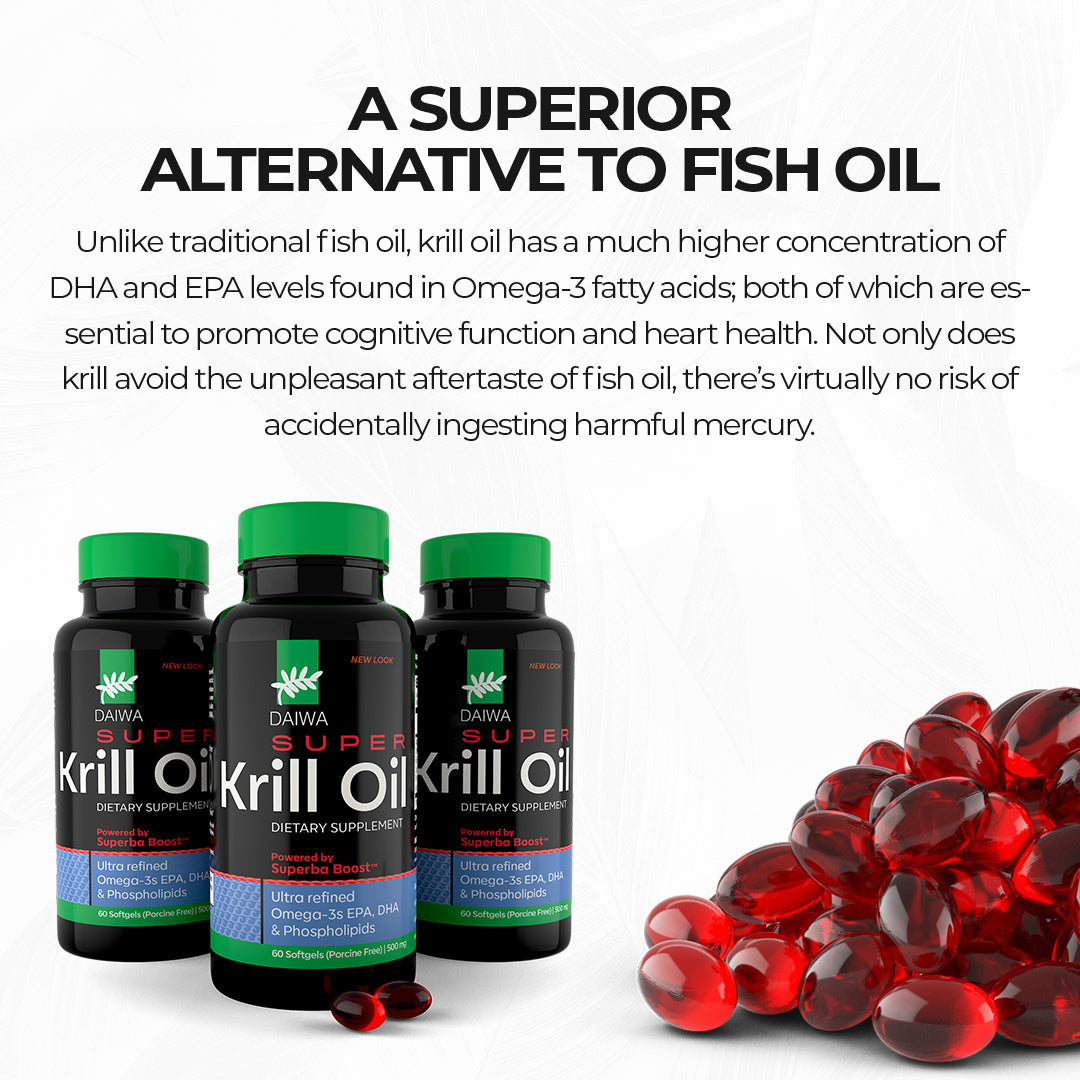
Standard fish oil wastes up to 68% of its EPA and DHA because the fats aren't bound to phospholipids. Daiwa Krill Oil delivers omega-3s in phospholipid form, the same structure your cell membranes use, plus natural astaxanthin for antioxidant protection.
Learn MoreTiming and Frequency
When should you take omega-3 supplements?
With Meals:
- Optimal: Take with meals containing fat
- Why: Fat enhances absorption of omega-3s
- Convenience: Breakfast or dinner works well
Timing Considerations:
- Consistency matters more than timing: Take at the same time daily
- Split dosing: Can take once daily or split into two doses
- Krill oil: Can be taken with or without food (though with meals may enhance absorption)
How often should you take omega-3s?
Daily Supplementation:
- Recommended: Daily intake for consistent blood levels
- Why: Omega-3s are not stored long-term in the body
- Consistency: Daily dosing maintains optimal tissue levels
Dietary Intake:
- Fatty fish: 2-3 times per week can provide adequate intake
- Supplementation: Daily supplementation ensures consistent intake regardless of diet
- Combination: Both approaches work, but daily supplementation provides more consistency
Monitoring and Adjusting Dosage
How do you know if your dosage is working?
Cardiovascular Markers:
- Blood pressure: Monitor weekly (should see improvements after 8-12 weeks)
- Cholesterol panel: Every 3-6 months (triglycerides should decrease)
- Inflammatory markers: CRP if available (should decrease)
- Omega-3 index: Blood test measuring omega-3 levels (target: 8%+)
Cognitive Markers:
- Subjective assessment: Energy, focus, memory, mood
- Cognitive tests: Simple memory and attention tasks
- Formal assessment: Neuropsychological testing if available
- Long-term: Benefits accumulate over months/years
When to Adjust:
- Positive changes: Maintain current dosage
- No changes after 8-12 weeks: Consider increasing dosage (under medical guidance)
- Side effects: Reduce dosage or discontinue
- Health changes: Adjust based on new conditions or medications
How to adjust your dosage safely
Increasing Dosage:
- Gradual increase: Increase by 500 mg-1 gram increments
- Monitor response: Assess after 4-8 weeks at new dosage
- Medical supervision: Consult healthcare provider for significant increases
- Safety limits: Generally safe up to 4 grams daily, but consult provider for higher doses
Decreasing Dosage:
- If side effects occur: Reduce or discontinue
- If goals achieved: May maintain at lower maintenance dose
- Cost considerations: Can reduce if budget is concern (but may reduce benefits)
Safety Considerations and Maximum Dosages
What is the maximum safe omega-3 dosage?
General Safety:
- Up to 4 grams daily: Generally considered safe for most individuals
- Higher doses: May be used under medical supervision for specific conditions
- Long-term safety: Well-established for doses up to 4 grams daily
Potential Side Effects at Higher Doses:
- Mild blood-thinning: May increase bleeding risk (especially with anticoagulants)
- Digestive issues: Fishy burps, upset stomach (less common with krill oil)
- Blood sugar: May slightly affect blood sugar (monitor if diabetic)
When to Be Cautious:
- Blood-thinning medications: Consult healthcare provider
- Surgery: May need to discontinue before procedures
- Bleeding disorders: Use with caution
- Pregnancy/breastfeeding: Consult healthcare provider
Special Populations
Pregnant and Breastfeeding Women:
- Recommended: 200-300 mg DHA daily (for fetal/infant brain development)
- Safety: Omega-3s are generally safe, but consult healthcare provider
- Source: Choose high-quality, purified sources
Children:
- Dosage: Lower than adults, based on body weight
- Consult pediatrician: Before supplementing children
- Dietary sources: Emphasize fatty fish in diet when possible
Older Adults:
- May benefit from higher doses: 2 grams daily for cognitive support
- Monitor for interactions: With medications
- Quality matters: Choose reputable sources
Combining Omega-3s with Other Supplements
Can you combine omega-3s with other heart and brain health supplements?
Safe Combinations:
- Omega-3s + Nattokinase: Krill oil + Plasmanex1 work synergistically
- Omega-3s + CoQ10: Both support cardiovascular and cognitive health
- Omega-3s + Magnesium: Complementary benefits
- Omega-3s + B-vitamins: Support different pathways
Timing Considerations:
- Omega-3s: With meals
- Nattokinase: On empty stomach (typically morning)
- Other supplements: Follow product-specific recommendations
Dosage Adjustments:
- No need to reduce omega-3s: When adding other supplements
- Monitor overall intake: Ensure not exceeding safe limits
- Consult healthcare provider: When combining multiple supplements
★★★★★ Trusted by thousands of customers
Ready to Switch From Fish Oil?
Daiwa Krill Oil is absorbed up to 68% more efficiently than standard fish oil, contains natural astaxanthin, and comes with zero fish burps. Over 12,000 customers have already made the upgrade.
Shop Daiwa Krill OilFree shipping on orders over $50 · 30-day guarantee
Conclusion: Finding Your Optimal Dosage
Determining the optimal omega-3 dosage for cardiovascular and cognitive health requires considering your specific goals, health status, and the source of omega-3s. While general recommendations provide a starting point, individual needs vary.
Key Takeaways:
- General health: 500 mg-1 gram EPA+DHA daily
- Cardiovascular support: 1-2 grams EPA+DHA daily
- Cognitive support: 1-2 grams EPA+DHA daily (2 grams with krill oil)
- Krill oil advantage: Superior bioavailability may allow lower doses
- Individualization: Work with healthcare provider for personalized recommendations
- Consistency: Daily intake over months/years provides greatest benefits
Our Recommendation:
Start with Daiwa Krill Oil at 1-2 grams daily (providing 200-600 mg EPA+DHA). Due to krill oil's superior bioavailability and better brain delivery, this dosage may provide benefits equivalent to higher doses of fish oil. Monitor your response over 8-12 weeks and adjust based on your goals, health status, and healthcare provider's guidance.
Remember: The best dosage is the one you'll take consistently. Choose a dosage that fits your lifestyle, budget, and health goals, and maintain it long-term for optimal cardiovascular and cognitive health benefits.
Related Resources
- Cardiovascular Health & Cognitive Function Guide - Complete hub page
- Krill Oil vs Fish Oil Comparison - Detailed comparison
- Best Supplements 2026 - Supplement rankings
- Daiwa Krill Oil - Premium omega-3 supplement
- How-To Guide - Implementation strategies
References & Scientific Sources
- American Heart Association: Omega-3 Dosage Recommendations
- NIH Omega-3 Research
- Krill Oil Bioavailability and Dosage
- FDA Supplement Safety Information






Leave a comment
All comments are moderated before being published.
This site is protected by hCaptcha and the hCaptcha Privacy Policy and Terms of Service apply.