

Your body needs omega-3 fatty acids to thrive. These essential fats support your heart, brain, and immune system. But you cannot make them on your own. You must get them from food or supplements.
This brings up a big question. Should you choose krill oil or flaxseed oil? Both offer omega-3s. Yet they work in very different ways.
This guide breaks down the key differences between krill oil and flaxseed oil. You will learn which one fits your personal needs, diet, and health goals.
What Are Omega-3 Fatty Acids and Why Do They Matter?
Omega-3 fatty acids are essential fats your body cannot produce. You need them in every cell. They help your heart pump blood. They keep your lungs working well. They support your immune system and balance your hormones.

Omega-3 fatty acids have anti-inflammatory properties. This means they calm swelling in your body. Chronic diseases like heart disease often start with too much inflammation. Omega-3s help fight this problem.
Numerous studies link omega-3 fatty acids to better health. They may lower blood pressure. They can reduce high triglyceride levels in the blood. They also improve cholesterol levels.
The health benefits do not stop there. Omega-3s help your blood vessels stay flexible. They optimize blood viscosity, blood pressure, and blood coagulation. Some research suggests they may slow cognitive decline as you age.
The Three Main Types of Omega-3 Fatty Acids
Not all omega-3s are the same. There are three main types you should know about.
EPA (Eicosapentaenoic Acid)
Eicosapentaenoic acid, or EPA, fights inflammation. It supports heart health and may lift your mood. Fish oil, krill oil, and cod liver oil contain EPA. You can also get EPA by eating fish like salmon and mackerel.
DHA (Docosahexaenoic Acid)
Docosahexaenoic acid, or DHA, builds your brain and eyes. It is crucial during pregnancy for fetal brain and eye development. DHA comes from fish oil, krill oil, cod liver oil, and algae oil. Fatty fish are the best food sources.
ALA (Alpha-Linolenic Acid)
Alpha-linolenic acid, or ALA, comes from plant oils. The flax plant is the most popular source. Chia seeds and other plant-based foods also contain ALA. Your body must convert ALA into EPA and DHA to use it fully.
Understanding Krill Oil: Source, Benefits, and Absorption
Krill oil comes from small, shrimp-like crustaceans called krill. These tiny creatures live in cold ocean waters. They are a food source for whales, penguins, and fish.
Krill oil contains both EPA and DHA. These are the same omega-3 fatty acids found in fish oil and cod liver oil. But krill oil has a unique structure.
How Krill Oil Differs from Fish Oil
The omega-3s in krill oil attach to phospholipids. Fish oil and cod liver oil store their omega-3s in triglyceride form. This difference matters for absorption.
Krill oil is often cited for superior bioavailability due to its phospholipid structure. Your body may absorb krill oil more easily. Some people find they need smaller doses of krill oil compared to fish oil supplements.
Krill oil also contains astaxanthin. This is a powerful antioxidant that gives krill their red color. Astaxanthin helps protect the oil from going rancid. It may also offer extra health benefits.
Health Benefits of Krill Oil
Krill oil shares many beneficial effects with fish oil. Numerous studies show it can reduce inflammation. It may support heart health by improving cholesterol levels and triglyceride levels.
Taking fish oil or krill oil may help reduce the risk of heart disease. Heart disease is a leading cause of death worldwide. Getting enough EPA and DHA from krill oil or fish oil supplements could lower this risk.
Fish oil supplements, including those made from krill, can help increase lubrication between joints. This is helpful for people with joint health issues such as stiff or achy joints.
More research is still needed on some claims about krill oil. But early results look promising for cardiovascular health and brain function.
Ready to Experience Superior Omega-3 Absorption?
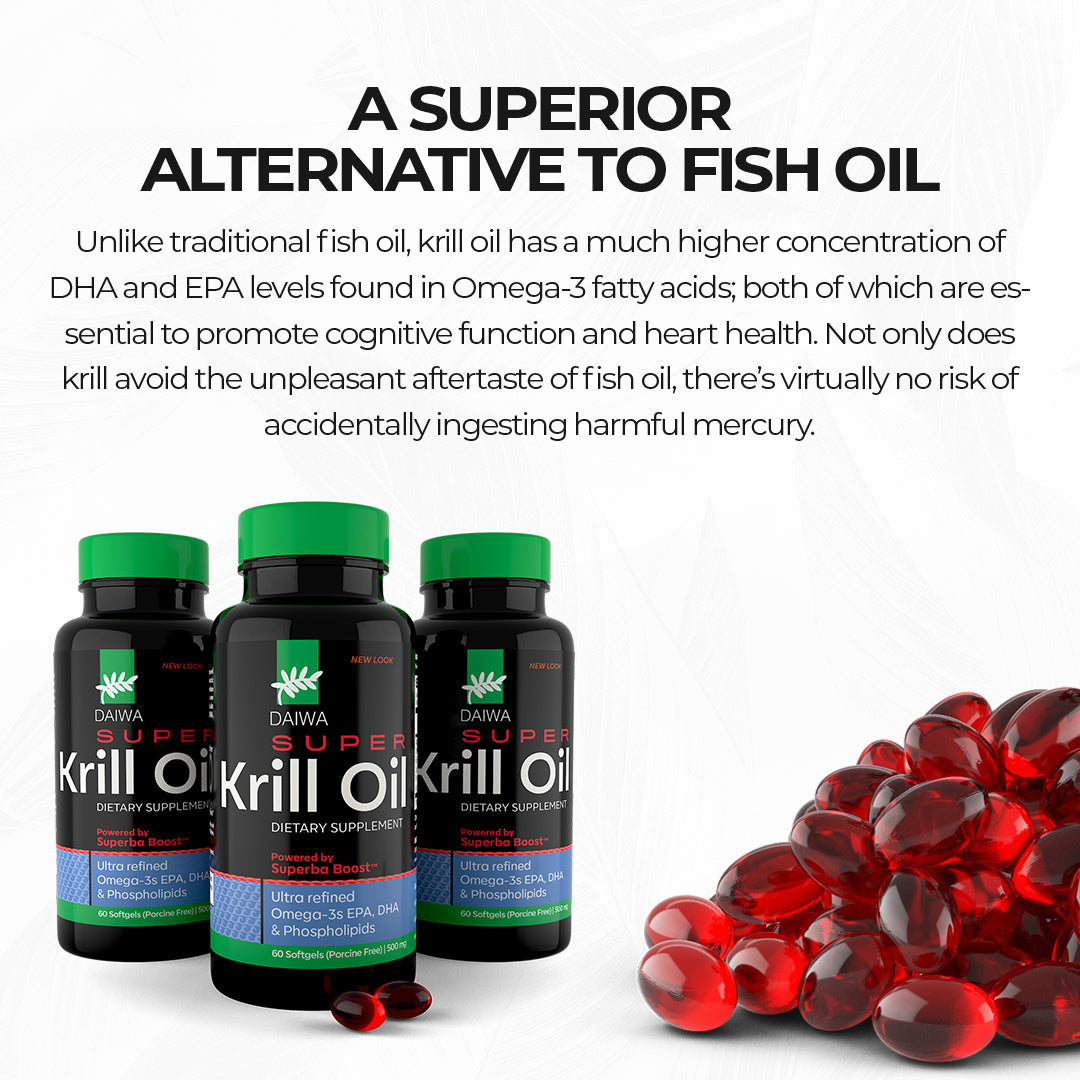
Daiwa Krill Oil delivers EPA & DHA in phospholipid form for maximum bioavailability.
Shop Daiwa Krill Oil,Upgrade Your Omega-3 Absorption
Standard fish oil wastes up to 68% of its EPA and DHA because the fats aren't bound to phospholipids. Daiwa Krill Oil delivers omega-3s in phospholipid form, the same structure your cell membranes use, plus natural astaxanthin for antioxidant protection.
Learn MoreUnderstanding Flaxseed Oil: A Plant-Based Omega-3 Source
Flaxseed oil comes from the seeds of the flax plant. It has been used for centuries as both food and medicine. Today, it is a popular choice among plant-based eaters.
Flaxseed oil is sometimes called linseed oil. It is rich in alpha-linolenic acid, or ALA. This plant-derived omega-3 fatty acid offers many health benefits.
What Makes Flaxseed Oil Unique
Flaxseed oil contains lignans. These compounds act as antioxidants and phytoestrogens. Flaxseed oil can help manage symptoms associated with menopause due to its lignan content.
Flaxseed oil is a better option for plant-based eaters or vegans. It contains no animal products. This makes it safe for anyone avoiding fish or shellfish.
Flaxseed oil compared to fish oil has one key difference. Flaxseed oil provides ALA, not EPA and DHA directly. Your body must convert ALA through a conversion process. This conversion process is not very efficient in humans.
Health Benefits of Flaxseed Oil
Both flaxseed oil and fish oil may benefit heart health. They can reduce risk factors of heart disease like high blood pressure and cholesterol levels.
A study found that flaxseed oil is more effective than fish oil in reducing serum insulin levels. It also lowered high-sensitivity C-reactive protein levels in type 2 diabetes patients with coronary heart disease. This suggests flaxseed oil may help with insulin sensitivity in certain people.
Flaxseed oil may aid in weight management. It may also help reduce inflammation throughout the body. Omega-3 fatty acids are thought to help treat skin conditions too.
Flaxseed oil may have fewer side effects compared to fish oil. Fish oil can cause nausea and other gastrointestinal issues. Many people tolerate flaxseed oil better.
Krill Oil vs Flaxseed: The Key Differences
Now let's compare krill oil vs flaxseed directly. Understanding these key differences will help you choose the right oil supplements for your needs.
Omega-3 Type and Conversion
Krill oil gives you EPA and DHA directly. Your body can use these omega-3s right away.
Flaxseed oil provides ALA. Your body must convert ALA into EPA and DHA. This conversion process is slow and inefficient. Only about 5-15% of ALA becomes EPA. Even less becomes DHA.
This is the biggest difference between these two oils. If you need EPA and DHA fast, krill oil works better.
For more details, see The Complete Guide to Cardiovascular Health and Cognitive Function. For more details, see heart & circulation supplements. For more details, see Krill Oil Research Studies. For more details, see Daiwa Brain Health®. For more details, see Krill Oil's Emerging Role in Cognitive Function. For more details, see Daiwa Krill Oil. For more details, see Krill Oil vs Fish Oil Paleo. For more details, see Inflammation Support Bundle.Bioavailability and Absorption
Krill oil may be absorbed more easily by the body than flaxseed oil due to its phospholipid structure. The omega-3s enter your cells more quickly.
Flaxseed oil still provides beneficial effects. But you may need larger amounts to get the same results as krill oil or fish oil supplements.
Source and Diet Compatibility
Krill oil comes from shrimp-like crustaceans. It is not suitable for vegans or individuals with shellfish allergies. If you avoid animal products, krill oil is not for you.
Flaxseed oil is a safe alternative for those with shellfish allergies. It is 100% plant based. Vegans and vegetarians can use it without worry.
Antioxidant Content
Krill oil contains astaxanthin, an antioxidant not found in flaxseed oil. This gives krill oil extra protective power.
Flaxseed oil contains lignans instead. These also work as antioxidants but in a different way.
Side Effects and Tolerance
Flaxseed oil may have fewer side effects. Fish oil and krill oil can sometimes upset your stomach.
Both krill oil and flaxseed oil may help reduce inflammation in the body. But flaxseed oil tends to be gentler on the digestive system.
✓ Direct EPA & DHA ✓ Superior Absorption ✓ Astaxanthin Antioxidant
Skip the conversion process. Get the omega-3s your body can actually use.
Try Daiwa Krill Oil TodayIs There a Downside to Taking Krill Oil?
Yes, there are some things to watch out for. Krill oil may enhance the effects of blood-thinning medications. If you take blood thinners, talk to your healthcare provider first.
Krill oil is made from shellfish. Anyone with a shellfish allergy should avoid it completely. This is a serious safety concern.
Krill oil can also be more expensive than fish oil supplements or flaxseed oil. The price difference may matter depending on your budget.
Some people experience mild side effects like bad breath or fishy burps. Storing the oil properly can help reduce these issues. Make sure your supplements are stored properly in a cool, dark place.
Always consult your healthcare provider before starting any new supplement. This is especially true if you have current medications or health conditions.
Which Is Better: Ground Flaxseed or Fish Oil?
This depends on your goals and diet preferences.
Fish oil is often the standard recommended supplement when you want to get more omega-3s in your diet. It provides EPA and DHA directly. You do not need to wait for your body to convert anything.
Ground flaxseed offers fiber along with ALA. Flaxseed oil just has the oil without the fiber. If you want the extra fiber benefits, ground flaxseed is a good choice.
For heart health and brain support, fish oil and fish oil supplements tend to work faster. The American Heart Association recommends eating a variety of fatty fish at least twice a week. This gives you the heart health benefits from omega-3 fatty acids naturally.
If you follow a plant based diet, flaxseed is your better option. Algal oil is recommended over flaxseed oil for those needing direct DHA and EPA without animal products. Algae-based supplements provide DHA and sometimes EPA for vegetarians and vegans.
Is Krill Oil Good for Pregnancy?
Omega-3 fatty acids are crucial during pregnancy for fetal brain and eye development. DHA is especially important. Krill oil does contain DHA.
However, always talk to your healthcare provider before taking krill oil during pregnancy. They can help you weigh the benefits and any potential risk factors.
Many doctors recommend fish oil supplements or eating fish during pregnancy instead. Fatty fish like salmon provide omega-3s along with other nutrients.
Some pregnant women prefer cod liver oil. Cod liver oil contains EPA, DHA, plus vitamins A and D. But cod liver oil must be used carefully during pregnancy due to vitamin A content.
The choice between krill oil, fish oil, or cod liver depends on your personal needs and medical advice.
Can You Get Enough Omega-3 from Flaxseed?
This is where flaxseed falls short. The conversion process from ALA to EPA and DHA is inefficient.
You would need to eat large amounts of flaxseed or flaxseed oil to match the EPA and DHA in fish oil or krill oil. Most people do not convert enough ALA to meet their needs.
The adequate intake of ALA is about 1.1-1.6 grams per day. Flaxseed oil can easily meet this. But meeting your EPA and DHA needs through flaxseed alone is much harder.
If you rely only on flaxseed oil, consider adding algae oil to your routine. Algae oil provides DHA directly from a plant based source.
Eating fish two or more times per week is another option. Fatty fish give you EPA and DHA without any conversion needed.
Comparing Krill Oil, Fish Oil, and Cod Liver Oil
Let's look at how these three popular oil and fish supplements stack up.
Fish Oil
Fish oil comes from fatty fish like salmon, mackerel, and sardines. It contains high amounts of EPA and DHA. Fish oil supplements are widely available and affordable.
Fish oil is often recommended for its benefits in heart and brain health. However, the evidence of these benefits is mixed in some studies. More research continues to explore these claims.
Cod Liver Oil
Cod liver oil comes from the liver of cod fish. It has EPA and DHA plus vitamins A and D. Cod liver oil offers beneficial effects for bone health and immune function.
The difference between regular fish oil and cod liver oil is the vitamin content. Cod liver oil gives you extra nutrients but also requires careful dosing.
Krill Oil
Krill oil provides EPA and DHA with better absorption potential. The astaxanthin content adds antioxidant protection.
Krill oil costs more than standard fish oil supplements. But some people prefer it because they need smaller doses.
How to Choose the Right Oil Supplements for Your Personal Needs
The choice between krill oil and flaxseed oil should consider dietary needs, absorption goals, and specific health conditions.
Ask yourself these questions:
Do you eat animal products? If yes, krill oil or fish oil might be good choices.
Are you vegan or vegetarian? Flaxseed oil or algae oil suits you better.
Do you have shellfish allergies? Avoid krill oil. Flaxseed oil is a safe alternative.
Are you taking blood thinners? Talk to your healthcare provider before using any oil supplements.
Do you want EPA and DHA directly? Choose krill oil, fish oil, or cod liver oil.
Is plant based nutrition important to you? Flaxseed oil combined with algae oil covers your needs.
Getting Omega-3s from Food Sources
Supplements are helpful. But food should come first.
The American Heart Association recommends eating fatty fish at least twice per week. Salmon, mackerel, sardines, and herring are all excellent choices. Eating fish gives you omega-3s plus protein and other nutrients.
Flaxseed is easy to add to smoothies, oatmeal, or baked goods. Chia seeds work the same way.
Walnuts and hemp seeds also contain ALA. These plant oils and seeds support your omega-3 intake naturally.
A balanced diet with both food and supplements gives you the best results.
Potential Interactions and Safety Concerns
Both krill oil and flaxseed oil can interact with medications.
Krill oil may enhance the effects of blood thinners. Flaxseed oil may interact with certain medications, such as cholesterol-lowering drugs.
Always tell your healthcare provider about your current medications before starting any new supplement. They can check for possible interactions.
People with certain chronic diseases should also get medical advice. Those with Crohn's disease or other digestive conditions may need special guidance.
Start with small doses and watch for any side effects. Most healthy adults tolerate these oils well.
★★★★★ Trusted by thousands of customers
Ready to Switch From Fish Oil?
Daiwa Krill Oil is absorbed up to 68% more efficiently than standard fish oil, contains natural astaxanthin, and comes with zero fish burps. Over 12,000 customers have already made the upgrade.
Shop Daiwa Krill OilFree shipping on orders over $50 · 30-day guarantee
Final Thoughts: Making the Best Choice for Your Health
Omega-3 fatty acids offer real health benefits. They reduce inflammation, support heart health, and may help prevent heart attacks and cognitive decline.
Krill oil gives you EPA and DHA with excellent absorption. It works well for people who eat animal products and want fast results.
Flaxseed oil fits plant based lifestyles. It provides ALA plus lignans for extra antioxidant support. Combining it with algae oil helps fill the EPA and DHA gap.
Both options have their place. The best choice depends on your diet, health goals, and personal needs.
Talk to your healthcare provider to find what works best for you. And remember: getting omega-3s from food like fatty fish, flaxseed, and chia seeds supports your whole body naturally.
Premium Quality Omega-3 Support
Get Direct EPA & DHA with Daiwa Krill Oil
✓ Phospholipid-bound for superior absorption
✓ Natural astaxanthin antioxidant protection
✓ No fishy aftertaste or burps
Shop Daiwa Krill Oil Now,Support your heart, brain, and joints with every softgel.





Leave a comment
All comments are moderated before being published.
This site is protected by hCaptcha and the hCaptcha Privacy Policy and Terms of Service apply.